


MCB, RCD, SPD & RCBO: Understanding EV Charger Safety
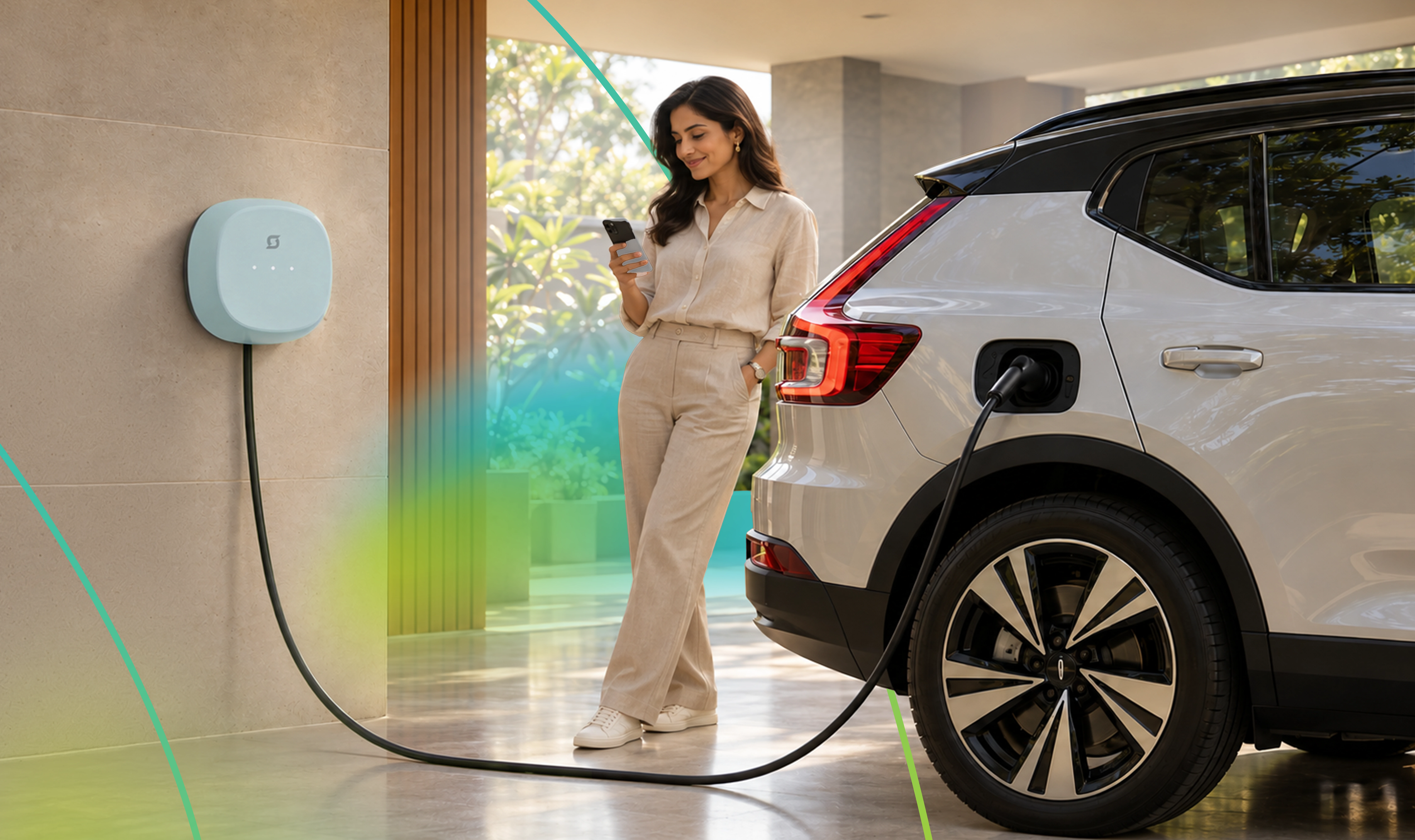
Charging an EV at home is the most convenient way to begin each morning with a full battery. While plugging in an EV home charger feels as seamless as powering any personal gadget, the charger delivers high-capacity electrical energy over continuous charging sessions.
A dedicated AC EV wallbox operates at steady current, requiring robust distribution switchgear designed specifically for continuous electrical service. Understanding MCB, RCD, SPD and RCBO for EV charger safety helps EV owners see how each purposeful device works quietly to ensure a seamless, efficient charging experience.
Your Home EV Charger Needs The Right Electrical Protection[1]
An EV home charger works differently from typical domestic appliances. Standard appliances like water heaters and air conditioning units switch on and off intermittently once reaching set temperatures, allowing conductors time to rest and cool. In contrast, Mode-3 EV charging pulls steady power for several continuous hours. A standard 7.4 kW EV home charger draws 32 amperes continuously for 6 to 8 hours.
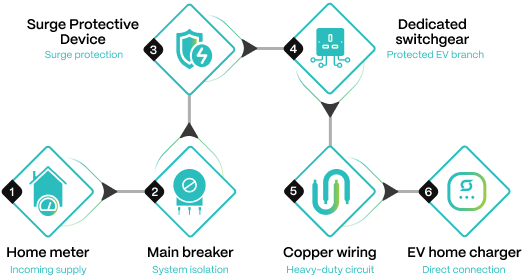
Managing this sustained load requires dedicated EV charger electrical protection. Reliable charging demands a dedicated branch line, heavy-gauge copper wiring, low-resistance EV charger earthing, and protective switchgear engineered for non-stop operation.
Four Electrical Protection Devices Address Four Different Risks
Maintaining comprehensive EV charger safety requires switchgear matched to four specific electrical scenarios, with each device fulfilling a clear engineering function.
An MCB (Miniature Circuit Breaker) Protects Against Overloads And Short Circuits
A Residual Current Device (RCD) detects current escaping the circuit, protecting individuals from electric shock. An RCD without built-in overcurrent protection is an RCCB. While an MCB protects wiring, an RCD for EV charger setups protects users by monitoring current balance between live and neutral conductors. If leakage to earth exceeds 30 milliamperes (mA), the RCD disconnects power within milliseconds.
EV charging also involves direct current (DC). Because an EV converts AC to DC internally, minor DC leakage can occur. DC leakage above 6mA can blind standard Type A RCDs, preventing them from tripping. Installations require either a Type B RCD[3] or a Type A RCD paired with an IEC 62955 certified[5] 6mA DC residual direct current detecting device (RDC-DD).
An SPD (Surge Protective Device) Helps Protect Equipment From Sudden Voltage Spikes
A Surge Protective Device (SPD) protects sensitive microprocessors from transient overvoltages. Voltage spikes enter domestic panels through grid switching, industrial loads, or indirect lightning strikes.
An SPD uses Metal Oxide Varistors connected between conductors and earth. During normal operation, varistors resist current flow. When a voltage surge occurs, their resistance drops instantly, diverting surge energy harmlessly to ground. Installing an SPD for EV charger circuits shields electronics in both the charger and the EV battery management system. Direct structural lightning protection requires external building lightning rods.
An RCBO (Residual Current Circuit Breaker With Overcurrent Protection) Combines Two Protective Functions
A Residual Current Circuit Breaker with Overcurrent Protection (RCBO) combines the functions of an MCB and an RCD into a single modular unit. It protects against thermal overloads, short circuits, and earth leakage simultaneously.
An RCBO for EV charger installations saves distribution board space and ensures circuit independence. If an earth fault occurs on the EV home charger line, only that RCBO trips, keeping the rest of the home powered normally.
Do You Need An MCB, RCD, SPD And RCBO For Your Home EV Charger?
A compliant home EV charger installation rarely requires four distinct modular enclosures. Because an RCBO integrates MCB and RCD functionality into one unit, it replaces two separate physical breakers on the DIN rail.
An SPD operates across power and grounding paths, functioning as an independent surge diversion device alongside line breakers.
The exact switchgear combination depends on the internal electronics of the EV home charger. When an EV home charger includes built-in 6mA DC residual detection conforming to IEC 62955 standards, installers can use an economical Type A RCD or Type A RCBO at the main panel. This coordinated setup meets IEC 60364-7-722 electrical standards without requiring costly external Type B switchgear.
Proper Earthing And Circuit Checks Complete The Safety Setup
Protective switchgear works alongside certified cabling and dedicated grounding to ensure complete fault clearing.
Your Electrician Must Check Earthing, Cable Sizing And Available Electrical Load
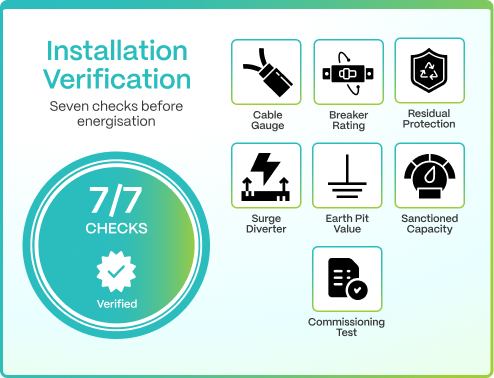
A licensed electrical technician should verify seven key technical points before commissioning an EV home charger:
- Dedicated circuit and cable sizing: Run continuous copper cables directly from the meter panel. Use 6 mm² multi-strand copper for short runs under 20 meters, or 10 mm² armoured copper cable for extended parking runs.
- Correct protective device ratings: Install a dedicated 40A Type C breaker for 7.4 kW single-phase chargers or a 32A/40A 4-pole breaker for three-phase systems.
- Coordinated residual protection: Match the external RCD or RCBO with the charger internal DC leakage detection.
- SPD integration: Install a Type 2 surge protective device in the sub-panel to absorb grid voltage disturbances.
- EV charger earthing: Verify ground resistance below 1 ohm and confirm neutral-to-earth voltage remains under 2 volts to maintain clear EV communication.
- Sanctioned electrical load: Confirm the utility sanctioned load[2] supports continuous EV charging without exceeding residential limits.
- Verification and testing: Test RCD tripping times and inspect earth loop impedance before beginning the initial charge.
Exicom Spin Air Brings Charger-Level Protection Into The Installation
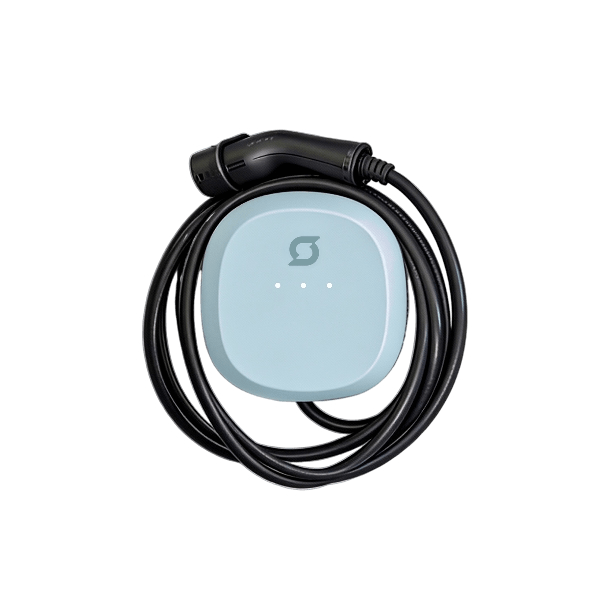
The Exicom Spin Air integrates advanced protective safety features directly within the EV wallbox. Designed specifically for Indian electrical conditions, the Exicom Spin Air family supports 7.4 kW single-phase, 11 kW three-phase, and 22 kW three-phase connections.
Exicom Spin Air features integrated residual current monitoring with certified 6mA DC detection to IEC 62955 and 30mA AC earth-fault protection. By handling DC leakage directly inside the charger, Exicom Spin Air eliminates the risk of blinding upstream breakers and allows standard Type A RCD or RCBO devices in the home distribution board. The wallbox also actively monitors overvoltage, undervoltage, overcurrent, operating temperatures, and ground-to-neutral voltage fluctuations.
Charger-level intelligence works in harmony with external panel switchgear. An installation still relies on dedicated cabling, an upstream circuit breaker, and sound EV charger earthing. Exicom certified surveys assess household load capacity and verify earthing impedance prior to activation. As Exicom Managing Director Anant Nahata stated, empowering EV owners requires building dependable charging infrastructure engineered for everyday reliability.
Exicom Spin Air
Charger-Level Protection. Built Into the Installation.
Spin Air combines integrated leakage protection with active monitoring of key electrical conditions, supporting dependable home charging across Indian electrical environments.
- 7.4 kW single-phase
- 11 kW and 22 kW three-phase
- Certified 6 mA DC detection to IEC 62955
- 30 mA AC earth-fault protection
- Voltage, current and temperature monitoring
- Supports standard Type A RCD or RCBO devices
Safe Home Charging Starts With The Right Protection[4] For Your Setup
Achieving dependable EV charger safety comes down to matching switchgear to specific electrical tasks. An MCB prevents cable overload, an RCD protects against ground leakage shock, an SPD absorbs grid surges, and an RCBO streamlines dual protection into one compact unit. Pairing certified distribution switchgear with intelligent engineering like Exicom Spin Air ensures a convenient, reliable home charging experience every single day.
Frequently Asked Questions
Lorem ipsum dolor sit amet, consectetur adipiscing elit, sed do eiusmod tempor incididunt ut labore et dolore magna aliqua. Ut enim ad minim veniam, quis nostrud exercitation ullamco laboris nisi ut aliquip ex ea commodo consequat. Duis aute irure dolor in reprehenderit in voluptate velit esse.
Lorem ipsum dolor sit amet, consectetur adipiscing elit, sed do eiusmod tempor incididunt ut labore et dolore magna aliqua. Ut enim ad minim veniam, quis nostrud exercitation ullamco laboris nisi ut aliquip ex ea commodo consequat. Duis aute irure dolor in reprehenderit in voluptate velit esse.
Lorem ipsum dolor sit amet, consectetur adipiscing elit, sed do eiusmod tempor incididunt ut labore et dolore magna aliqua. Ut enim ad minim veniam, quis nostrud exercitation ullamco laboris nisi ut aliquip ex ea commodo consequat. Duis aute irure dolor in reprehenderit in voluptate velit esse.
Lorem ipsum dolor sit amet, consectetur adipiscing elit, sed do eiusmod tempor incididunt ut labore et dolore magna aliqua. Ut enim ad minim veniam, quis nostrud exercitation ullamco laboris nisi ut aliquip ex ea commodo consequat. Duis aute irure dolor in reprehenderit in voluptate velit esse.
Lorem ipsum dolor sit amet, consectetur adipiscing elit, sed do eiusmod tempor incididunt ut labore et dolore magna aliqua. Ut enim ad minim veniam, quis nostrud exercitation ullamco laboris nisi ut aliquip ex ea commodo consequat. Duis aute irure dolor in reprehenderit in voluptate velit esse.
%20(1).webp)