


Wiring and circuit requirements for installing EV charger at home
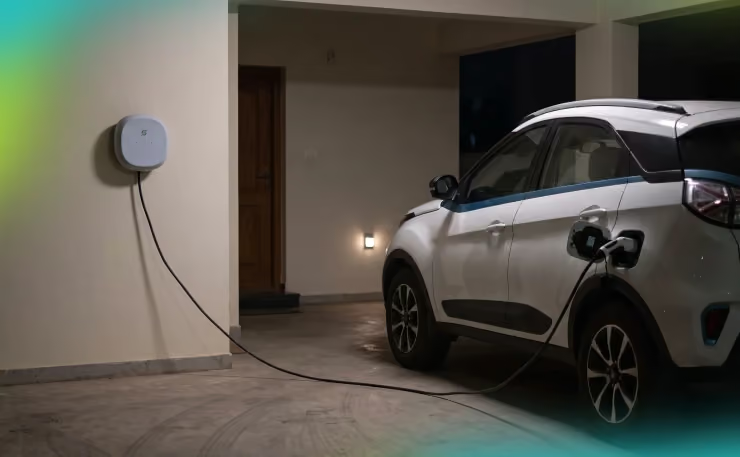
Raghav is thinking of buying a brand new Tiago EV. In fact, he thinks about it every time he sees a car. But when he looks at his apartment’s distribution board, his stomach does a little flip. His Resident Welfare Association (RWA) has already warned him about grid capacity, and his local electrician is throwing around terms like "armoured cabling" and "Type B RCCBs" like they are magic spells from an engineering textbook.
Raghav’s dilemma is incredibly common. Like we said previously, nearly 85% of all private EV charging in India happens right at home. Yet, the physical process of setting up the EV charger can induce massive electrical anxiety. Let’s cut through the noise and look at the real on-ground wiring facts so you can charge safely without losing sleep or blacking out your block.
Will my home EV Charger trip the MCB?
The fear of a sudden, embarrassing blackout is perhaps the single biggest hurdle keeping Indian car buyers from going electric. We’re all conditioned to treat our home's electrical panel like a delicate house of cards: one extra appliance, and the whole system collapses. But does your EV charger actually have to trip your Miniature Circuit Breaker (MCB), or are we just installing them wrong?
To understand the power needs of your home wallbox, consider the 7.4 kW EV charger as being at par with a 3-ton air conditioning system. Just as your home already handles the high energy requirements of a 3-ton AC, a 7.4 kW EV charger operates as a steady, reliable power consumer. While it does draw power continuously throughout its charging cycle, this can be managed according to your sanctioned load by smart EV chargers with dynamic load balancing.
Smart EV Chargers continuously monitor power consumption and intelligently keep their own draw below the sanctioned limit.
Efficient Charging. Everyday.
Spin Air 2 AC Charger
Compact. Smart. Reliable. 7.4 kW charging solution for homes, offices and more.
Explore Product →- ✓7.4 kW Power Output
- ✓Smart & Connected
- ✓Safe & Reliable
- ✓Compact Wallbox Design
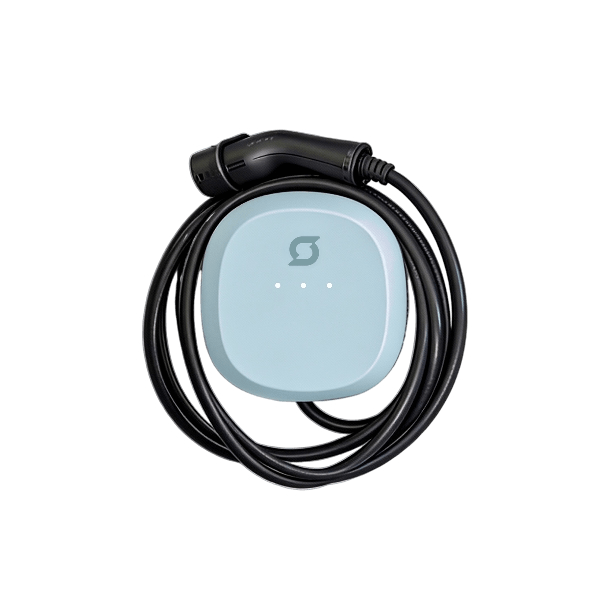
Additionally, by ensuring your installation includes a robust, professional-grade circuit, you provide the system with the necessary breathing room to deliver safe, consistent, and worry-free charging every single time.
What kind of MCB and cable does an EV charger actually need?
If you are installing a standard 7.2 kW or 7.4 kW AC wallbox charger, it will draw roughly 31.3 to 32 Amps of electricity continuously for hours on end. For a continuous load this heavy, you need to get two crucial components exactly right: the circuit breaker (MCB) and the physical cable.
Using the wrong wire gauge is a silent fire hazard.
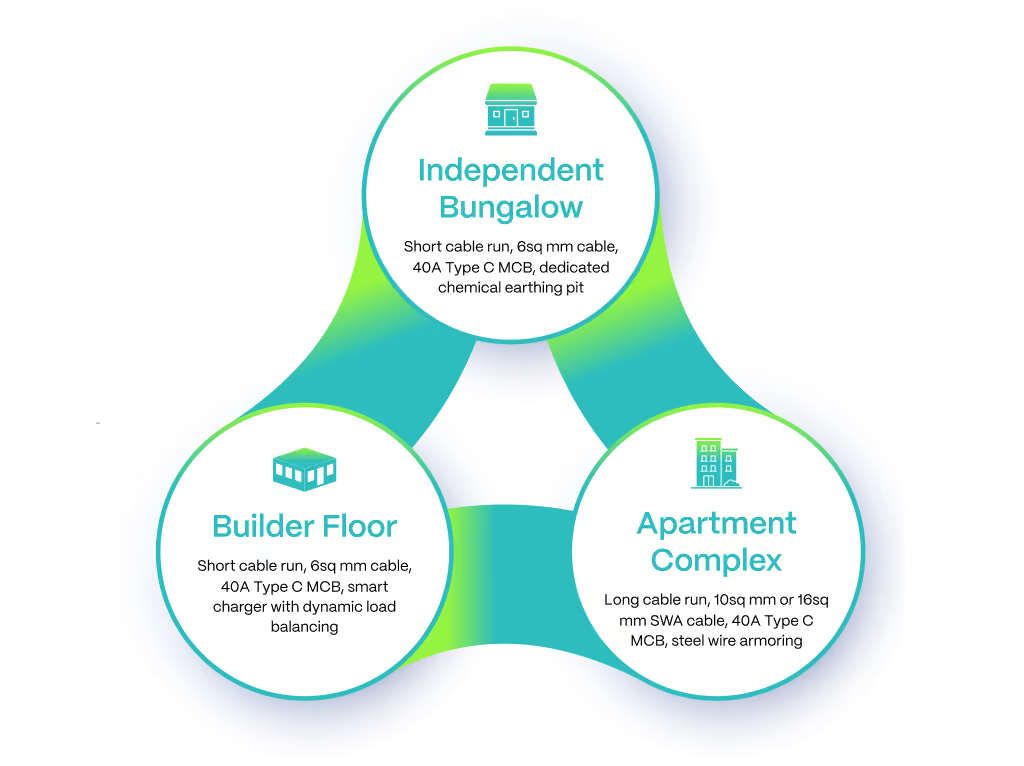
The exact thickness (gauge) of this copper wire depends entirely on how far your parking spot is from your electricity meter. Here are 3 common use cases in Indian housing:
1. If you live in an Independent Bungalow or Villa
Since your electricity meter is usually located right next to your driveway or main gate, the cable run is short, typically under 15 to 20 meters. For this setup, you need a standard 6 sq mm three-core copper cable paired with a 40A Type C MCB installed in your main distribution board. The real villa challenge here is grounding. Modern EVs will refuse to charge if neutral-to-earth voltage exceeds 2V. To bypass this earthing trap, you must avoid using your home’s existing, potentially degraded ground line and have your installer dig a dedicated chemical earthing pit next to your parking space.
2. If you live in a Large Apartment Complex with Basement Parking
In a high-rise, your meter sits in a centralized ground-floor room, but your parking slot is located two or three levels down in the sub-basement, creating a massive 50 to 120-meter run. If you use standard wiring over a distance this long, you will face severe voltage drop, slow charging, and dangerous heat buildup. To overcome this, you must upsize to a thick 10 sq mm or 16 sq mm Steel Wire Armoured (SWA) copper cable paired with a 40A Type C MCB at your meter panel. The steel wire armoring is a strict RWA safety requirement to protect the high-voltage line from physical damage and rodents in shared basement areas.
3. If you live in a G+4 Builder Floor with Stilt Parking
In these congested stilt parking layouts, your electricity meter is mounted on a shared wall right in the parking bay, keeping the physical cable run short (usually under 20 meters). This allows you to comfortably use a standard 6 sq mm copper cable with a 40A Type C MCB. However, builder floor apartments are usually capped at a tight 5 kW single-phase sanctioned load per floor, and upgrading to a three-phase connection is often physically blocked by overcrowded shared meter panels. To charge safely without tripping your main meter, you must pair your wiring with a smart charger that features Dynamic Load Balancing (DLB).
What does a compliant charging circuit cost all-in?
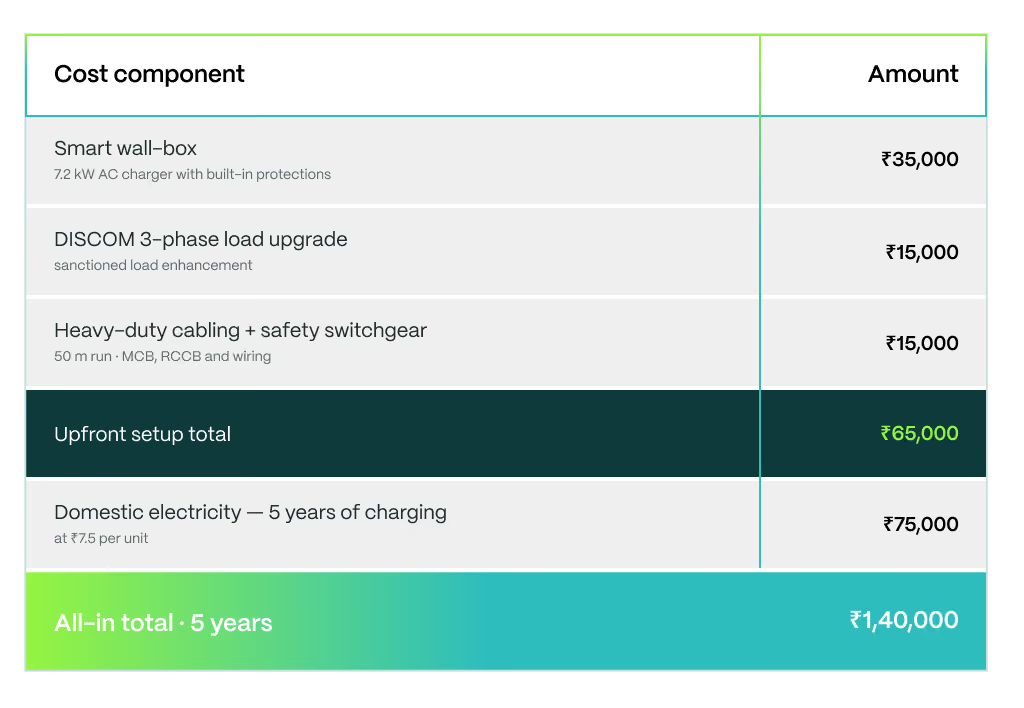
A private 7.2 kW setup will cost about ₹65,000 upfront (₹35,000 for a smart wall-box + ₹15,000 for a DISCOM 3-phase load upgrade + ₹15,000 for 50m of heavy-duty cabling and safety switchgear). Assuming a tariff rate of INR 7.5/unit, you spend another ₹75,000 on domestic electricity over five years. That brings your total to ₹1,40,000 for 5 years.
As mentioned in our previous blog, with a shared, society-managed setup, the RWA splits upfront hardware costs across users. Your personal buy-in for the shared infrastructure will therefore drop by around 30-40%. Billing in shared setups will be at standard residential society rates for power tariffs without commercial markups. However, you must factor a small software fee into your operational budget. The software tracks exactly who plugs in, handles the accounting, and adds the cost directly to your monthly maintenance bill.
Transitioning to electric mobility shouldn't feel like a rigorous engineering exam. By choosing an integrated smart charger designed specifically for Indian grid conditions, you can bypass the technical headache entirely.
Look at integrated smart chargers designed specifically for Indian grid conditions, like the Exicom Spin Air series. With built-in 6mA DC leakage protection, it saves you from buying expensive industrial breakers. Plus, its intelligent Dynamic Load Balancing ensures your car charges at maximum speed overnight without ever tripping your home's MCB, making the transition to electric mobility smooth and completely stress-free. You get maximum overnight charging, absolute thermal safety, and a fully charged car every single morning without ever tripping your home's MCB.
Frequently Asked Questions
Lorem ipsum dolor sit amet, consectetur adipiscing elit, sed do eiusmod tempor incididunt ut labore et dolore magna aliqua. Ut enim ad minim veniam, quis nostrud exercitation ullamco laboris nisi ut aliquip ex ea commodo consequat. Duis aute irure dolor in reprehenderit in voluptate velit esse.
Lorem ipsum dolor sit amet, consectetur adipiscing elit, sed do eiusmod tempor incididunt ut labore et dolore magna aliqua. Ut enim ad minim veniam, quis nostrud exercitation ullamco laboris nisi ut aliquip ex ea commodo consequat. Duis aute irure dolor in reprehenderit in voluptate velit esse.
Lorem ipsum dolor sit amet, consectetur adipiscing elit, sed do eiusmod tempor incididunt ut labore et dolore magna aliqua. Ut enim ad minim veniam, quis nostrud exercitation ullamco laboris nisi ut aliquip ex ea commodo consequat. Duis aute irure dolor in reprehenderit in voluptate velit esse.
Lorem ipsum dolor sit amet, consectetur adipiscing elit, sed do eiusmod tempor incididunt ut labore et dolore magna aliqua. Ut enim ad minim veniam, quis nostrud exercitation ullamco laboris nisi ut aliquip ex ea commodo consequat. Duis aute irure dolor in reprehenderit in voluptate velit esse.
Lorem ipsum dolor sit amet, consectetur adipiscing elit, sed do eiusmod tempor incididunt ut labore et dolore magna aliqua. Ut enim ad minim veniam, quis nostrud exercitation ullamco laboris nisi ut aliquip ex ea commodo consequat. Duis aute irure dolor in reprehenderit in voluptate velit esse.
.webp)