



EV charging in apartments – key decisions and upgrades to think about
.avif)
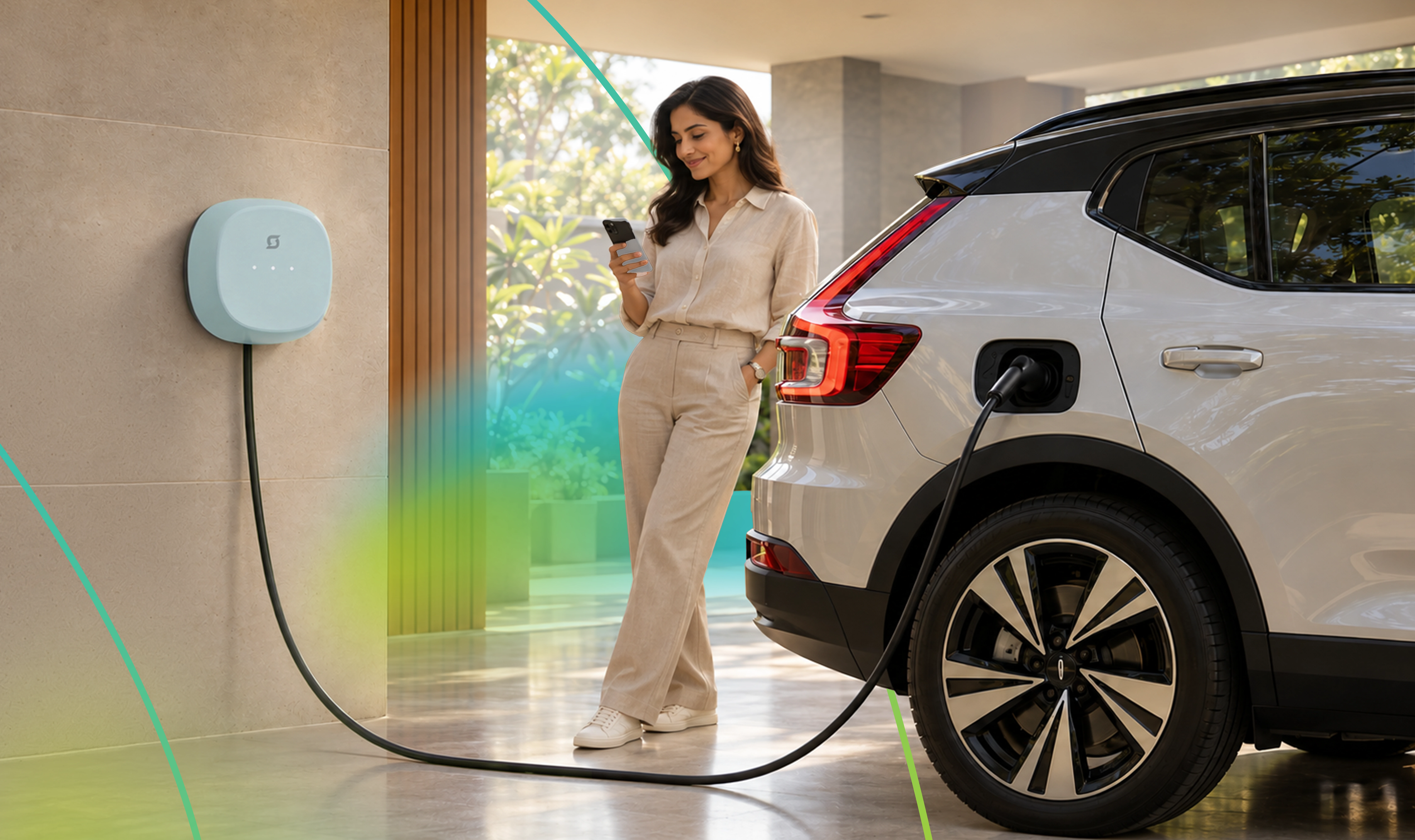
Robin bought an MG ZS EV. He loves the car. There’s a public charging station near his workplace, but he doesn’t always like to take out time for it. He wants the convenience of home EV charging, where he can simply plug in at night and leave with 100% battery in the morning. When he brought it up at the Sunday general body meeting of his society, he realized something complicated. Although aligned in principle, the path to having his dedicated charging set up is still not straight forward. The committee had questions. They wanted to know the exact cable path through the basement, and what would happen if other residents started installing similar EV charging cables too. They worried about the building's insurance. They grilled him on fire safety, they enquired whether his charger would trip the main breaker during summer evenings.
Robin isn’t alone in this situation.
EV charging in apartments is now essential but not seamless
According to industry whitepapers, over 80% to 85% of all private 4W EV charging in India happens at home. In Tier 1 metros like Bengaluru, Delhi, or Mumbai, EV penetration has crossed the 10% mark of new vehicle sales, and high-density residential apartments are the primary battlefield for EV charging infrastructure.
In Bengaluru, which holds 55% of Karnataka's EV share, apartment grids are hitting their limits. Pune and Mumbai are seeing a spike in premium electric cars, but older buildings have legacy single-phase wiring that are insufficient for the electrical load.
Do I need to upgrade my grid connection for EV charging?
The necessity of a grid upgrade comes down to the size of your car's battery and load limits enforced by Indian DISCOMs.
There are 2 options to explore here:
- Level 1 Charging (Basic AC - 3.3 kW EV charger)
Plugs into a standard 15A three-pin socket. It adds roughly 15–20 km of range per hour. Since a standard Indian apartment has a sanctioned load of 5 kW, a 3.3 kW charger can operate without a DISCOM upgrade, provided you aren't simultaneously running heavy appliances like air conditioners or geysers.
- Level 2 Charging (Fast AC - 7.4 kW EV Charger)
This is the sweet spot for the Indian market, preferred by most owners of popular 4W EV models. A 7.2 kW wall-box cuts charging time by more than half, charging a 60kWh battery in 6-8 hours instead of 18). However, it requires a grid upgrade, unless the EV charger itself is equipped with load management features. A standard Indian apartment has a sanctioned load of 5 kW. Using a 7.2 kW EV charger in maximum capacity will push your total load past 10 kW, which is why it is a good idea to upgrade to a three-phase connection.
If your parking is in the basement, then the Central Electricity Authority (CEA) also dictates having dedicated circuit breakers and proper earthing to prevent fire hazards.
For starters, yes, a resident can upgrade their individual meter, install an EV charger, and pull a heavy cable down to their dedicated parking bay. But what happens as and when more residents start doing the same?
Private vs shared EV charging: What is better?
There is no right answer to this, because it largely depends on society size, layout, usage patterns and budgets.
Small societies (<50 units) can easily go for private charging. The building's existing transformer usually has enough spare capacity to handle a few private load upgrades without triggering wiring issues or grid failure.
Large societies (100+ units) must pivot to shared EV charging. If even 20% of residents in a 300-unit complex use private EV chargers and plug in simultaneously at 8PM, the local transformer will likely fail. Smart EV chargers equipped with scheduling and load-balancing softwares can distribute power safely within the building's limits. Smart chargers also have scheduling, remote start/stop/auto start facilities, which makes them easier to share among residents of multiple families. If one wants to create further convenience for residents, then a dedicated HT/LT connection can be taken strictly for EV charging. That will ensure that the smart chargers are able to operate at their highest capacity and charge vehicles more quickly.
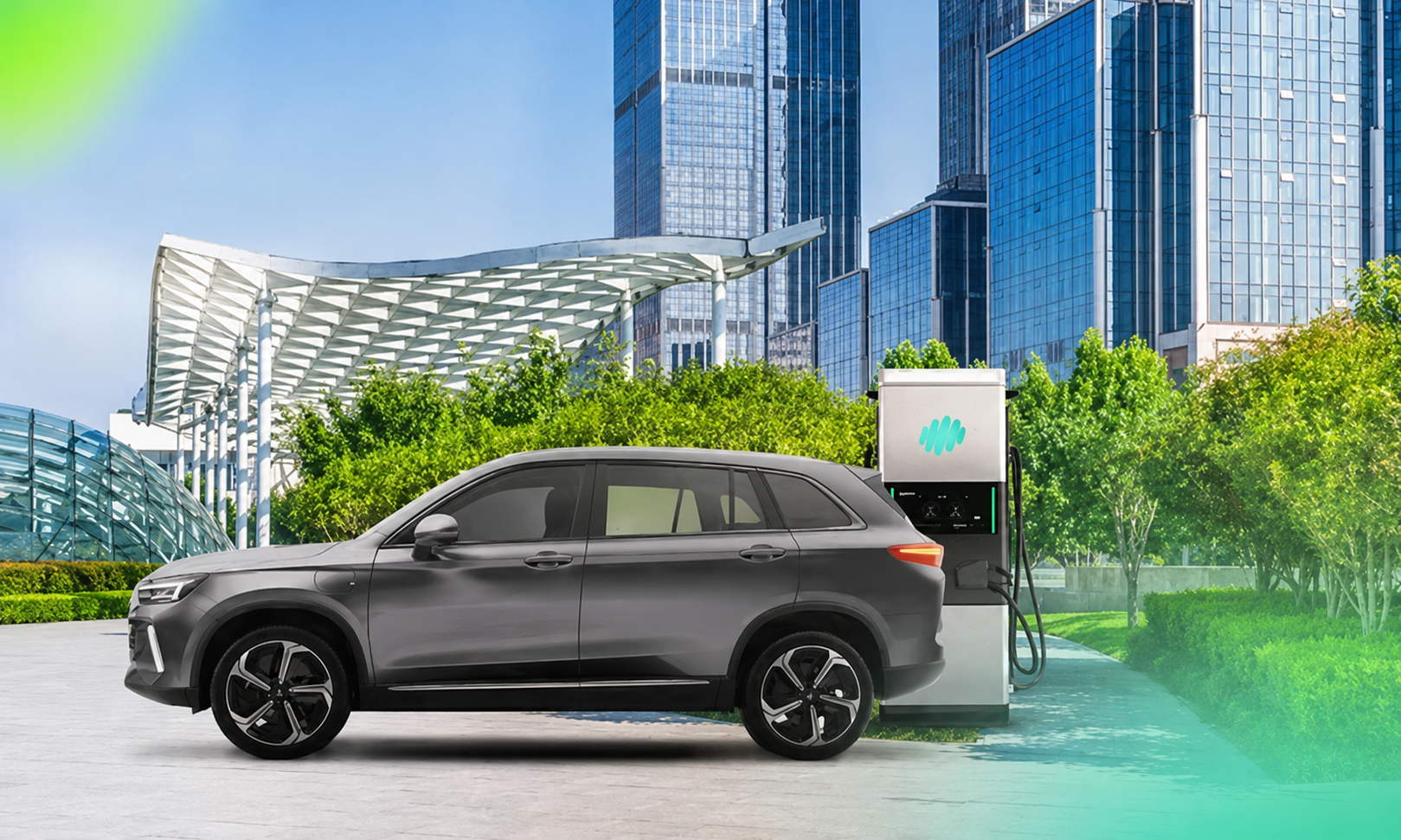
Shared systems also reduce wiring clutter in large societies and are also a better fit for visitor charging or for residents whose parking bays are far from the meter room.
What is the total cost of installing EV chargers in apartments?
Let's run the numbers for a standard driver doing 15,000 km a year.
A private 7.2 kW setup will cost about ₹65,000 upfront, (₹35,000 for a smart wall-box + ₹15,000 for a DISCOM 3-phase load upgrade + ₹15,000 for 50m of heavy-duty cabling and safety switchgear). Assuming a tariff rate of INR 7.5/unit, you spend another ₹75,000 on domestic electricity over five years. That brings your total to ₹1,40,000 for 5 years.
With a shared, society-managed setup, the RWA splits upfront hardware costs across users. Your personal buy-in for the shared infrastructure will therefore drop by around 30-40%.
Billing in shared setups will be at standard residential society for power tariffs without commercial markups. However, you must factor a small software fee into your operational budget. The software tracks exactly who plugs in, handles the accounting, and adds the cost directly to your monthly maintenance bill.
Ready to Install an EV Charger in Your Apartment?
After understanding the installation process, the next step is choosing the right charger.
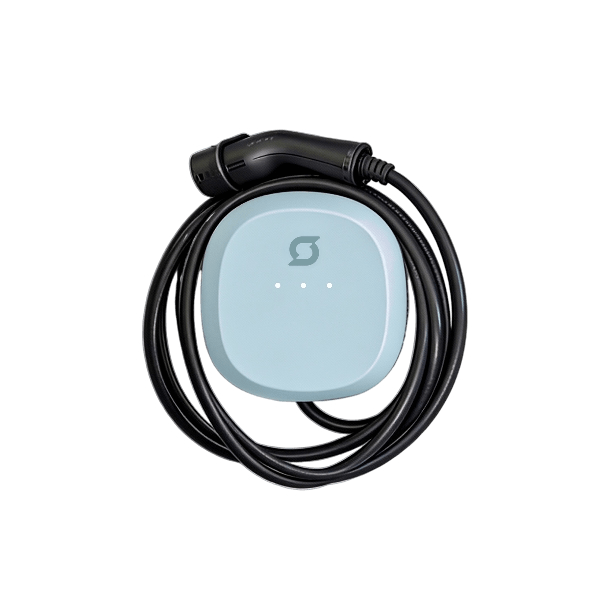
- ✓ Ideal for apartment parking with a compact, space-saving wall-mounted design.
- ✓ Smart charging controls with app connectivity, scheduling, and energy monitoring.
- ✓ Built-in electrical safety features for reliable charging in homes and housing societies.
Pros and Cons of Private and Shared setups:
Whether it’s a private, or a shared setup you are looking for, you need an EV charger that is smart and safe. The Exicom Spin Air is built exactly for this. It is a smart 7.2 kW home EV charger that fits neatly into tight apartment parking slots. It includes built-in protection against voltage spikes and earth leakage, keeping your car and the building grid safe.
You can check out the full specifications on the Exicom Spin Air product page to see how it integrates with your parking space. If you want to see how to go about starting installation, read our apartment EV charging blog for step-by-step help.
Ready to upgrade your parking spot? Fill out our installation request form to get a site assessment, or visit our official store to buy your EV charger directly.
Frequently Asked Questions
Lorem ipsum dolor sit amet, consectetur adipiscing elit, sed do eiusmod tempor incididunt ut labore et dolore magna aliqua. Ut enim ad minim veniam, quis nostrud exercitation ullamco laboris nisi ut aliquip ex ea commodo consequat. Duis aute irure dolor in reprehenderit in voluptate velit esse.
Lorem ipsum dolor sit amet, consectetur adipiscing elit, sed do eiusmod tempor incididunt ut labore et dolore magna aliqua. Ut enim ad minim veniam, quis nostrud exercitation ullamco laboris nisi ut aliquip ex ea commodo consequat. Duis aute irure dolor in reprehenderit in voluptate velit esse.
Lorem ipsum dolor sit amet, consectetur adipiscing elit, sed do eiusmod tempor incididunt ut labore et dolore magna aliqua. Ut enim ad minim veniam, quis nostrud exercitation ullamco laboris nisi ut aliquip ex ea commodo consequat. Duis aute irure dolor in reprehenderit in voluptate velit esse.
Lorem ipsum dolor sit amet, consectetur adipiscing elit, sed do eiusmod tempor incididunt ut labore et dolore magna aliqua. Ut enim ad minim veniam, quis nostrud exercitation ullamco laboris nisi ut aliquip ex ea commodo consequat. Duis aute irure dolor in reprehenderit in voluptate velit esse.
Lorem ipsum dolor sit amet, consectetur adipiscing elit, sed do eiusmod tempor incididunt ut labore et dolore magna aliqua. Ut enim ad minim veniam, quis nostrud exercitation ullamco laboris nisi ut aliquip ex ea commodo consequat. Duis aute irure dolor in reprehenderit in voluptate velit esse.
%20(1).webp)

