



Dynamic Load Balancing
What is Dynamic Load Balancing?
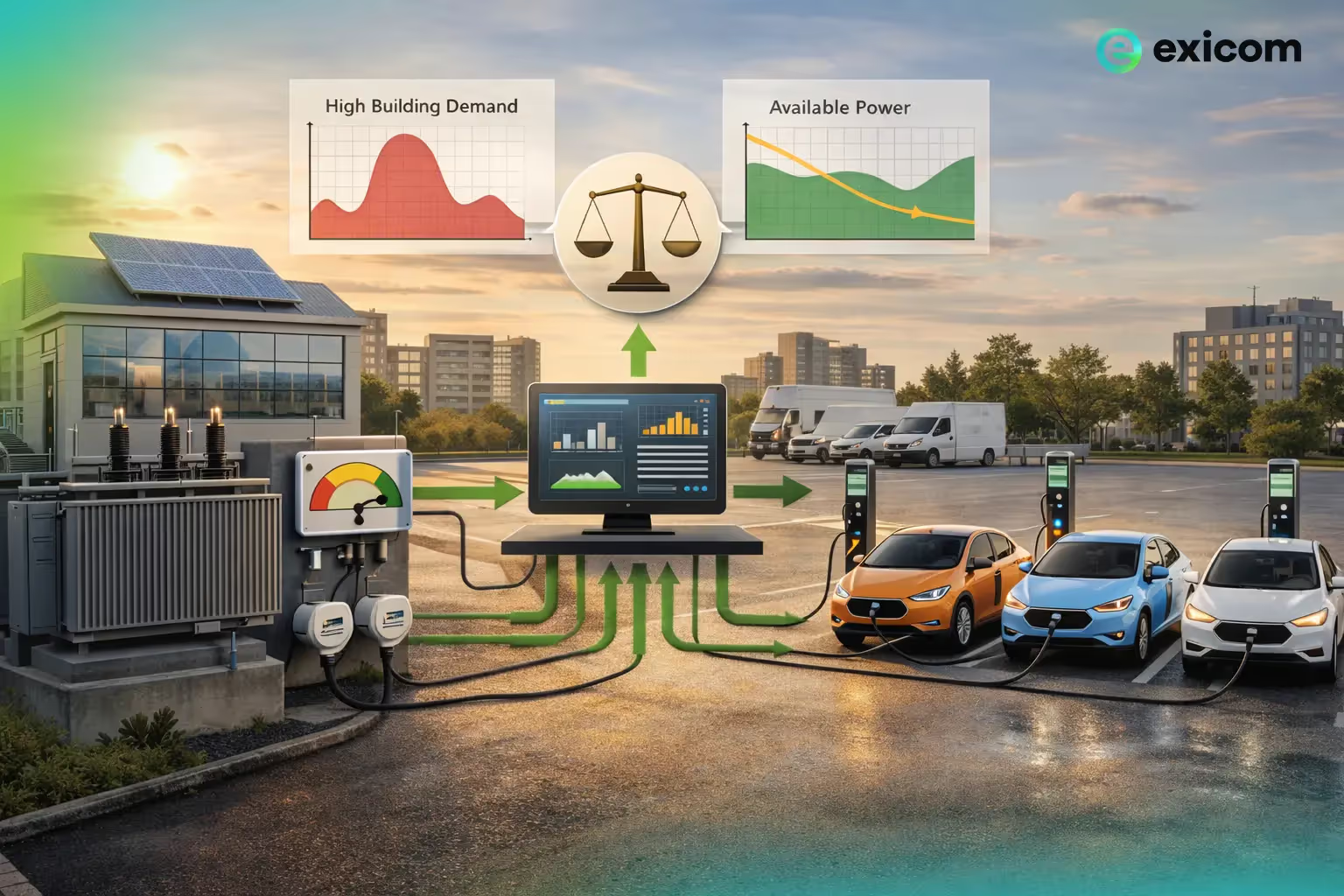
Dynamic load balancing is the real-time distribution of available electrical power across multiple loads. In EV charging, it ensures that vehicle chargers draw only the power that the building or site can safely provide at any given moment.
Unlike static load balancing, which sets fixed limits, dynamic load balancing continuously adjusts charging power based on real-time consumption data.
This capability is critical for modern charging station deployments, especially in commercial buildings, apartments, and fleet depots.
a. How it works
Dynamic load-balancing EV charger systems rely on three core inputs:
- Real-time building load data
- Maximum sanctioned or contracted electrical capacity
- Number and status of connected vehicle chargers
Sensors or smart meters measure total electricity usage. A charger management system then calculates the available spare capacity. That capacity is dynamically allocated among active vehicle chargers.
When building demand rises, charging power reduces. When demand drops, chargers ramp up automatically. All adjustments happen in seconds, without manual intervention.
This approach is often referred to as dynamic load management EV charging.
b. Key benefits
The key benefits are:
- Prevents electrical overloads and tripping
- Avoids expensive transformer or panel upgrades
- Enables higher charger density on existing infrastructure
- Improves overall energy efficiency
- Supports future scalability
Dynamic load balancing also improves compliance with grid safety standards and simplifies EV charger load calculation.
Why is Dynamic Load Balancing important in EV charging?
EV charging is a high-power, long-duration load. Multiple chargers operating simultaneously can quickly exceed a building’s capacity.
Dynamic load balancing addresses this by making EV charging flexible rather than rigid.
For commercial sites, it enables the installation of more vehicle chargers without exceeding electrical capacity. For residential buildings, it enables shared charging without sacrificing household power needs. For fleets, it ensures predictable charging without demand spikes.
Without dynamic control, sites often resort to static load balancing algorithms, which assume worst-case usage. That approach leads to underutilised infrastructure and fewer chargers than actually possible.
How do smart chargers do dynamic load balancing?
Smart chargers integrate hardware and software intelligence. Each charger communicates with a central load management system or cloud platform.
Key components include:
- Smart meters or CT sensors at the main incomer
- Embedded controllers inside vehicle chargers
- A charger management system for decision-making
- Secure communication protocols
When combined, these elements form an EV load management device ecosystem. Platforms such as Dynamic Load Management Wallbox systems exemplify this architecture in practice.
Some manufacturers also implement proprietary approaches, commonly referred to as dynamic load balancing.
How much load enhancement can be done through DLM?
Load enhancement refers to increasing the number of EV chargers or total charging capacity without increasing the sanctioned electrical load.
In most real-world deployments, dynamic load management enables:
- 30–60% more chargers on the same electrical connection
- Significant reduction in peak demand penalties
- Better utilisation of existing transformers
Actual enhancement depends on usage diversity. Offices, malls, and residential buildings benefit most, as not all chargers operate at full power simultaneously.
Dynamic load-balancing EV charger deployments often outperform static configurations by a wide margin.
What is load enhancement?
Load enhancement is the strategic optimisation of available electrical capacity. Instead of increasing supply, demand is intelligently managed.
In EV charging, load enhancement allows a site to:
- Add more vehicle chargers
- Increase charging availability
- Delay or avoid grid upgrades
It is a core outcome of advanced dynamic energy management strategies.
Load enhancement differs from application load balancing, network load balancing, or DNS load balancing, which manage digital traffic. EV charging load enhancement manages physical electrical demand, though the optimisation logic is conceptually similar to global server load balancing in IT systems.
How to do load enhancement for EV charging?
Effective load enhancement follows a structured approach.
Step 1: Assess existing electrical capacity
Analyse sanctioned load, transformer ratings, and historical demand profiles. Accurate EV charging report data improves planning accuracy.
Step 2: Install real-time monitoring
Deploy smart meters or sensors to capture live building consumption.
Step 3: Deploy smart vehicle chargers
Choose chargers that support EV charger load balancing and open communication protocols.
Step 4: Implement a load management system
A central system dynamically allocates power across chargers, based on real-time availability.
Step 5: Optimise charging policies
Time-based limits, priority rules, and power caps further enhance performance.
For homes, a load management system ensures EV charging never disrupts essential appliances. For commercial sites, enterprise-grade platforms enable scalable growth.
Static vs Dynamic Load Balancing in EV Charging
Before comparing these two approaches, it helps to pause and see how they actually behave in practice. Same objective. Very different outcomes.

