



Level 2 EV Charging
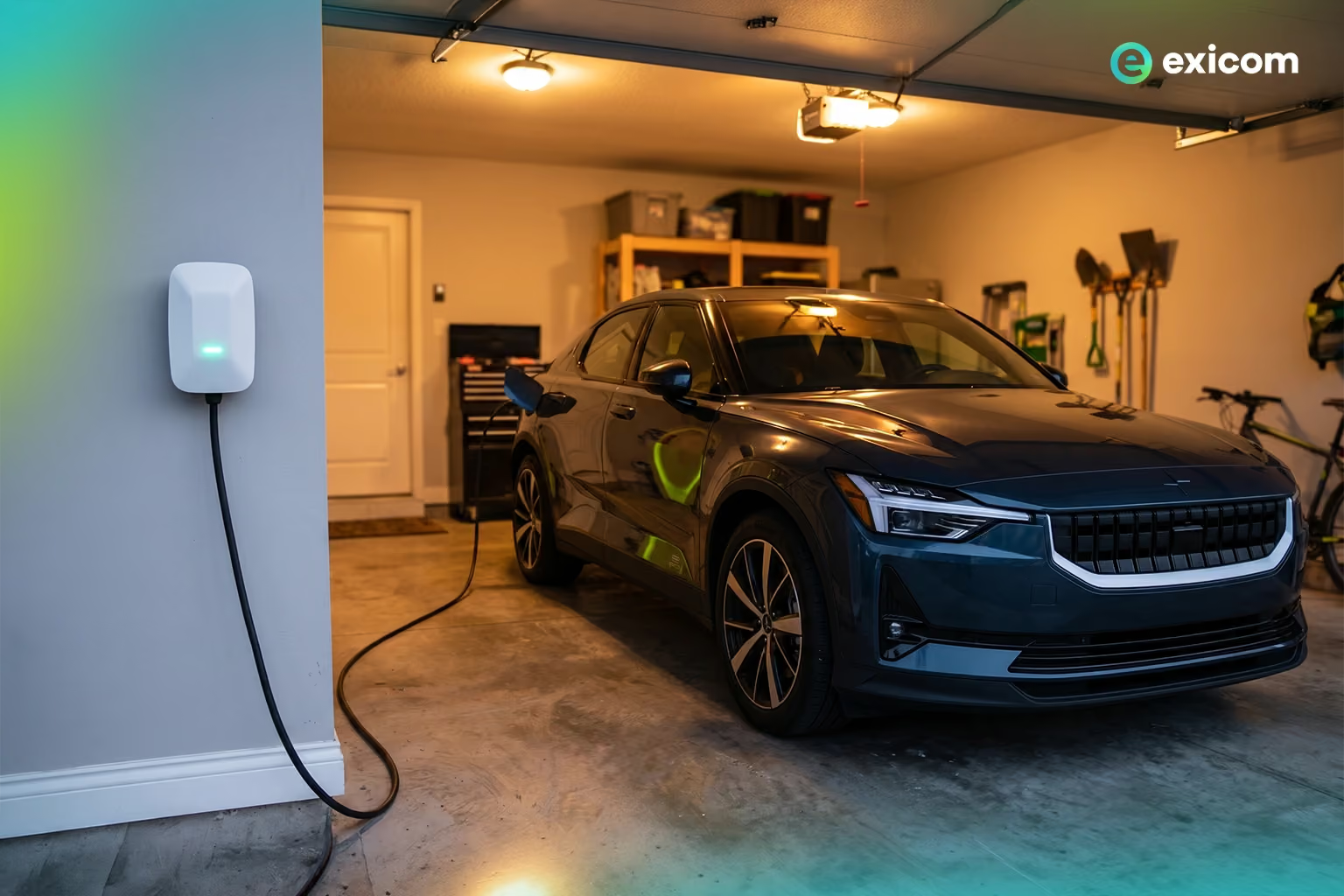
What is Level 2 EV charging?
Second level charging can be defined as a form of charging electric cars that makes use of a 240 volt or 208 volt alternating current (AC) power source. It enables faster charging than what a regular household socket would allow, giving anywhere between 3 kW to 22 kW of power. Such efficacy qualifies it as the global standard for EV infrastructures.
Expanded Explanation
For many electric vehicle owners and commercial fleet operators, Level 2 charging offers the perfect compromise between installation expenses, energy efficiency, and everyday practicality. To completely understand its usefulness, it's beneficial to inquire: what is Level 1 charging ? Level 1 employs a typical 120V home outlet (in 110V/120V regions), providing merely 3 to 5 miles of range for each hour of charging. It is a gradual, inactive method. In sharp contrast, Level 2 functions at a significantly elevated electrical capacity, generally providing 20 to 75 miles of range each hour. This rate enables a completely drained electric vehicle battery to fully recharge overnight.
From a technical engineering perspective, the key feature of Level 2 is the Level 2 charging voltage along with the associated amperage.North American systems rely on two-phase 208V to 240V connections. On a global scale, in countries like India and Europe, it utilizes one-phase 230V or three-phase 400V wiring. The exact what is level 2 EV charging kw output ranges from a minimum of 3.3kW to a maximum of 22kW. The key aspect about level 2 chargers (EVSE) is that they give AC electricity to the car, but the battery stores DC energy. The vehicle's internal Onboard Charger (OBC) serves as the link, transforming the incoming AC power into DC. The OBC serves as the final limitation; if a car's OBC is rated at 7.2 kW, it will draw precisely 7.2 kW, regardless of being plugged into a 22 kW Level 2 charger.
How It Works
The transmission of electricity from the regional grid to the vehicle depends on a tightly controlled digital exchange and strong power electronics.
- Power Grid & Panel: Electricity is supplied by the local utility company via a dedicated, high-capacity circuit breaker located in the main electrical panel of the building.
- Level 2 EVSE (Charger): The Electric Vehicle Supply Equipment (EVSE) serves as the safety barrier. It interacts with the vehicle's Battery Management System (BMS) to establish a secure connection and confirm capacity prior to enabling high-voltage current flow.
- EV Onboard Charger (OBC): The vehicle receives the AC power. The internal OBC rectifies this AC power into DC power.
- DC Battery Pack: The converted DC energy is stored chemically within the vehicle's lithium-ion battery cells for driving.
Types / Variants
Understanding where Level 2 sits in the overarching charging ecosystem is critical for infrastructure planning and real estate development.
Real-world Use Cases
- Consumers:Level 2 is the undisputed foundation of home charging. EV owners connect their cars after work, benefiting from reduced off-peak nighttime electricity costs, and wake up each morning with their vehicles fully charged, completely alleviating range anxiety.
- Businesses: Retail outlets, hotel chains, and cinemas utilize 7.2 kW or 11 kW commercial chargers to draw in EV users. This "destination charging" approach not only offers a high-end service but also significantly enhances customer dwell time and retail expenditure.
- Fleets / Infra Players: Last-mile delivery fleets and corporate transportation services utilize sets of robust Level 2 chargers at their parking facilities. As commercial delivery vans usually remain stationary overnight, AC charging is a very economical method to replenish energy without hastening battery wear from frequent DC fast charging.
When assessing infrastructure investments, examining the **cost of Level 1 versus Level 2 charging** and the particular **duration of Level 2 charging** indicates that the operational economics strongly support Level 2 for regular, continuous usage.
Note: Efficiency losses during the OBC's AC-to-DC conversion process typically range from 5% to 10%. Actual charging speed remains constrained by the maximum acceptance rate of the vehicle's internal hardware.
India Context
As of mid-2026, electric mobility adoption in India has reached unprecedented scale across passenger vehicles and commercial logistics, making widespread Level 2 AC infrastructure critical.
- Cost (₹): The hardware expense for a smart, BIS-certified 7.2 kW Level 2 AC charger in India varies between ₹35,000 and ₹60,000 based on networking functionalities. Residential electricity rates differ from state to state but generally range from ₹5 to ₹8 per unit (kWh). Charging a typical 40 kWh passenger electric vehicle at home costs about ₹250 to ₹320, resulting in running expenses that are much lower than those of internal combustion engine vehicles.
- Govt Policy: The consolidated guidelines from the Ministry of Power clearly classify EV charging as a service, simplifying the licensing procedure. States such as Haryana (which includes tech centers like Gurugram) and Maharashtra have incorporated Level 2 charger requirements into their local building regulations for new housing communities.
- Market Adoption: 7.2 kW Type 2 AC chargers dominate the Indian B2C market. Real estate developers now mandatorily include electrical load provisioning for Level 2 chargers in residential basement parking, supporting popular models from Tata, Mahindra, and MG.
Business / Industry Section
- Fleet Operators: For logistics firms operating electric Light Commercial Vehicles (eLCVs), Level 2 offers reliable, stress-free overnight charging. Employing 7.2 kW or 11 kW AC chargers instead of DC fast chargers for regular use allows fleet operators to safeguard battery chemistry and significantly lower initial grid upgrade capital expenses (Capex).
- Charge Point Operators (CPOs): CPOs utilize connected Level 2 chargers that are compatible with OCPP (Open Charge Point Protocol). These units are significantly less expensive to set up and upkeep compared to Level 3 chargers. They produce consistent, dependable income in areas where drivers leave their vehicles for long durations, like office complexes or commuter transit centers.
- Enterprises: Major corporate campuses set up vast arrays of Level 2 charging stations. This acts as an essential employee retention benefit while also meeting corporate ESG (Environmental, Social, and Governance) carbon reduction objectives.
Challenges + Solutions
Implementing Level 2 infrastructure on a commercial scale presents unique electrical and logistical challenges that necessitate intelligent engineering approaches.
Final Thought
With the automotive sector continuously moving away from fossil fuels, Level 2 charging has become the essential basis of the emerging energy economy. By effortlessly converting unused parking duration into productive charging time, it addresses the primary obstacle to EV adoption: range anxiety. Level 2 is more than just a charging standard; it is the essential, foundational framework supporting sustainable worldwide transportation.

