


DISCOM
Distribution Company responsible for supplying local electricity to your home.
.avif)
Arjun and Meera have been friends since sixth grade. Life took them to opposite ends of the country. Today, Arjun lives in Chennai and Meera in Delhi. One evening, while catching up over a call, the conversation drifted to their EVs. They drive the same model, charge them almost every night, and cover roughly the same distance every week.
Then Meera mentioned her electricity bill.
There was a pause.
"Wait... why are you paying so much more than I am?"
Same car. Same battery. Almost the same routine. Yet one of them was spending noticeably more to charge their EV.
If you've ever looked at your charging cost and wondered the same thing, you're in the right place.
The running cost of an EV isn't printed anywhere on the car. It's decided by two things the showroom rarely talks about: the electricity tariff where you live, and how much your household already draws every month.
Indian homes are billed in slabs. The more units you use in a month, the higher the rate on the units at the top. Those slab rates aren't the same everywhere - they're set state by state, and often DISCOM by DISCOM. So the same 40-unit overnight top-up can land in a comfortable mid-slab in one city and get taxed at the steepest rate in another. In some states the upper residential slab sits well under ₹3 a unit; in others it climbs past ₹14. Over months of daily charging, that small difference in tariffs can turn into a noticeable increase in your annual running cost.
“Subsidies can reduce the cost of buying an EV, but they don't decide what you'll pay to charge it every month.”
A purchase subsidy - a state EV-policy incentive, a road-tax waiver, a registration discount - lowers what you pay to buy the car, once. Your per-unit electricity tariff decides what you pay to run it, every night for years. A state can be generous on the first and expensive on the second. So two owners can drive off with very different sticker prices and still end up with charging bills that look nothing alike. When you're comparing "how affordable is an EV here," it's worth separating the one-time discount from the recurring cost - because only one of them shows up on next month's bill.
Once you know your per-km cost, there's a second lever most people never touch: the clock.
Many DISCOMs now price electricity by the time of day. Power drawn in the evening - right when you get home, lights on, AC running, dinner cooking, the whole neighbourhood doing the same - is billed at peak rates. The same units drawn late at night, once demand drops, are billed lower. It's the identical energy going into the identical battery. The only thing that changed is when you pulled it from the grid.
Plug in at 7 pm out of habit, and you're charging through the most expensive window of the day. Move that same charge past the off-peak cutoff, and the meter counts slower for the same result by morning.
There's a quieter reason timing matters, and it's baked into how slabs work. Because billing is progressive, your EV's units don't sit in their own neat category - they stack on top of everything else your household used that month.
So the first units of a charge might land in a mid slab, but a big overnight top-up keeps piling units on - and the last stretch is what tips you into the highest, priciest slab. The tail end of every deep charge is the most expensive part of it. Which is why when and how much you charge quietly shape the bill together.
"Knowing it's cheaper at 11 pm doesn't mean anyone's awake to plug in at 11 pm "
And that's the real catch. The savings are sitting right there in the off-peak window, and almost nobody claims them - not because they don't understand the tariff, but because it's 11 pm and they're asleep. Nobody wants to set an alarm, walk down to the parking, and plug in at the exact hour the rate drops. So the car goes in at 7 pm when you get home, and you quietly pay peak rates all night for a saving you were fully aware of.
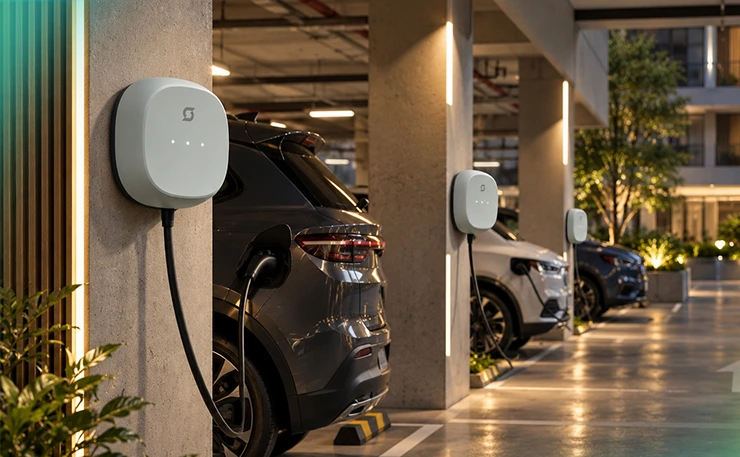
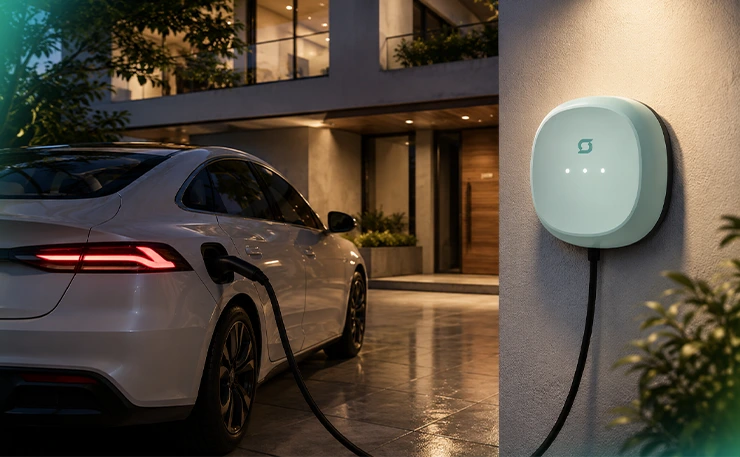
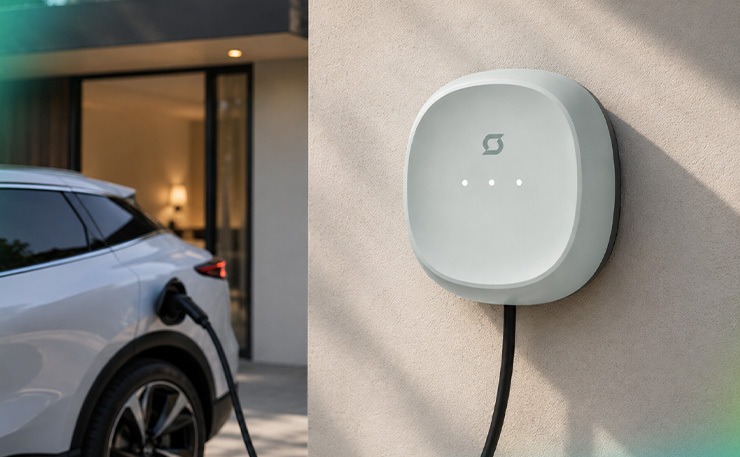
With the Spin Air, you plug in whenever you actually get home. In the Spin Control app, you set the charging window to begin once your off-peak rate kicks in. The car sits connected but idle until then; the charger wakes it at the cheaper hour and finishes overnight, so it's ready by morning. You get the off-peak rate every single night without ever having to remember it — the charger remembers 11 pm so you don't.
It handles the other half of the problem too. Its Dynamic Load Management keeps the charging draw within your home's sanctioned load, easing back automatically when the AC, geyser and everything else spike, so a scheduled overnight charge doesn't trip your connection or push you into penalty territory.
None of this changes what you drive or how far. It just turns "I really should charge off-peak" into something that already happened while you slept. Your state and your car set the baseline. The clock decides the rest. And a charger that handles the switch on its own is what quietly closes the gap between the cheaper rate you knew about and the one you actually paid..
Efficient Charging. Everyday.
Compact. Smart. Reliable. 7.4 kW charging solution for homes, offices and more.
Explore Product →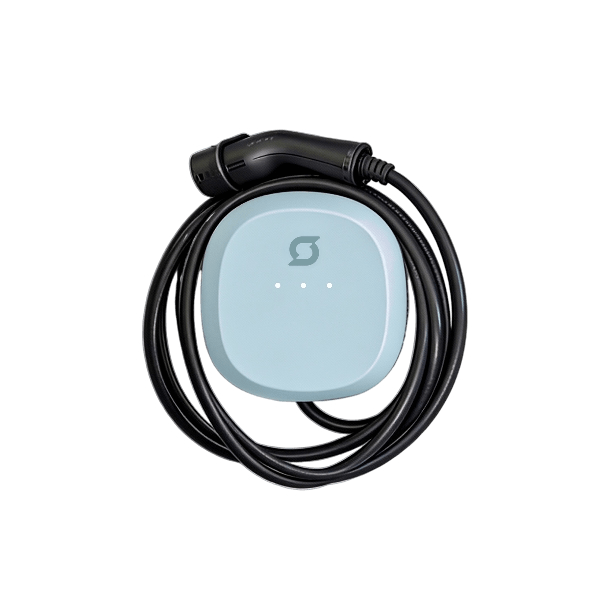
Lorem ipsum dolor sit amet, consectetur adipiscing elit, sed do eiusmod tempor incididunt ut labore et dolore magna aliqua. Ut enim ad minim veniam, quis nostrud exercitation ullamco laboris nisi ut aliquip ex ea commodo consequat. Duis aute irure dolor in reprehenderit in voluptate velit esse.
Lorem ipsum dolor sit amet, consectetur adipiscing elit, sed do eiusmod tempor incididunt ut labore et dolore magna aliqua. Ut enim ad minim veniam, quis nostrud exercitation ullamco laboris nisi ut aliquip ex ea commodo consequat. Duis aute irure dolor in reprehenderit in voluptate velit esse.
Lorem ipsum dolor sit amet, consectetur adipiscing elit, sed do eiusmod tempor incididunt ut labore et dolore magna aliqua. Ut enim ad minim veniam, quis nostrud exercitation ullamco laboris nisi ut aliquip ex ea commodo consequat. Duis aute irure dolor in reprehenderit in voluptate velit esse.
Lorem ipsum dolor sit amet, consectetur adipiscing elit, sed do eiusmod tempor incididunt ut labore et dolore magna aliqua. Ut enim ad minim veniam, quis nostrud exercitation ullamco laboris nisi ut aliquip ex ea commodo consequat. Duis aute irure dolor in reprehenderit in voluptate velit esse.
Lorem ipsum dolor sit amet, consectetur adipiscing elit, sed do eiusmod tempor incididunt ut labore et dolore magna aliqua. Ut enim ad minim veniam, quis nostrud exercitation ullamco laboris nisi ut aliquip ex ea commodo consequat. Duis aute irure dolor in reprehenderit in voluptate velit esse.