


Is Your Home EV Charger Suitable for the Indian Monsoon?
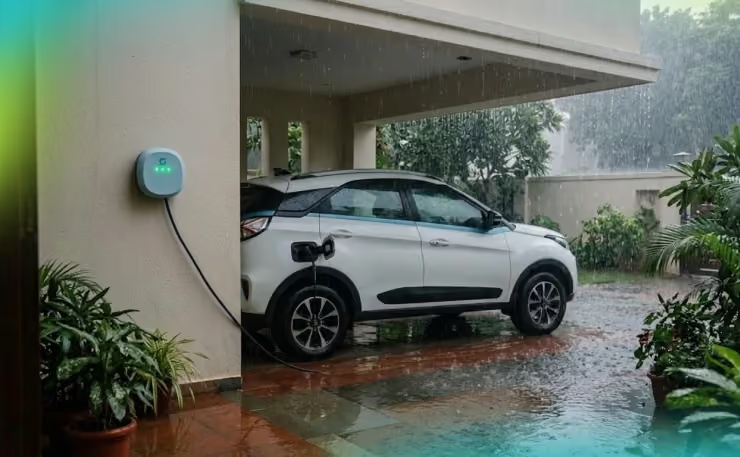
What would you do?
Your apartment’s basement is flooded, and your EV’s battery is 30%. You need to leave tomorrow morning.
Would you
- Charge anyway
- Wait
- Use another charger
If you paused even for a second, you're not alone. For a growing number of Indian EV owners, this is the exact mental dilemma they face on a heavy monsoon night. When the sky opens up and streets turn into temporary water parks, plugging a high-voltage machine into your home's grid can make you pause.
Is it safe to charge an EV in the rain? That depends entirely on your charger and your home's earthing, which is exactly what this guide walks through. EV charging in rain isn't the gamble it feels like, once you know what to check.
EV charging safety awareness has not kept pace with adoption
India's EV adoption has grown faster than owner education has kept up with it, and that gap is exactly where questions like this one come from. In 2025 alone, total EV registrations crossed 2.3 million units. By mid-2026, EV penetration touched a solid 11.43%. But here’s the reality check: roughly half of Indian EV owners still don't have access to reliable, dedicated home charging setups - which means many are charging through shared or improvised wiring, exactly the setup that makes EV charging in the monsoon risky.
Most current EV owners are the first generation in their household to face this decision
Part of the reason is simple. Most current EV owners are the first generation in their household to face this decision. Nexons, Windsors, BE 6s, Creta Electrics, Atto 3s, they're a common sight now, parked in basements and stilt parking across every Indian city. But there's no uncle who's "been through this before," no inherited wisdom on charging safety, because the category itself is only a few years old here. So most owners default to trusting whatever charger came bundled with the car, without ever really asking whether it's built for Indian monsoon conditions.
The EV battery packs are liquid-cooled and built to meet IP67 standards for dust and water resistance: a reminder that EV charger IP rating matters just as much for the charger as it does for the battery. That's a higher bar than what's expected of the charger itself - chargers are built to IP66, since they face direct water jets rather than submersion. They survive brutal tests, including 16-foot drops and simulated deep-water drives. The battery pack is highly secure. The risk lies in the charging environment itself.
Old earthing and a flooded basement turn a routine charge into a real risk
Earthing is, at its simplest, a safety exit route for stray electricity. Once water enters the picture, even minor flaws in a building's residential grid can escalate quickly.
Home EV charger safety starts with earthing. CEA regulations under Schedule-XVII mandate that EV home chargers use a TN earthing system compliant with IS 732, along with IS 3043 grounding practices, and require neutral-to-earth voltage to stay strictly under 10V. If that voltage drifts upward, a well-designed EV charger detects the imbalance, throws an error, and pauses the session before anything becomes unsafe.
Earth rods corrode gradually, and a basement holding onto monsoon moisture only accelerates that process. Add standing water, which conducts electricity with almost no resistance, and a fault that would otherwise have been harmless suddenly has somewhere unsafe to travel.
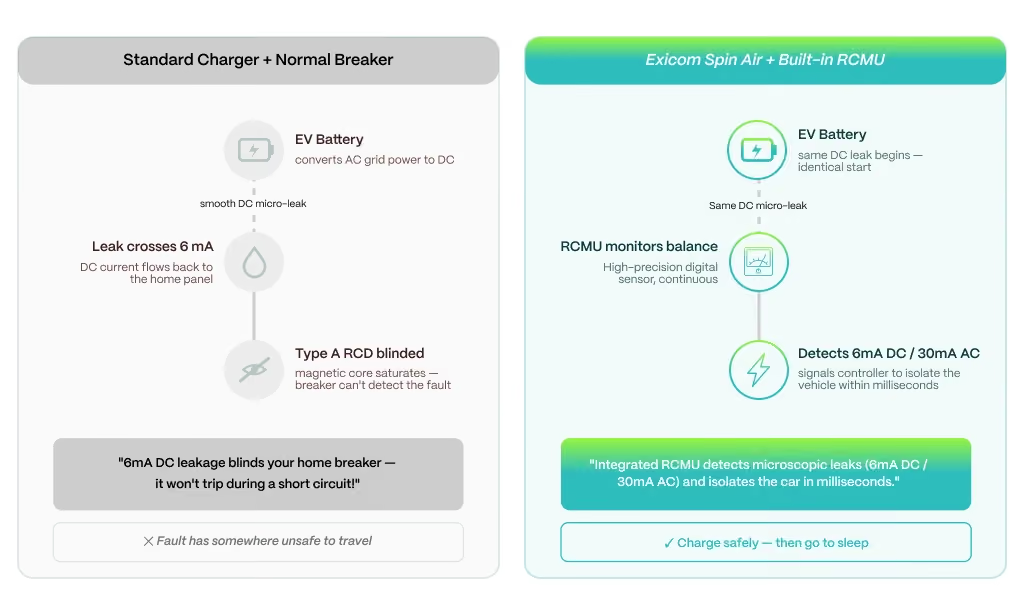
The harder problem is a micro-leak. Standard home panels rely on Type A Residual Current Devices to catch conventional AC leaks. But an EV charger converts AC grid power into DC for the battery, which can produce a smooth DC leakage current, and once that leak crosses 6 mA, it can effectively saturate and blind a standard Type A RCD's magnetic core. In that scenario, your home breaker may fail to trip even during a genuine short circuit.
This is why properly engineered EV chargers use an integrated Residual Current Monitoring Unit instead. Unlike an RCD, which simply breaks a circuit, an RCMU is a high-precision digital sensor that continuously monitors current balance. The moment it detects a 6 mA DC or 30 mA AC leak, it signals the charger's controller to isolate the vehicle within milliseconds, a level of protection required under IEC 61851-1 internationally and IS 17017-1 in India.
Efficient Charging. Everyday.
Spin Air 2 AC Charger
Compact. Smart. Reliable. 7.4 kW charging solution for homes, offices and more.
Explore Product →- ✓ 7.4 kW Power Output
- ✓ Smart & Connected
- ✓ Safe & Reliable
- ✓ Compact Wallbox Design
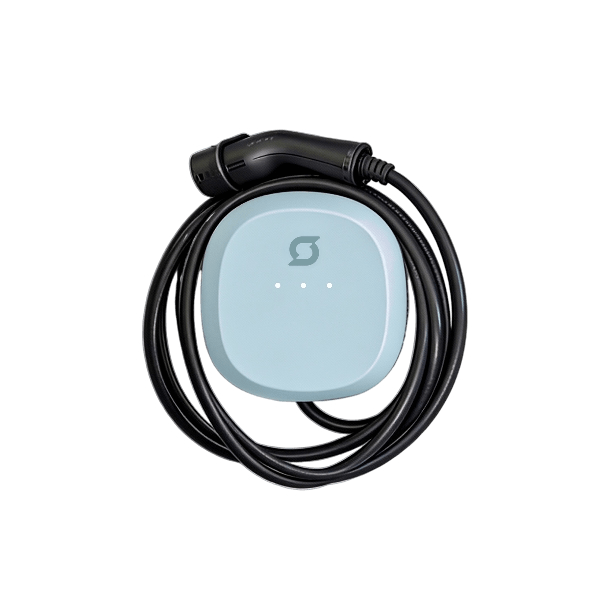
IP rating is worth understanding properly here: it indicates how well a device resists dust and water, and IP66 specifically means protection against water jets from any direction, which is the standard a charger installed in a flood-prone basement actually needs. Surge and over-voltage protection guard against the voltage spikes that are common during monsoon storms.
And one habit worth retiring entirely: never run an EV charger off an extension board. It isn't rated for sustained high current over 6–8 hours, and it carries none of the fault protection a dedicated circuit provides. International standards like IEC 61851 and the connector standard IEC 62196 build in requirements around exactly this kind of protection, and India's own norms are modeled closely on them.
Indoor or outdoor: your parking spot changes the whole risk
Before you run the checklist, it's worth knowing which threat you're actually facing - because "covered parking" and "safe" aren't the same thing, and where your charger sits decides what the monsoon does to it.
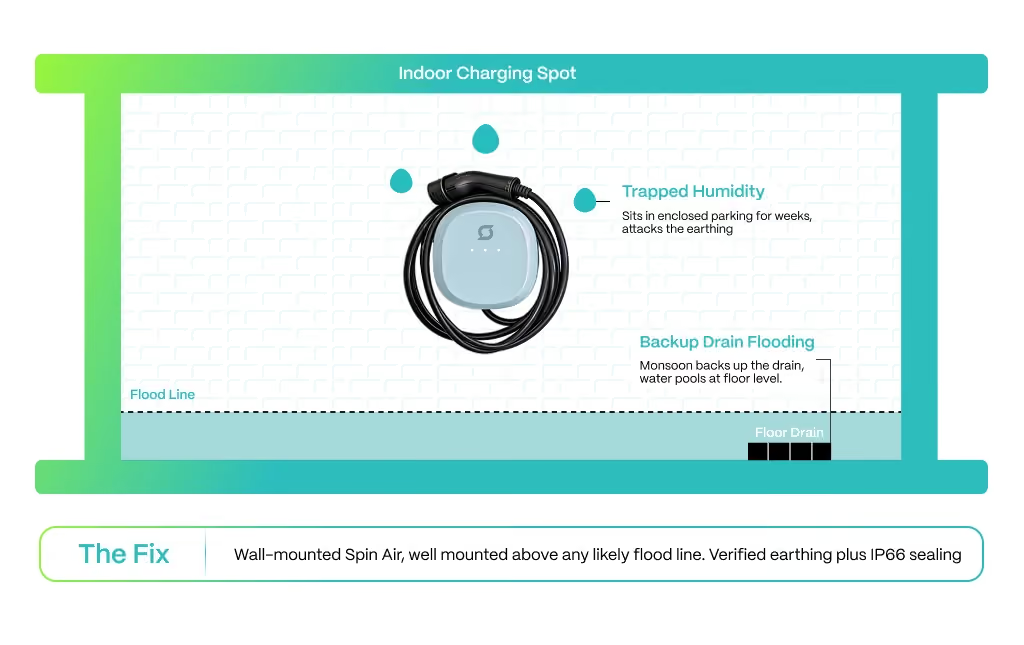
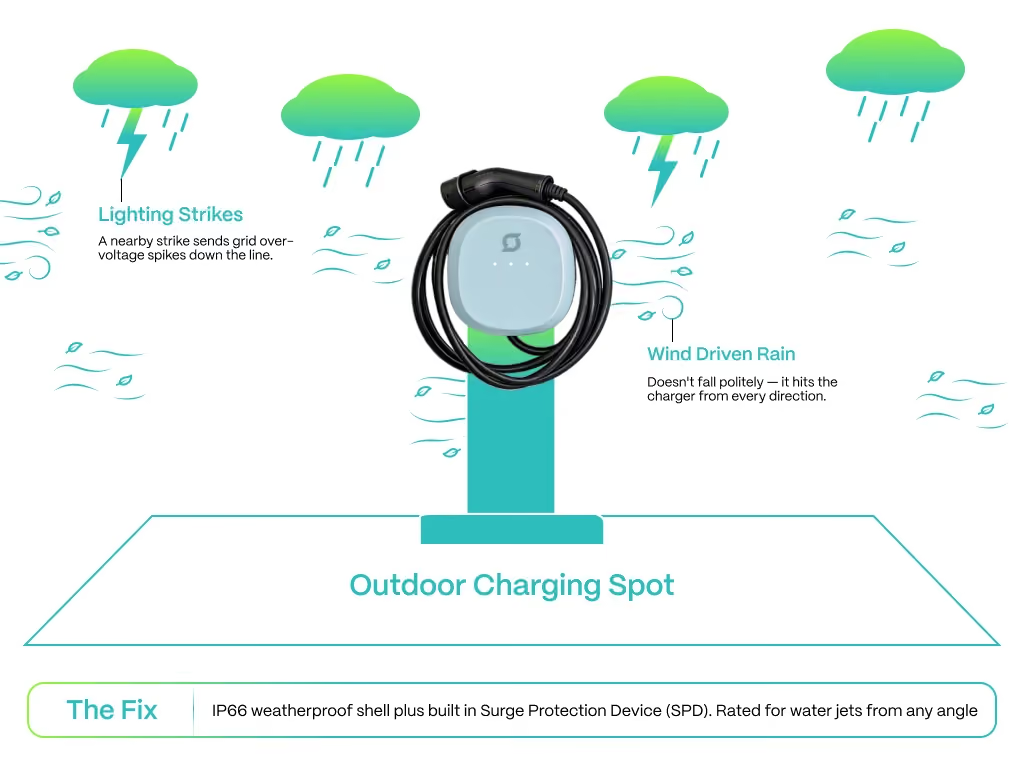
Spin Air was built to clear both bars - the sealing for jets from any angle, the surge protection for the storms - so the honest answer holds whether your parking is three floors down or wide open to the sky.
EV Charging Safety Tips - The Monsoon EV Charging Checklist Every Owner Should Maintain
Once you know what to actually look for, inspecting your own setup takes a few minutes.
Exicom's Spin Air was engineered around exactly this checklist: IP66 sealing, integrated ground fault detection, surge protection, and load balancing for homes running more than one EV - making it a genuinely waterproof EV charger for India's conditions, built specifically for electric vehicle charging in rain-heavy months. There's nothing dramatic about it. It simply ticks every box above, properly. So the next time your basement floods and your battery reads 30%, the answer isn't a gamble anymore. It's simply: charge, and go to sleep.
Frequently Asked Questions
Lorem ipsum dolor sit amet, consectetur adipiscing elit, sed do eiusmod tempor incididunt ut labore et dolore magna aliqua. Ut enim ad minim veniam, quis nostrud exercitation ullamco laboris nisi ut aliquip ex ea commodo consequat. Duis aute irure dolor in reprehenderit in voluptate velit esse.
Lorem ipsum dolor sit amet, consectetur adipiscing elit, sed do eiusmod tempor incididunt ut labore et dolore magna aliqua. Ut enim ad minim veniam, quis nostrud exercitation ullamco laboris nisi ut aliquip ex ea commodo consequat. Duis aute irure dolor in reprehenderit in voluptate velit esse.
Lorem ipsum dolor sit amet, consectetur adipiscing elit, sed do eiusmod tempor incididunt ut labore et dolore magna aliqua. Ut enim ad minim veniam, quis nostrud exercitation ullamco laboris nisi ut aliquip ex ea commodo consequat. Duis aute irure dolor in reprehenderit in voluptate velit esse.
Lorem ipsum dolor sit amet, consectetur adipiscing elit, sed do eiusmod tempor incididunt ut labore et dolore magna aliqua. Ut enim ad minim veniam, quis nostrud exercitation ullamco laboris nisi ut aliquip ex ea commodo consequat. Duis aute irure dolor in reprehenderit in voluptate velit esse.
Lorem ipsum dolor sit amet, consectetur adipiscing elit, sed do eiusmod tempor incididunt ut labore et dolore magna aliqua. Ut enim ad minim veniam, quis nostrud exercitation ullamco laboris nisi ut aliquip ex ea commodo consequat. Duis aute irure dolor in reprehenderit in voluptate velit esse.