


EV Charging for New Public Sites: Guide for Planners
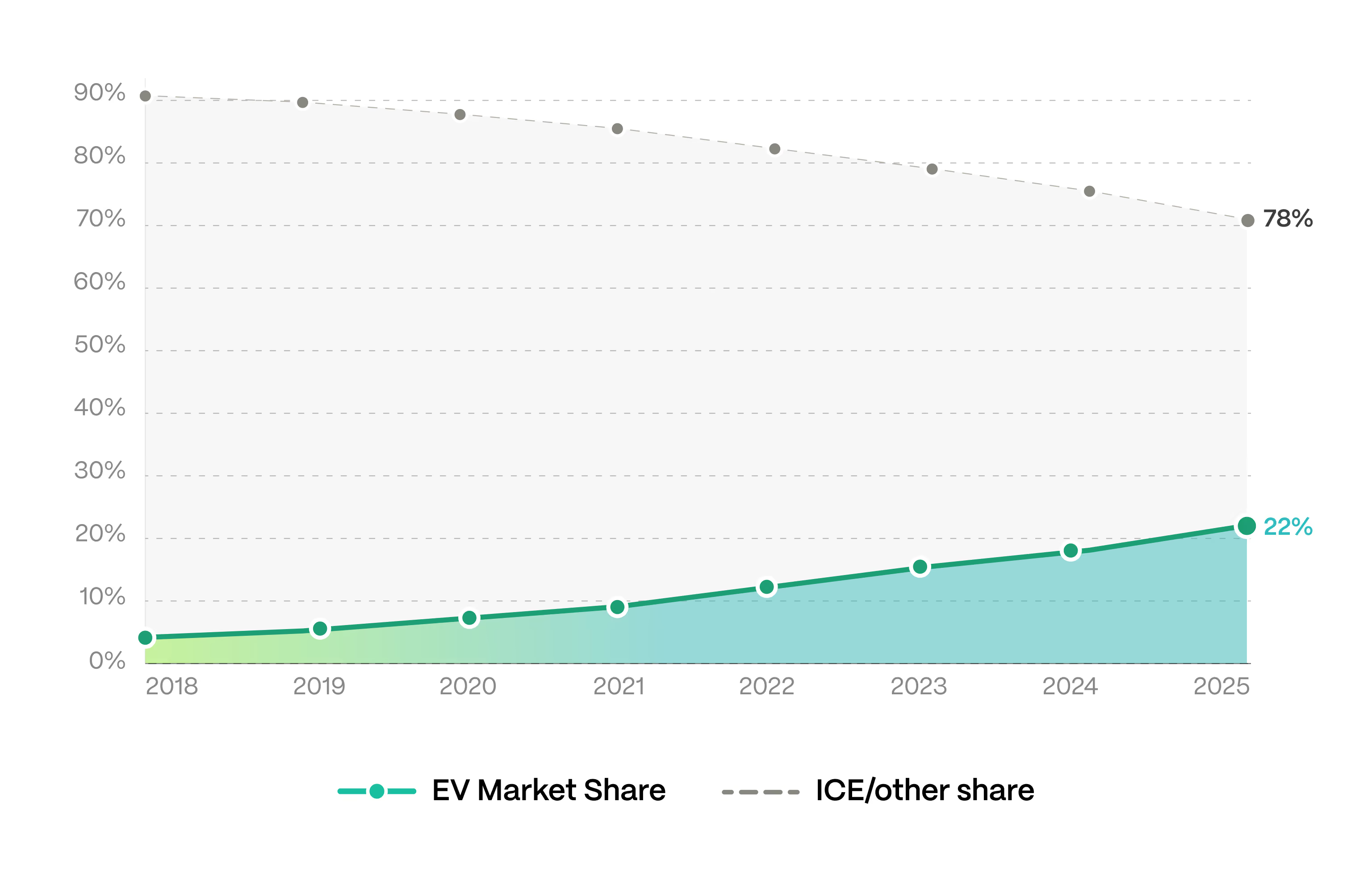
20 million. That’s the number of EVs that were sold in 2025, 22% of total vehicle sales in that year. The current sales in 2026 have already crossed 17 million worldwide, India alone contributing 2 million. In a few years, it won’t be surprising if every 3rd vehicle on the road is an EV. And as the number of EVs grows, so does the demand for EV charging.
The demand for EV charging hubs is increasing
Things are changing and they are changing fast. EV Charging hubs are becoming a normal part of commercial parking, fleet operations, and community infrastructure. While public chargers have already crossed 5 million worldwide, and around 30,000 in India, it still needs to expand much faster to keep up with vehicle growth. In other words, EV charging infrastructure is becoming a deployment speed problem, not a future demand one.
AC charging is a good option for homes and other locations that permit overnight or around 3-4 hours of charging time. However, large-scale vehicle management needs quicker options, which is why DC fast charging is used commercially in EV charging stations, but it often runs into problems, especially in the building and retrofitting stage.
EV charging hubs are impacted by 3 things
The difficulty in building a charging hub is rarely in the EV charger itself. The friction sits around the charger: utility approval, available space, and uncertainty about utilization. The following 3 issues often appear together, and each one makes the next decision more difficult.
1. Getting necessary grid approvals is tedious
DC fast charging increases electrical demand quickly. Even for commercial sites that support 24*7 lighting, lifts, and other such big loads, a much larger sanctioned supply is needed once fast charging is added. That creates a multi-step approval process with utilities, design teams, and site owners, and the work often slows down because each party is managing different constraints. The issue is not just the approval timeline and fragmented management. It is also the mismatch between what a site wants to deploy and what the grid can realistically provide, which is why, even an approval doesn’t guarantee success.
2. Dense urban areas might not have space for new utilities
Retrofit sites often have limited space for additional electrical rooms, longer cable runs, or oversized civil works. That means the site may have demand but not the physical space to support a large EV charging layout. Constrained parking geometry, shared drive lanes, and existing underground utilities are some of the things rhat reduce flexibility.
This constraint matters because the first charger is usually the hardest one to place. If the installation requires a major rework of bays, conduits, or circulation paths, the operator may postpone the project or reduce scope.
3. Utilization might be quite non-uniform
Concerns around utilization and ROI is the primary deterrent of most EV charging infrastructure investors. Some sites fill only in the evening. Some mixed-use properties have fluctuated demand across the day. Some community sites serve EVs, ICE vehicles, and non-vehicle purposes in the same bay pattern. That makes it difficult for a new operator to know whether the EV charger will run often enough to recover the investment.
This is why low-stake sites need flexible infrastructure. The operator should be able to start with a smaller deployment, observe demand, and add capacity only when the data supports it.
Therefore, the first few EV chargers in a charging hub should be treated less like a final infrastructure decision and more like an evidence-gathering step that can validate price points, dwell time, and repeat traffic.
And this would need better-fit EV chargers.
EV charging equipment must be compact and dynamic
Compact EV charging hardware reduces the civil burden on the site, and dynamic power sharing reduces the risk of locking capital into unused capacity.
Slimmer EV chargers are easier to install and maintain
A slimmer EV charger is better suited to sites that need to preserve circulation, protect a premium parking layout, or start with a single installation before committing to a larger hub. It can reduce how much bay space is sacrificed, how much conduit work is needed, and how disruptive the installation. For new CPOs, parking or community charging operators testing demand, this lower footprint makes the project easier to approve internally and easier to adapt later.
Ring Topology enables power management for both high and low utilization
Low-utilization sites start difficult because they need commercial credibility before they need high absolute power. Oversized systems can create the wrong economics: too much capex, too much upstream planning, and too much capacity sitting idle. EV charging topology, which in simple terms means how chargers are connected with each other, can be used very intelligently here. In the case of ring topology, two EV chargers can work together as one coordinated system when the site needs more power.
How is this useful?
Let’s take an example of our product Slim 60.
In standalone mode, this EV charger delivers up to 60 kW. When paired, the system scales to 120 kW through charger-to-charger boost mode. Now, a CPO does not need to choose between a small pilot and a large final build. The site can begin with one unit, prove utilization, and then connect a second unit when high demand is seen. The additional charger is not wasted if demand remains low, because the system still operates in standalone mode.
The Scalable Power Path
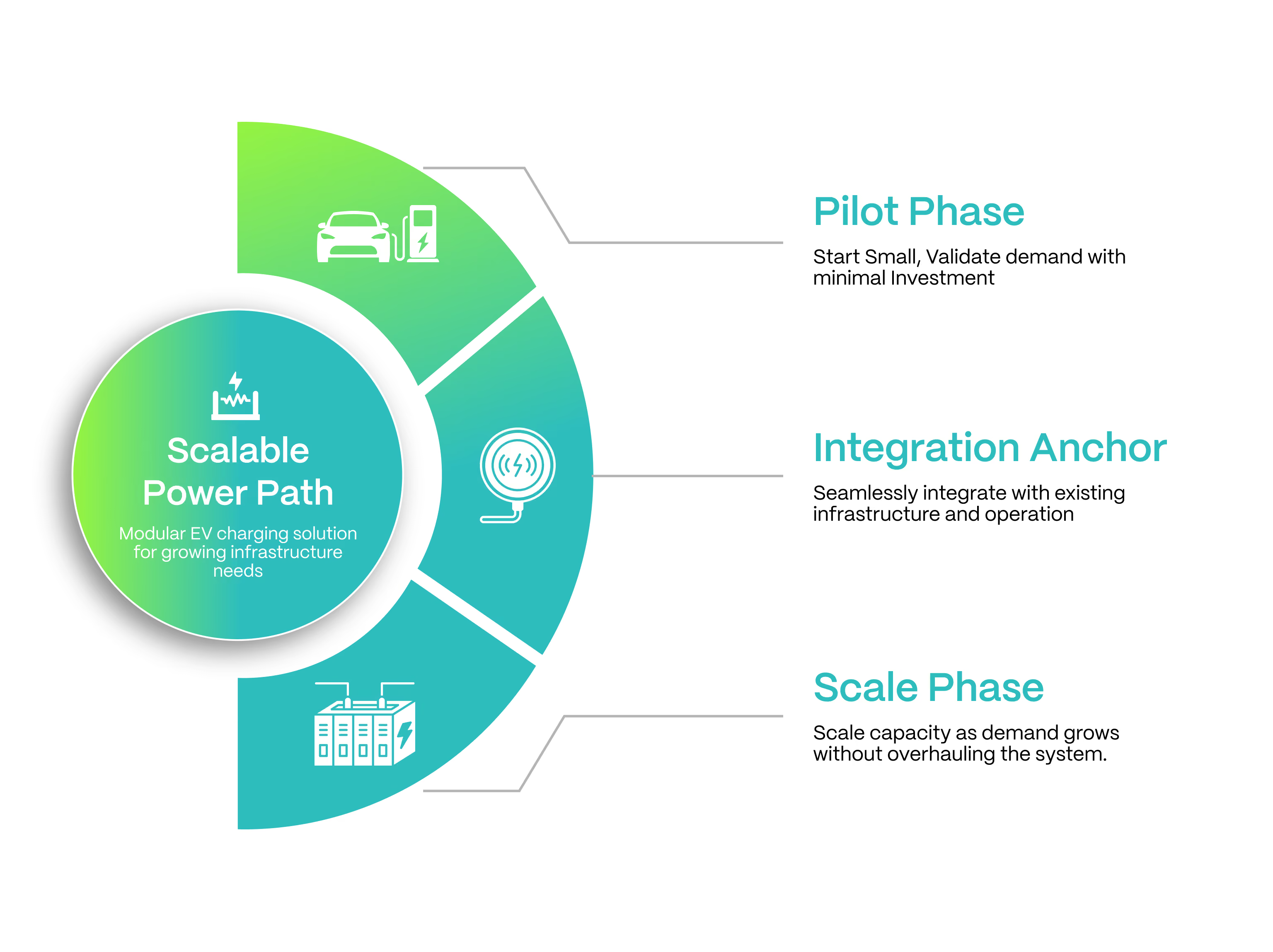
In practical terms, ring topology supports three operating ideas:
- Start with a single 60 kW unit where the site is still proving demand.
- Add a second unit when you see repeat traffic.
- Use the paired 120 kW mode when one charger needs stronger supply without having to change anything much on the site.
Where is this model most useful?
In essence, the main question is not whether DC fast charging is worth investing in. It is whether the EV charger can fit the site, satisfy early demand, and leave room for growth.
Frequently Asked Questions
Lorem ipsum dolor sit amet, consectetur adipiscing elit, sed do eiusmod tempor incididunt ut labore et dolore magna aliqua. Ut enim ad minim veniam, quis nostrud exercitation ullamco laboris nisi ut aliquip ex ea commodo consequat. Duis aute irure dolor in reprehenderit in voluptate velit esse.
Lorem ipsum dolor sit amet, consectetur adipiscing elit, sed do eiusmod tempor incididunt ut labore et dolore magna aliqua. Ut enim ad minim veniam, quis nostrud exercitation ullamco laboris nisi ut aliquip ex ea commodo consequat. Duis aute irure dolor in reprehenderit in voluptate velit esse.
Lorem ipsum dolor sit amet, consectetur adipiscing elit, sed do eiusmod tempor incididunt ut labore et dolore magna aliqua. Ut enim ad minim veniam, quis nostrud exercitation ullamco laboris nisi ut aliquip ex ea commodo consequat. Duis aute irure dolor in reprehenderit in voluptate velit esse.
Lorem ipsum dolor sit amet, consectetur adipiscing elit, sed do eiusmod tempor incididunt ut labore et dolore magna aliqua. Ut enim ad minim veniam, quis nostrud exercitation ullamco laboris nisi ut aliquip ex ea commodo consequat. Duis aute irure dolor in reprehenderit in voluptate velit esse.
Lorem ipsum dolor sit amet, consectetur adipiscing elit, sed do eiusmod tempor incididunt ut labore et dolore magna aliqua. Ut enim ad minim veniam, quis nostrud exercitation ullamco laboris nisi ut aliquip ex ea commodo consequat. Duis aute irure dolor in reprehenderit in voluptate velit esse.
.webp)