



Delhi's New EV Policy 2026 - Decoded for Everyone Charging EV at Home
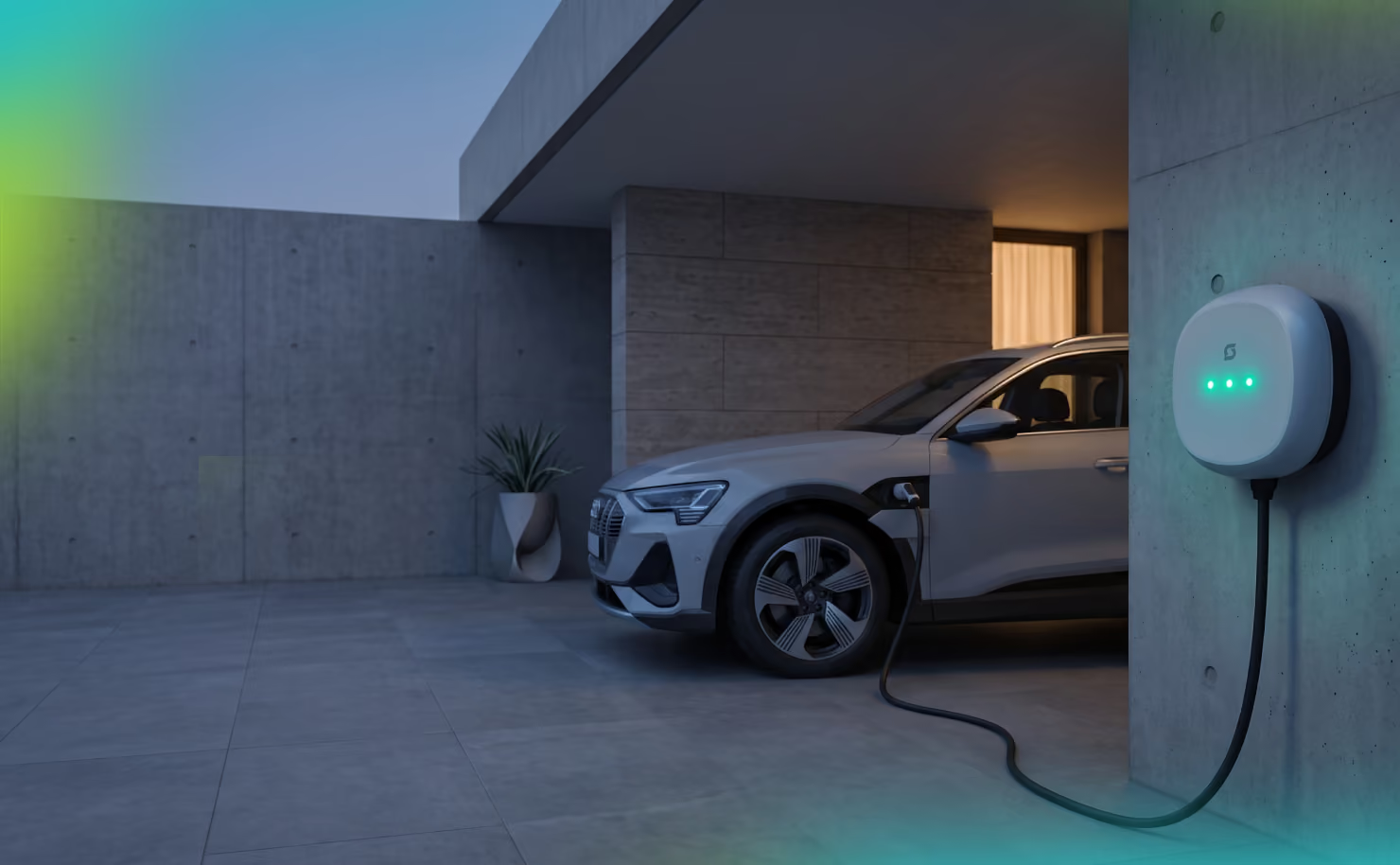
Delhi's 1st EV Policy focused on EV Adoption through subsidies
Delhi's first EV policy, notified in 2020, did what it set out to do. Purchase subsidies and a full waiver of road tax and registration fees brought down the cost of buying an EV, at a time when vehicular emissions were already identified as the single largest contributor to the city's winter air pollution, at 23%. At that stage, the priority made sense.
But incentive to buy EVs doesn’t ensure intent to buy EVs. Once the EV is sold, the problem just moves into parking lots, basements, driveways. Places the 2020 policy never mentioned.
Home EV Charging Was Difficult For Owners In Delhi
The 2020 policy dealt with the showroom. It never had to reckon with what happens after the car reaches a parking spot that wasn't originally planned for one, in a building whose wiring assumed no such thing, and whose managing committee had no framework yet to evaluate the request.
Three separate things, each landing on the owner: buildings whose sanctioned load never budgeted for a charger, wiring that meant real coordination in a shared premises, and RWA approvals that took time simply because there was no earlier precedent to follow.
Delhi's 2026 policy picks up right where that left off, starting with what you pay at registration.
Delhi's EV Policy 2026 Answers Home EV Charging Problems
The 2026 policy, notified on 30 June 2026 and in force from 1 July, was built to close exactly this gap - though it closes some of it more firmly than the rest. Between the vehicle policy itself and Delhi's separate building bylaws, three specific changes now apply, each one answering one of the three problems above.
RWAs Are Now Formally Encouraged To Support Home EV Charging
Clause 5.10 says RWAs, group housing societies, and residential communities "shall be encouraged to facilitate" private and community EV charging within residential premises.
It's a meaningful shift in direction. For the first time, there's an explicit state government position that residential charging should be facilitated, giving RWAs a clear steer from the policy itself and giving residents a reference point they didn't have before.
New construction must reserve and wire parking for EV use
This one comes from Delhi's building bylaws, which mandate that at least 20% of parking spaces in new residential and commercial developments be EV-ready, with conduits and wiring already in place even before a charger goes in.
For anyone buying into a new project, this is the most immediately useful piece. Planning for EV load during construction costs a fraction of retrofitting it into a building people already live in, and it means every new development in Delhi starts from a smarter baseline than the buildings before it.
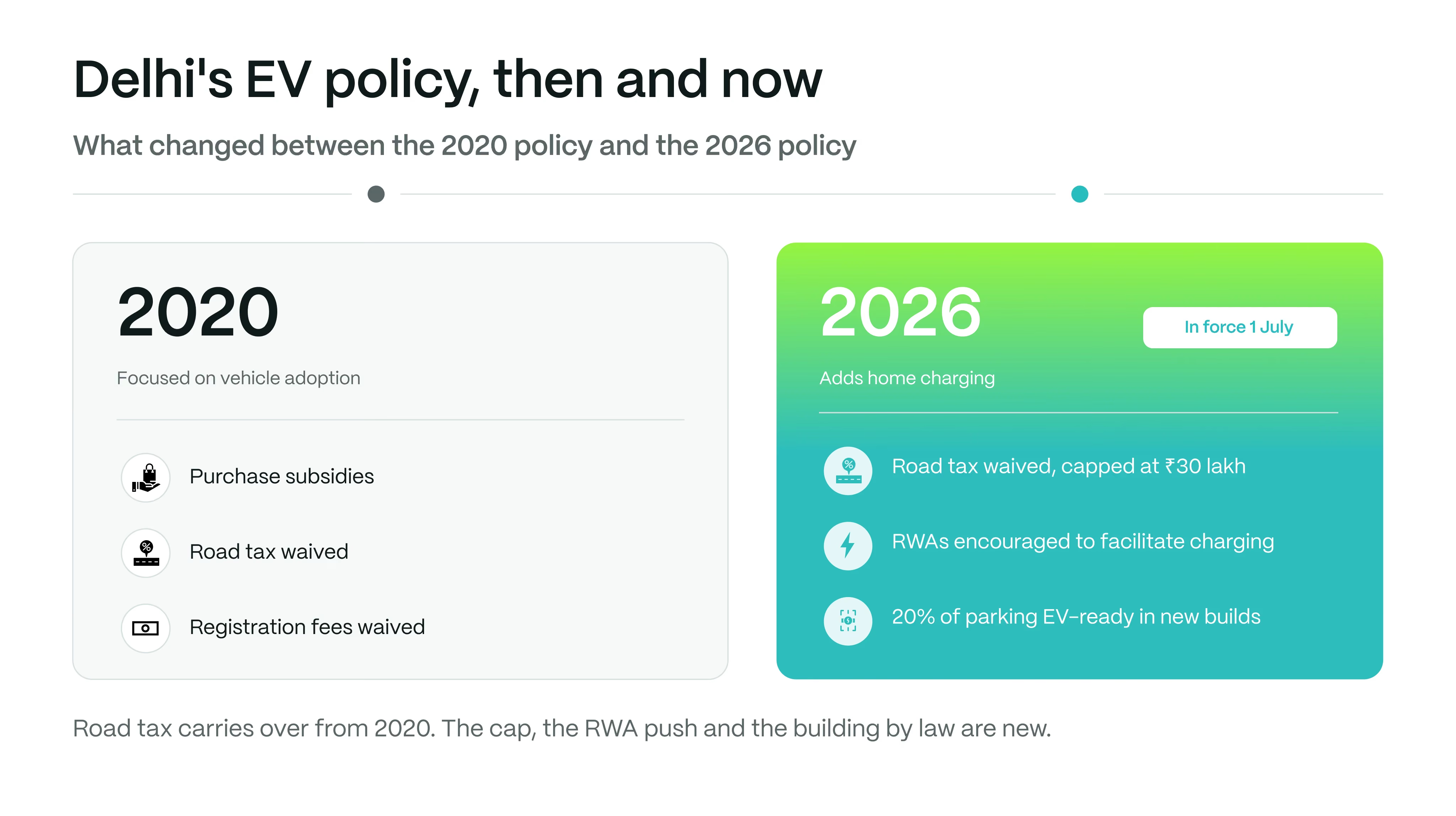
Road tax, the RWA push, the building bylaw. Together they cover cost, encouragement, and future-ready construction. The next layer, sanctioned load, sub-metering, and how a building's existing electrical setup handles multiple EVs charging at once, is where residents, RWAs, and charging providers now have room to build good practice together.
Load and Metering Still Have Some Unanswered Questions
The policy doesn't cover the one thing that actually decides whether charging works: your home's sanctioned load, whether EV use needs its own sub-meter, who pays if an older building needs an upgrade. The 2026 policy comes close in one place. It directs DISCOMs to explore time-of-day electricity tariffs, so charging costs less at night than during peak hours. That's aimed at public and community charging for now.
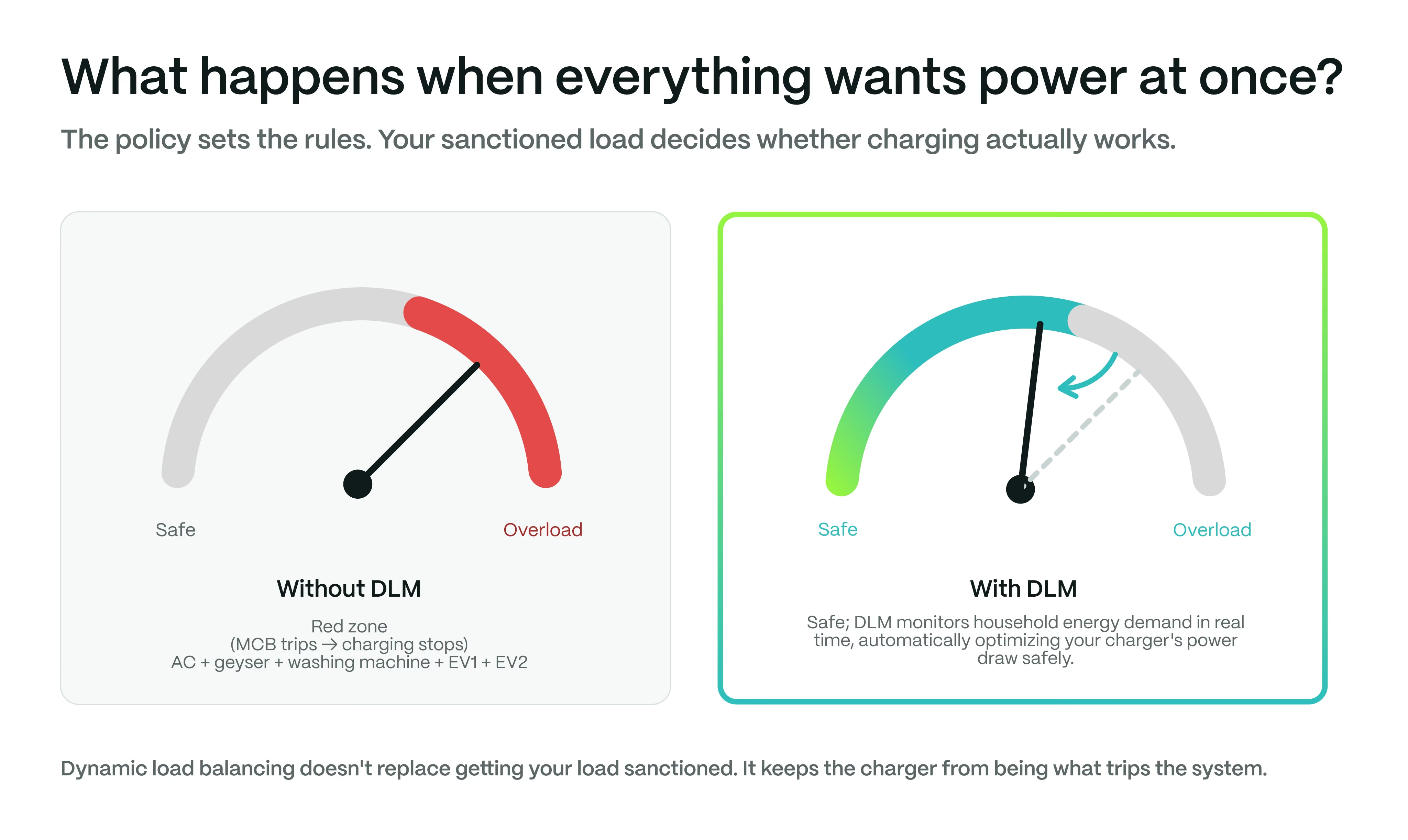
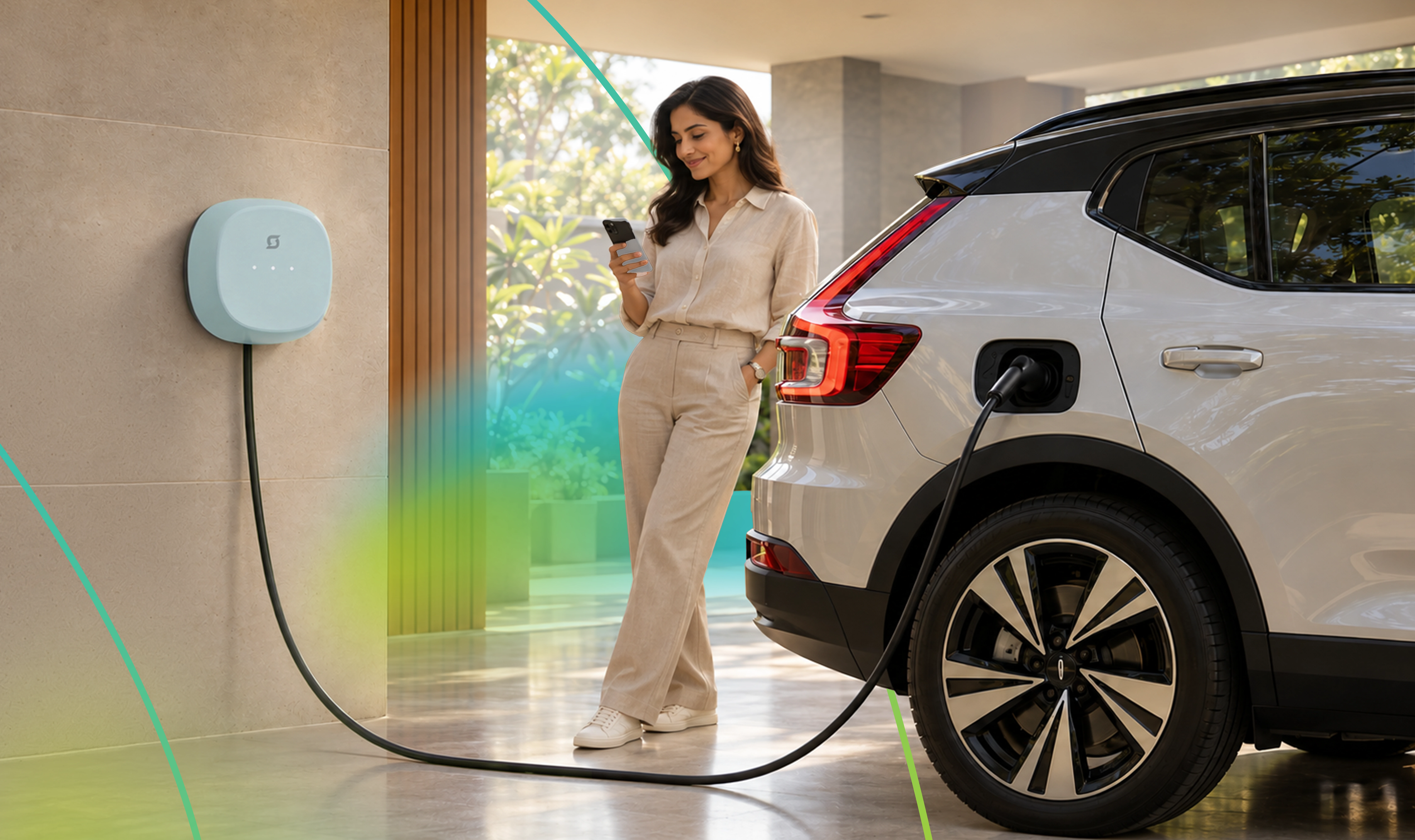
The gap shows up fastest in buildings with more than one EV owner charging at the same time. A charger that works within the home's sanctioned load, rather than against it, matters here. Exicom's Spin Air Charger is built around exactly this problem. It runs dynamic load balancing, so it pulls less when the rest of the home or building is drawing more, and holds steady when it isn't. The Spin Control App lets you schedule charging for off-peak hours rather than when you plug in, which matters once your building starts metering EV use separately. None of this replaces getting your load sanctioned correctly. It just means the charger isn't the thing tripping the system once you have.
Efficient Charging. Everyday.
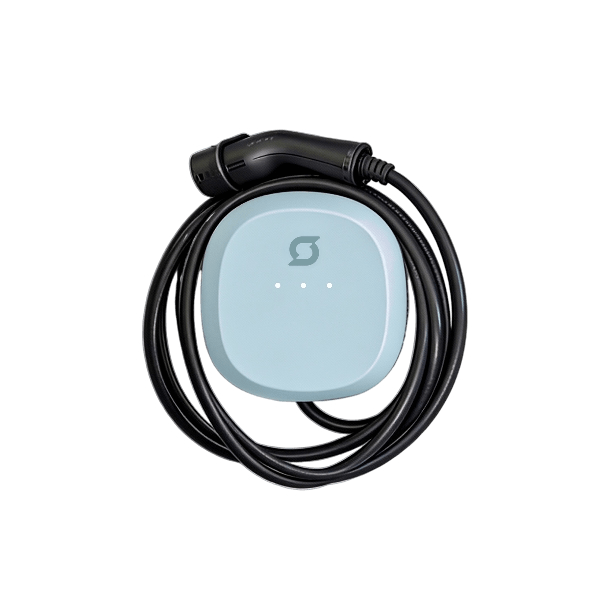
Spin Air 2 AC Charger
Compact. Smart. Reliable. 7.4 kW charging solution for homes, offices and more.
Explore Product →- ✓7.4 kW Power Output
- ✓Smart & Connected
- ✓Safe & Reliable
- ✓Compact Wallbox Design
Three years ago, an EV owner in Delhi had no road tax clarity, no RWA to point to, and no reason to expect a new building would be wired for a charger. Now they have all three, even if two of them are soft commitments rather than hard rules. Credit where it's due: the road tax waiver is real money back in an owner's pocket, and the building bylaw means every new project from here on gets this right at the design stage instead of retrofitting it in later. With Delhi's policy clearing the way, the setup you choose is what turns that opportunity into charging that just works, every day.
Frequently Asked Questions
Lorem ipsum dolor sit amet, consectetur adipiscing elit, sed do eiusmod tempor incididunt ut labore et dolore magna aliqua. Ut enim ad minim veniam, quis nostrud exercitation ullamco laboris nisi ut aliquip ex ea commodo consequat. Duis aute irure dolor in reprehenderit in voluptate velit esse.
Lorem ipsum dolor sit amet, consectetur adipiscing elit, sed do eiusmod tempor incididunt ut labore et dolore magna aliqua. Ut enim ad minim veniam, quis nostrud exercitation ullamco laboris nisi ut aliquip ex ea commodo consequat. Duis aute irure dolor in reprehenderit in voluptate velit esse.
Lorem ipsum dolor sit amet, consectetur adipiscing elit, sed do eiusmod tempor incididunt ut labore et dolore magna aliqua. Ut enim ad minim veniam, quis nostrud exercitation ullamco laboris nisi ut aliquip ex ea commodo consequat. Duis aute irure dolor in reprehenderit in voluptate velit esse.
Lorem ipsum dolor sit amet, consectetur adipiscing elit, sed do eiusmod tempor incididunt ut labore et dolore magna aliqua. Ut enim ad minim veniam, quis nostrud exercitation ullamco laboris nisi ut aliquip ex ea commodo consequat. Duis aute irure dolor in reprehenderit in voluptate velit esse.
Lorem ipsum dolor sit amet, consectetur adipiscing elit, sed do eiusmod tempor incididunt ut labore et dolore magna aliqua. Ut enim ad minim veniam, quis nostrud exercitation ullamco laboris nisi ut aliquip ex ea commodo consequat. Duis aute irure dolor in reprehenderit in voluptate velit esse.
%20(1).webp)

