


Overcoming the Heat block: Liquid-Cooled EV Power will enable the Megawatt Era
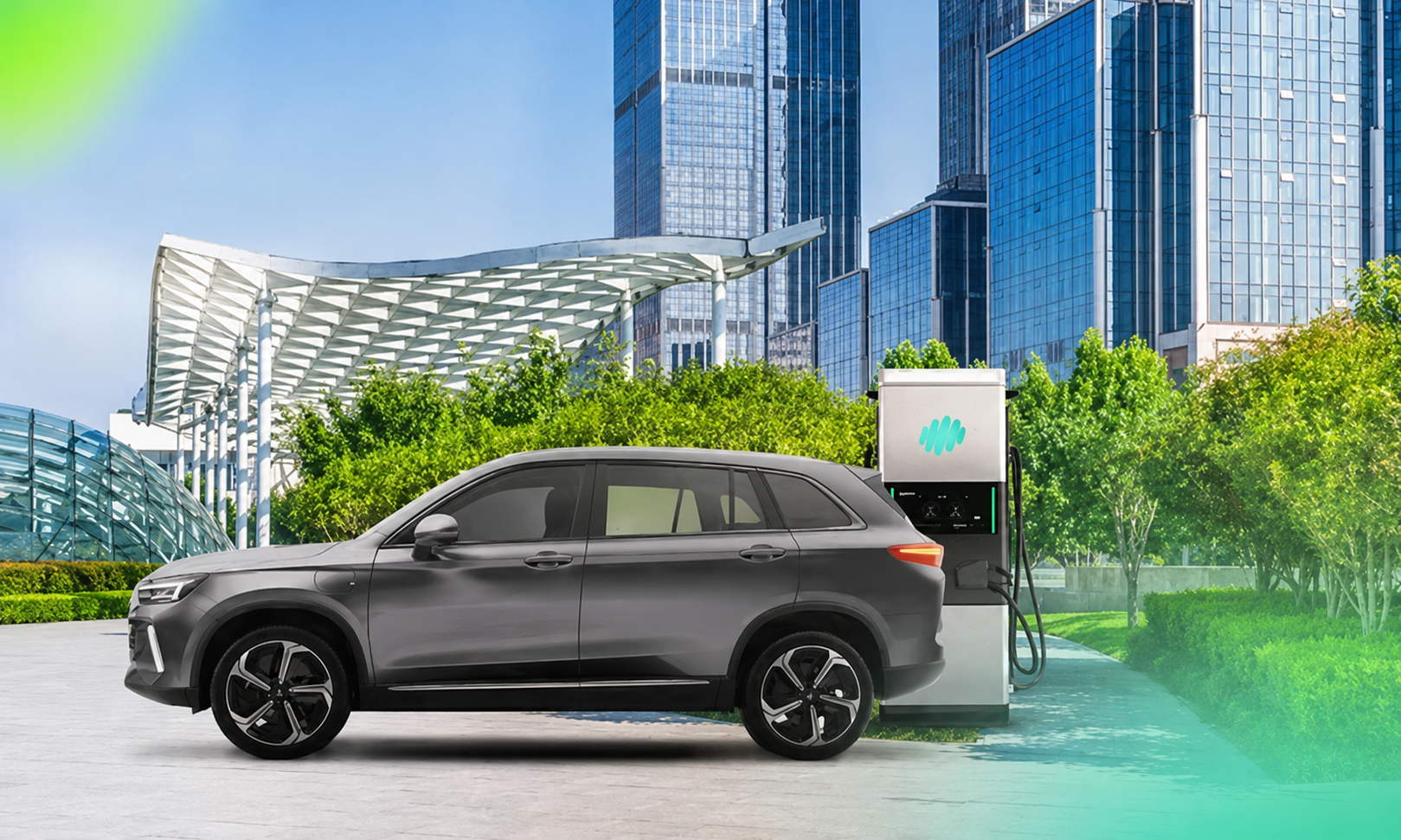
Recently, the number of electric cars on U.S. roads crossed 4 million, with over 1.23 million sold last year (in 2024). Today,cumulative deployments of zero-emission commercial trucks have reached over 72,000 nationwide, of which Class 8 heavy-duty electric trucks account for 2,500. This means that the world now needs fast recharging for electric mobility with high power charging needs. We are no longer simply ‘topping up’ commuter cars; weare trying to charge massive trucks in 20-30 minute pitstops.
The defining metric for the next generation of electric vehicles, particularly long-range cars and Class 8 commercial trucks, is turn around time. For a logistics operator managing a fleet of heavy-duty trucks, a vehicle sitting plugged into a charger is a stranded asset generating zero revenue.
To achieve parity with diesel refuelling times,commercial electric trucks require 1,000 kWh battery to be recharged in 30-45-minute window. This requires going beyond standard fast chargers to Megawatt Charging System (MCS), a standard designed to deliver up to 3.75 megawatts (3,750 kW) of continuous power.
We are moving towards megawatt charging for quicker refuelling
Let’s understand the enormity of this shift. A conventional DC fast charger operates between 50 and 150 kW. The MCS standard requires up to 3,000 amperes and 1,250 volts, that is 3750kW. This is more than twenty times higher. And the heat it will generate will be even more, by a power of two.
This is not as easy as it sounds. A fundamental constraint of physics comes up. More amperage means heavier copper wires, and extreme resistive heating. Near a megawatt of energy, this becomes untenable with air cooling.
Megawatt charging requires a fundamental shift in product design
This means that any increase in amper age results inan exponential, rather than linear, increase in heat generation. For instance,when a Charge Point Operator (CPO) upgrades a station from a 500-amp CCS connector to a 3,000-amp MCS connector to support faster charging times, the amperage increases by a factor of 6, and the heat generated increases by afactor of 36. To add to this, the rectifiers converters inside the charger leadto a 3- 5% energy loss. While this might seem negligible, it converts to 50kW of heat at a 1-megawatt scale. That is the thermal equivalent of running overthirty residential space heaters inside a metal box.
If this immense heat is not rapidly and efficiently evacuated from the system, it triggers a cascade of catastrophic failures. High temperatures are the primary enemy of power electronics. Reliability studies indicate that nearly 60% of all power electronic failures in EV charging stations are directly attributable to thermal stress. In traditional air-cooled systems, internal temperatures fluctuate violently with ambient weather. Forevery 10°C to 15°C rise in operating temperature, the failure rate of internal components effectively doubles. When chargers are deployed in harsh environments—from the extreme summer heat of Texas to the salty coastal air of Florida—relying on ambient air ventilation severely throttles peak charging speeds and limits hardware longevity.
To prevent sudden failure or fire, modern chargers preserv etheir life by ‘thermal derating, - the charger automatically throttles currentand drastically reduces the charging speed. Heat can cause a charger to save itself and convert an 30-minute charging stop into a two-hour delay – effective impacting convenience and revenue for commercial vehicles.
Air cooling becomes unsustainable at megawatt scale
Historically, the EV charging industry has reliedon passive and active air cooling to manage heat, utilizing large aluminum heat sinks and high-velocity fans. This method fails at megawatt-scale and hot environments of highway depots.
- Massive copper requirements: To passively reduce heat the cross-sectional area of the solid copper must be drastically increased. The solid copper makes the cord so stiff and heavy that a human cannot safely use it.
- Poor thermal conductivity: Air has a very low volumetric heat capacity,meaning it is incredibly inefficient at removing concentrated heat .
- Harsh environmental exposure: Air-cooled chassis pull in ambient air, which exposes electronics to corrosive coastal salt, moisture, and dust.
Liquid cooling can support megawatt charging for EVs
Active liquid cooling solves these problems as a flowing liquid can absorb, transport, and reject thermal energy orders of magnitudefaster and more efficiently
- Active heat removal: Liquid coolants, such as water-glycol mixtures or dielectric fluids, absorb and transfer heat away rapidly and continuously.
- Lighter, thinner cables: By actively chilling the conductors, these cables use significantly less copper, making it lighter and easier to handle.
- Fully sealed enclosures: Liquid cooling eliminates the need for air vents, allowing the charger cabinet to be hermetically sealed against dust, pollen, and corrosive moisture.
These benefits mean that liquid cooled cables avoid thermalderating: The active liquid loop maintains strict, uniform temperature control (keeping internal temps safely <45°C) regardless of ambient weather,ensuring maximum charging speeds are sustained indefinitely.
"Globally, liquid cooling has become the architecture of choice for high-power charging," Anant Nahata
In August 2026, Exicom became the first company inIndia to begin manufacturing advanced liquid-cooled AC and DC power modules atits Hyderabad Smart Manufacturing Facility. Built upon the globally proven liquid-cooling architecture of Tritium, this development fundamentally alters the supply chain for US fleet operators.
.png)
By localizing the production of Tritium’s TRI-FLEX™and DC-FLEX™ systems in a highly automated Indian facility, Exicom is merging sophisticated Western thermal technology with Indian manufacturing agility.Initial production volumes are strictly earmarked for export to North America and Europe, explicitly targeting CPOs, commercial fleets, and OEM stransitioning to ultra-fast charging architectures.
Liquid cooled chargers offer better ROI in 3 areas for US fleets
The pivot to liquid-cooled charging is not merely atechnical upgrade; it drastically alters the Total Cost of Ownership (TCO) and operational efficiency for fleet operators.
The operational advantages manifest in threedistinct areas:
- Cable Ergonomics: Thinner, lighter cables essential for driver handling at high amper ages. Megawatt charging requires massive amperage. Without liquid cooling, cables become too thick and heavy for average drivers to maneuver safely. Liquid-cooled cables are dramatically thinner, improving the user experience and enabling faster turnaround times at fleet depots.
- Asset Longevity: 3x to 4x extended shelf life due to internal climate control. By absorbing and transferring heat away from power modules at the source, liquid coolants maintain an optimal internal climate. This consistent thermal management extends the overall shelf life of the dispenser and its internal components by 3x to 4x, deferring massive CapEx replacement costs.
- Environmental Resilience: Ventless, fully sealed designs protecting against US coastal salt and desert dust. Liquid-cooled chargers utilize fully sealed designs. By eliminating the need for cooling vents, the system locks out dust, moisture, and corrosive salt air—the primary environmental culprits behind charger downtime.
Frequently Asked Questions
Lorem ipsum dolor sit amet, consectetur adipiscing elit, sed do eiusmod tempor incididunt ut labore et dolore magna aliqua. Ut enim ad minim veniam, quis nostrud exercitation ullamco laboris nisi ut aliquip ex ea commodo consequat. Duis aute irure dolor in reprehenderit in voluptate velit esse.
Lorem ipsum dolor sit amet, consectetur adipiscing elit, sed do eiusmod tempor incididunt ut labore et dolore magna aliqua. Ut enim ad minim veniam, quis nostrud exercitation ullamco laboris nisi ut aliquip ex ea commodo consequat. Duis aute irure dolor in reprehenderit in voluptate velit esse.
Lorem ipsum dolor sit amet, consectetur adipiscing elit, sed do eiusmod tempor incididunt ut labore et dolore magna aliqua. Ut enim ad minim veniam, quis nostrud exercitation ullamco laboris nisi ut aliquip ex ea commodo consequat. Duis aute irure dolor in reprehenderit in voluptate velit esse.
Lorem ipsum dolor sit amet, consectetur adipiscing elit, sed do eiusmod tempor incididunt ut labore et dolore magna aliqua. Ut enim ad minim veniam, quis nostrud exercitation ullamco laboris nisi ut aliquip ex ea commodo consequat. Duis aute irure dolor in reprehenderit in voluptate velit esse.
Lorem ipsum dolor sit amet, consectetur adipiscing elit, sed do eiusmod tempor incididunt ut labore et dolore magna aliqua. Ut enim ad minim veniam, quis nostrud exercitation ullamco laboris nisi ut aliquip ex ea commodo consequat. Duis aute irure dolor in reprehenderit in voluptate velit esse.
%20(1).webp)