



Beyond the Home Charger: How India's Urban Spaces, Workplaces, and Tourist Destinations Are Becoming the Next Frontier for EV Charging
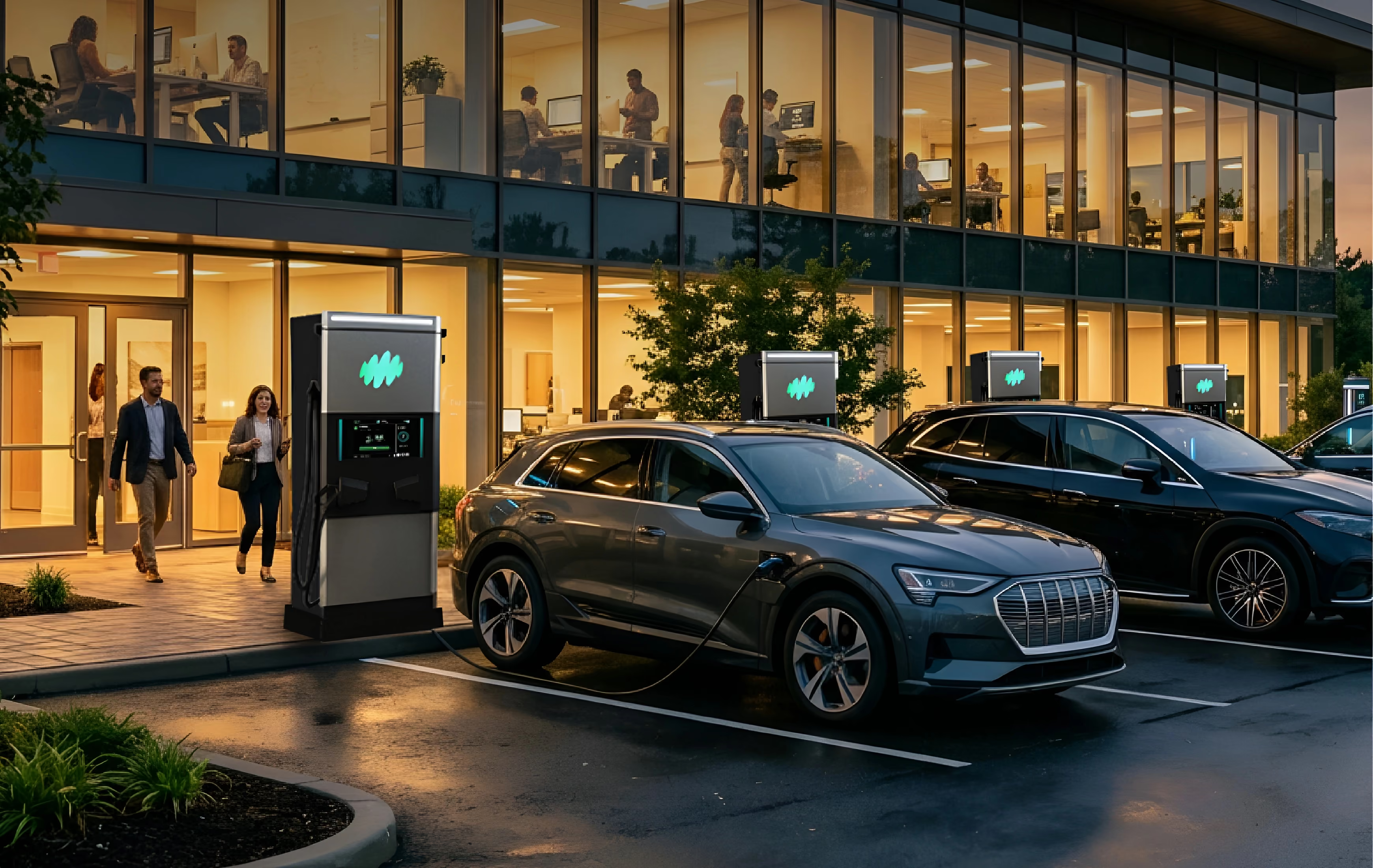
A major EV charging opportunity is hiding in plain sight, and most property owners have yet to capitalise on it.
India has crossed 45 lakh registered EVs, yet charging infrastructure outside homes remains severely underserved. Malls, office parks, hotels, transit hubs, SEZs, and tourist destinations all have one thing in common: vehicles sitting idle for hours every day. Every one of those parking hours is an opportunity to generate revenue through electricity mark-ups, higher dwell times, advertising, and fleet partnerships, while benefiting from growing government incentives.
Charging Where People Already Are: The Case for Urban Public Infrastructure
India's Tier 1 cities are leading EV adoption, with Bengaluru, Delhi, and Mumbai accounting for the majority of four-wheeler EV registrations. Yet even here, EVs remain a fraction of total vehicles on the road. The missing piece is the charging infrastructure where people actually spend their time.
Malls, markets, event venues, airports, railway stations, and bus depots are full of vehicles parked for hours every day. These locations are already natural charging destinations. The charger just needs to be there.
Range confidence matters too. EV drivers will commit to the technology when charging is accessible along their daily routes. India currently has around 25,000 EV charging stations. The target by 2030 is nearly 4 million. That gap is the size of the opportunity.
Benefits of Having EV Charging Infrastructure in Urban Spaces
Builds Range Confidence: A dense network of public EV charging stations reassures drivers that they can complete their trips without disruption, making EVs practical for both everyday commutes and longer city journeys.
Enables Accessibility and Inclusivity: Not every household has dedicated parking or the ability to install a private charger. Public charging ensures EV ownership is accessible across socio-economic groups, not just those with well-equipped homes.
Boosts Infrastructure Utilisation: Urban spaces such as malls, offices, and transit hubs already have vehicles parked for hours. A car at a mall for four hours can leave fully charged while its owner shops or watches a film, putting idle time to productive use.
Drives Economic Value: Public EV chargers create revenue through charging fees, advertising, and retail partnerships. Food stalls and retail outlets see higher spending when EV drivers spend time on-site. EV chargers do more than power vehicles — they power local economies.
4 Things Necessary for Deploying EV Chargers in Urban Public Spaces
Site Selection: Place chargers where people naturally spend time — malls, metro stations, and office complexes. Usage follows footfall.
Grid Readiness: Smart load management, renewable integration, and faster DISCOM approvals keep infrastructure reliable without overloading city networks.
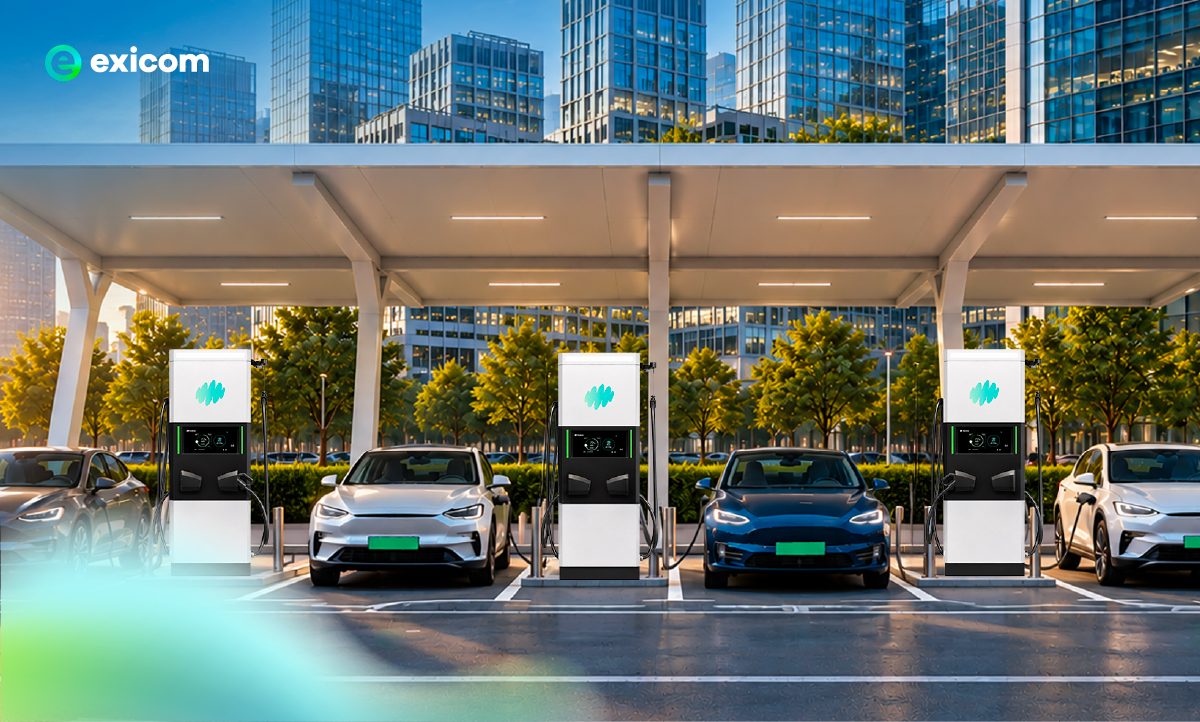
Charger Mix: AC chargers for regular commuters who park for hours, DC fast chargers for fleets and high-turnover users. Both are necessary.
Interoperability and Customer Experience: Seamless UPI payments, app-based discovery, universal standards, and clear signage make charging frictionless. Public-private partnerships and retail tie-ups sustain the economy.
To learn more about EV charging in urban spaces, read our blog.
Charging at Work: The Opportunity Hiding in Plain Sight
India has over 270 active SEZs and more than 3,500 industrial parks, with an estimated 18 to 22 million vehicles entering these workplaces every day. These vehicles are among the primary sources of carbon emissions in Indian cities. With 30% of all new vehicles required to be electric by 2030, the government is actively pushing for electrification across commercial and industrial transport.
A significant share of India's EV owners are corporate professionals commuting to offices, SEZs, and industrial parks every day. Fleet vehicles operate out of these same locations. Yet of India's 25,000-plus public charging stations, fewer than 10,000 are located at workplaces. The gap between where EV owners spend their time and where chargers exist is significant.
The business case is substantial. Robust EV charging infrastructure in industrial hubs drives business competitiveness, decarbonisation, user convenience, and future-readiness. Workplace EV charging delivers on three fronts: convenience, cost savings, and competitive edge.
Why Workplace EV Charging Makes Business Sense
For Operations and Profitability: Large campuses like Infosys Mysore and Reliance SEZ see thousands of vehicles daily. High vehicle density, organised parking, predictable traffic patterns, and stable power supply make workplaces among the most efficient environments for EV charging deployment. Vehicles charge during loading or idle time, demand is forecastable, and installation requires minimal infrastructure upgrades.
For Real Estate Developers: EV-ready campuses qualify for IGBC and GRIHA green building certifications, property tax rebates, concessional stamp duties, and faster project clearances in states including Maharashtra, Tamil Nadu, and Karnataka. Beyond certifications, charging infrastructure generates revenue through charging fees, advertising, food-chain partnerships, and fleet contracts. Between 2023 and 2024, Embassy Tech Parks installed 100 chargers across six parks, resulting in improved green ratings and higher tenant satisfaction.
For Companies and Their Employees: Employees who can charge at work adopt EVs faster and experience less daily friction. At DLF IT SEZ Chennai, one dedicated charging bay drove a 30% rise in employee EV adoption within five months. For companies, workplace charging strengthens ESG credentials and supports Scope 2 emissions reduction, giving them a competitive edge with global clients and investors.
Building Smarter Workplace Charging Infrastructure
DLM, Multi-Stack Charging, and Dual Guns: Workplaces see multiple vehicle types with different charging needs arriving simultaneously. Dynamic Load Management balances power demands across vehicles, multi-stack charging handles different profiles at the same time, and dual guns serve two vehicles at once, effectively halving the number of chargers required.
Smart Chargers with Predictive Maintenance: Smart charging protocols balance load demand and forecast charging needs to minimise waiting times. AI-powered algorithms monitor charger components in real time, detecting anomalies and predicting failures before they occur.
Remote Monitoring: IoT-enabled infrastructure allows operators to track energy consumption, utilisation rates, demand curves, and fault probabilities remotely, without requiring on-site intervention for routine oversight.
Energy Storage and Renewable Integration: Rooftop solar integration reduces grid dependence and cuts charging costs to less than half of grid electricity rates. Battery storage captures excess daytime solar energy and provides backup during grid failures.
User Experience: Unified booking and payment platforms, multilingual UI, and mechanically assisted cable handling make charging frictionless for the diverse mix of drivers across multi-tenant campuses and industrial parks.
India's SEZs, workplaces, and industrial parks hold the key to rapid EV adoption, and in these spaces, EV charging infrastructure should be treated as core business infrastructure.
Read more: Workplace EV charging in India:The role of Industrial Parks, SEZs, and offices
Charging at the Destination: Hotels, Resorts, and the Road Less Charged .
India's tourism economy is projected to reach $523 billion by 2030, and rethinking mobility is central to getting there. Road transport is a major contributor to tourism-related emissions. EVs offer 19 to 34% lower lifecycle emissions compared to petrol or diesel, with the figure approaching zero when powered by renewables.
The barrier to EV adoption on long trips is infrastructure. Most public chargers cluster in metros, leaving highways, smaller towns, and pilgrimage routes largely underserved. Weak grid reliability in remote areas, combined with fragmented access across multiple apps and payment systems, makes long-distance EV travel feel uncertain for most travellers.
EV Charging at Tourist Destinations: The Opportunity and How to Capture It
Tourist destinations are a natural fit for EV charging. Vehicles remain parked for extended periods while travellers explore, creating the perfect window for charging without disrupting plans. Strategic deployment across key locations turns this idle time into a significant revenue and sustainability opportunity.
Where to Deploy
Hotels and resorts can position overnight charging as a premium amenity, increasing dwell time and driving food and beverage revenue. Tata Power has partnered with Le Roi Hotels to deploy 16 chargers across eight resorts, while Madhya Pradesh Tourism is equipping 55 hotels to strengthen its eco-tourism appeal.
Pilgrimage routes are an equally compelling case. Uttarakhand's Char Dham route already has 25 chargers in place with 38 more planned, supporting long-distance travel and promoting eco-friendly Green Yatra journeys.
Hill stations and wildlife sanctuaries benefit from chargers at lodges, park gates, and parking zones, reducing pollution in fragile ecosystems. Himachal Pradesh has approved 402 chargers at tourist lodges.
Long-stay parking at airports and railway stations is ideal for full recharges. FAME-II covers up to 70% of infrastructure costs at such hubs, and Delhi's Indira Gandhi International Airport has already deployed multiple public chargers.
Innovative Models Making It Viable
Solar-powered chargers provide clean, reliable power in remote and high-altitude regions. Ladakh's 100 kW solar carport with an 860 kWh battery system is a strong example. Battery-backed systems ensure uninterrupted service in areas with weak grids, with resorts in Uttarakhand and Himachal Pradesh already adopting this model. PPP models share infrastructure costs between governments, hotels, and energy providers, accelerating deployment across destinations.
The Technology Behind Reliable Destination Charging
Three capabilities are critical for EV charging to work effectively at tourist destinations:
- Smart Charging adjusts charging speeds based on grid conditions and tariff hours, preventing overloads at tourist hubs that often operate on fragile grids.
- Dynamic Load Balancing distributes power across multiple vehicles in real time without requiring grid upgrades, ensuring every visitor at a resort, temple, or wildlife lodge gets enough charge to continue their journey.
- Remote Monitoring allows operators to track performance, run diagnostics, and predict faults before they occur. In remote locations where the nearest alternative charger may be 100 kilometres away, uptime is not optional.
Read more in our blog.
Government Policies Around EV Charging Infrastructure
Policy support is accelerating large-scale deployment. FAME-II allocated ₹800 crore for over 7,400 public chargers, with FAME-III expected to expand this further. Delhi, Karnataka, and Maharashtra are integrating charging infrastructure across malls, parking lots, transit hubs, and commercial developments.
Delhi's PPP model demonstrates what scaled deployment looks like. By aggregating land from DMRC and DTC, providing 100 kW grid connections, and enforcing interoperability standards, the city deployed nearly 900 chargers across 100 sites at fees as low as ₹2 per kWh.
For real estate developers and commercial property owners, policy support goes further. EV-ready campuses qualify for IGBC and GRIHA certifications, improve tenant attractiveness, unlock fiscal incentives, and strengthen long-term property value.
Where India Parks, India Should Charge
India is targeting 4 million charging stations by 2030. The locations that will drive the most utilisation and generate the strongest returns are in car parks that are already full.
The shift toward destination charging is already underway. The question for every property owner, campus developer, and hospitality operator is straightforward: Is the charger already where the vehicle is?
Frequently Asked Questions
Lorem ipsum dolor sit amet, consectetur adipiscing elit, sed do eiusmod tempor incididunt ut labore et dolore magna aliqua. Ut enim ad minim veniam, quis nostrud exercitation ullamco laboris nisi ut aliquip ex ea commodo consequat. Duis aute irure dolor in reprehenderit in voluptate velit esse.
Lorem ipsum dolor sit amet, consectetur adipiscing elit, sed do eiusmod tempor incididunt ut labore et dolore magna aliqua. Ut enim ad minim veniam, quis nostrud exercitation ullamco laboris nisi ut aliquip ex ea commodo consequat. Duis aute irure dolor in reprehenderit in voluptate velit esse.
Lorem ipsum dolor sit amet, consectetur adipiscing elit, sed do eiusmod tempor incididunt ut labore et dolore magna aliqua. Ut enim ad minim veniam, quis nostrud exercitation ullamco laboris nisi ut aliquip ex ea commodo consequat. Duis aute irure dolor in reprehenderit in voluptate velit esse.
Lorem ipsum dolor sit amet, consectetur adipiscing elit, sed do eiusmod tempor incididunt ut labore et dolore magna aliqua. Ut enim ad minim veniam, quis nostrud exercitation ullamco laboris nisi ut aliquip ex ea commodo consequat. Duis aute irure dolor in reprehenderit in voluptate velit esse.
Lorem ipsum dolor sit amet, consectetur adipiscing elit, sed do eiusmod tempor incididunt ut labore et dolore magna aliqua. Ut enim ad minim veniam, quis nostrud exercitation ullamco laboris nisi ut aliquip ex ea commodo consequat. Duis aute irure dolor in reprehenderit in voluptate velit esse.
.webp)

