


Reliable EV Charging Solutions: A Better Alternative to Slow, Unreliable EV Chargers
If you are the driver of an electric vehicle, I bet you know what it means. Your battery is about 12% charged, and you need to charge it, but you cannot do so because your session freezes. Or you get access to charging but lose it after five minutes. Or the charging process goes on too slowly for you to be able to walk home quicker than driving.
This problem is really irritating. In addition, it is actually one of the main reasons why people are reluctant to buy EVs. Range anxiety receives most coverage in the media, but ask any owner of an electric car, and you will hear another story from them: charging anxiety.
There is no doubt that it is one of the key points that shows how important it is to provide reliable charging stations for EVs today. With the increase of the number of EVs (from passenger cars and motorbikes to buses and delivery vehicles) there should be a reliable infrastructure that would allow these cars to operate effectively and without problems.
In this article, we will look at why so many existing chargers let people down, what a genuinely dependable charging setup looks like, and how Exicom is building a better alternative for drivers, fleet owners, and charge point operators.
Why So Many Existing EV Chargers Fail
Chargers seldom break down because of a single large cause. The reasons for their malfunction are numerous and diverse. Here is a list of the most common factors.
The hardware is optimized for more favorable climates. Many devices available today are created keeping in mind mild climates. If such chargers are used in very hot seasons or rainy monsoon climates, or areas with high levels of sandstorms, or coastal climates, all components will wear out faster than expected. Power modules will overheat, connectors will corrode, and the screen will fade from direct sun rays.
Bad heat control system. Fast charging produces heat. When a device doesn't have sufficient means to cope with it, it automatically reduces power to protect itself. That is why the power of a "60 kW" charger often drops to fractions of that number on hot days. The driver sees only a low output rate and thinks that the station is broken.
Unstable electrical grid. Voltage fluctuations and power interruptions are typical of many regions. A charger may be damaged by such irregularities.
Software bugs and network issues. Contemporary chargers rely on software to perform all processes of authentication, payment, and interaction with the car. Any minor software problem or poor network connection can prevent an operation from being performed. There are plenty of situations when compatibility issues arise due to incompatibility of a particular charger with certain car models.
Poor maintenance and support services. Even high-quality hardware does not last forever. The main question here is how soon it gets repaired. There are cases when charging networks do not have any remote monitoring, and a faulty charger stays unrepaired for several days or even weeks. Spare parts can arrive very late, especially if there is no presence of a charger manufacturer in a certain place.
Cheapest hardware as the most cost-effective solution. Under the pressure of implementing a large number of charging stations rapidly and economically, operators choose the cheapest hardware. The problem is that it seems to be profitable only at first glance.
It leads to the same result every time. Users are disappointed, operators lose money, and EV adoption becomes harder.
What Reliable EV Charging Solutions Actually Look Like
The term "reliable" has been used quite often in marketing contexts related to charging solutions. But let's get more concrete on what reliability means for such technology:
- High availability rate. The charger operates properly when drivers come to charge their electric vehicles on a daily basis, and not only on the day of its launch.
- Constant charging speed. The charger offers close to its maximum power output regardless of temperatures and does not slow down after the first hot day of summer.
- Robustness. High protection against environmental factors such as dust and moisture, components that tolerate a wide temperature range, and an enclosure that is robust enough for frequent public use.
- Resilience. The charger is equipped with protection from voltage fluctuations, power surges, and phase imbalance.
- Connected and smart software. OCPP support for integration into charging networks and platforms of your choice, remote diagnostics, and over-the-air updates.
- Compatibility. Compatibility with a wide range of cars and connector standards without the need for several tries by the driver.
- Fast and reliable technical support. Quick response teams and pre-installed spare parts.
Notice that only some of these are about the box on the wall. Reliability is really a mix of good engineering, good software, and good people standing behind the product. Miss one of them and the whole experience suffers.
How Exicom Delivers Reliable EV Charging Solutions
Exicom was not born as an outsider following the EV trend. Exicom has been providing vital power solutions for the telecommunications sector for many years, where equipment should operate nonstop in tough environmental conditions in which there is no room for error. It has been shaping its approach towards EV charging based on this experience.
Engineered for tough conditions
Exicom takes into consideration all of the practical aspects while designing the chargers, like the extremes of heat, dust, humidity, and unreliable power supply. The thermal design, selection of components, and protective housings are based on the assumption that the charger has to work in open air, regardless of the season, unlike in a laboratory setting.
A complete range, from home to highway
Among the problems faced by companies is the management of equipment from various suppliers. One such firm with an extensive portfolio of products is Exicom, which supplies:
- AC charging systems for residential areas, apartments, offices, and workplaces where vehicles spend long periods of time.
- DC fast charging systems for public locations, highways, malls, and commercial centers where drivers require fast charging.
- High-power systems for bus fleets and other applications where vehicles must follow strict timetables and cannot afford to spend long periods of time.
The latest addition to its product list has been the acquisition of Australian company Tritium, specializing in DC fast charging systems, in 2024.
Smart software that keeps chargers online
The hardware is not the whole solution. The chargers from Exicom are meant to be connected to the cloud-based management systems using open interfaces, which allow managers to view the status of the entire network live. By remote monitoring, diagnostics, and updating the firmware, most of the problems can be detected and sorted remotely. If an engineer’s presence is required, the problem will be known in advance.
Local manufacturing and service support
Since Exicom produces and services its equipment locally, its spares and maintenance teams are not limited to one distant location. This reduces the time required for repairs and maintains high levels of uptime. It also allows easier customization of their products according to the needs of each individual market.
Built to grow with you
Most solutions from Exicom are modular and scalable. This allows an enterprise to begin with just a handful of charging stations and scale up when there is a need for more, rather than tear down everything and start afresh.
Who Benefits From Switching to a Better Charger
Charge point operators (CPOs). For operators, every minute the charger is inactive due to breakdown leads to loss of income. Even more important is that one unpleasant experience of a customer will be enough for him not to come again. Reliable hardware and remote diagnostics allow the operator to maximize utilization, preserve the company’s reputation, and earn well from each station.
Fleet owners. Logistics companies, taxis, delivery vans, and electric buses all operate on a strict schedule. It is critical that they are able to recharge at night and perform their duties in the morning. They require chargers that will work perfectly without fail, as well as good load-balancing technology to enable charging of several vehicles simultaneously without damaging the power supply at the station.
Businesses and office buildings. Hotels, malls, businesses, and restaurants are installing chargers to attract clients and help employees charge. Having an unavailable charger on the premises of your business negatively affects the image of the company itself.
Housing societies and residential homeowners. For the convenience of homeowners, plug-and-play chargers that are safe and long-lasting with all kinds of safety features would work just fine.
Motorists, above all. In the end, all this would serve the purpose of the motorists. Once they are assured of the reliability of their chargers, electric driving stops being a gamble and becomes routine. And that is where EV adoption will take off.
How to Choose the Right Charging Partner
If you’re swapping out your chargers or putting in a new system, cost should not be the only factor considered. Consider asking the following questions of the potential suppliers of the chargers:
- What is the average uptime of your chargers when deployed?
- How resistant are your chargers to high temperatures, dust, and water? Check the ingress protection and operating temperature range.
- Are your chargers compatible with industry standards such as OCPP? This will ensure that you’re not locked into a single software provider.
- What after-sales services do you offer? Find out about response time to issues, spare parts availability, and whether you have access to a local service crew.
- Is your system scalable? The ability to expand by adding extra chargers or power without having to replace the whole system is important.
- What vehicle types have your chargers been tested on? Wider compatibility will save a lot of headaches for drivers.
- What is the total cost of ownership of your system? Think of maintenance, efficiency, downtime, and lifetime cost, and not just initial cost.
An unreliable charger that fails several times per year will inevitably cost more than a reliable charger.
The Bottom Line
The success of the EV transition is not determined by the number of chargers but by the number of functional chargers when required. Glitchy and unreliable charging stations prevent all people, whether individual motorists or companies managing fleets of 200 cars, from moving forward and adopting this new technology.
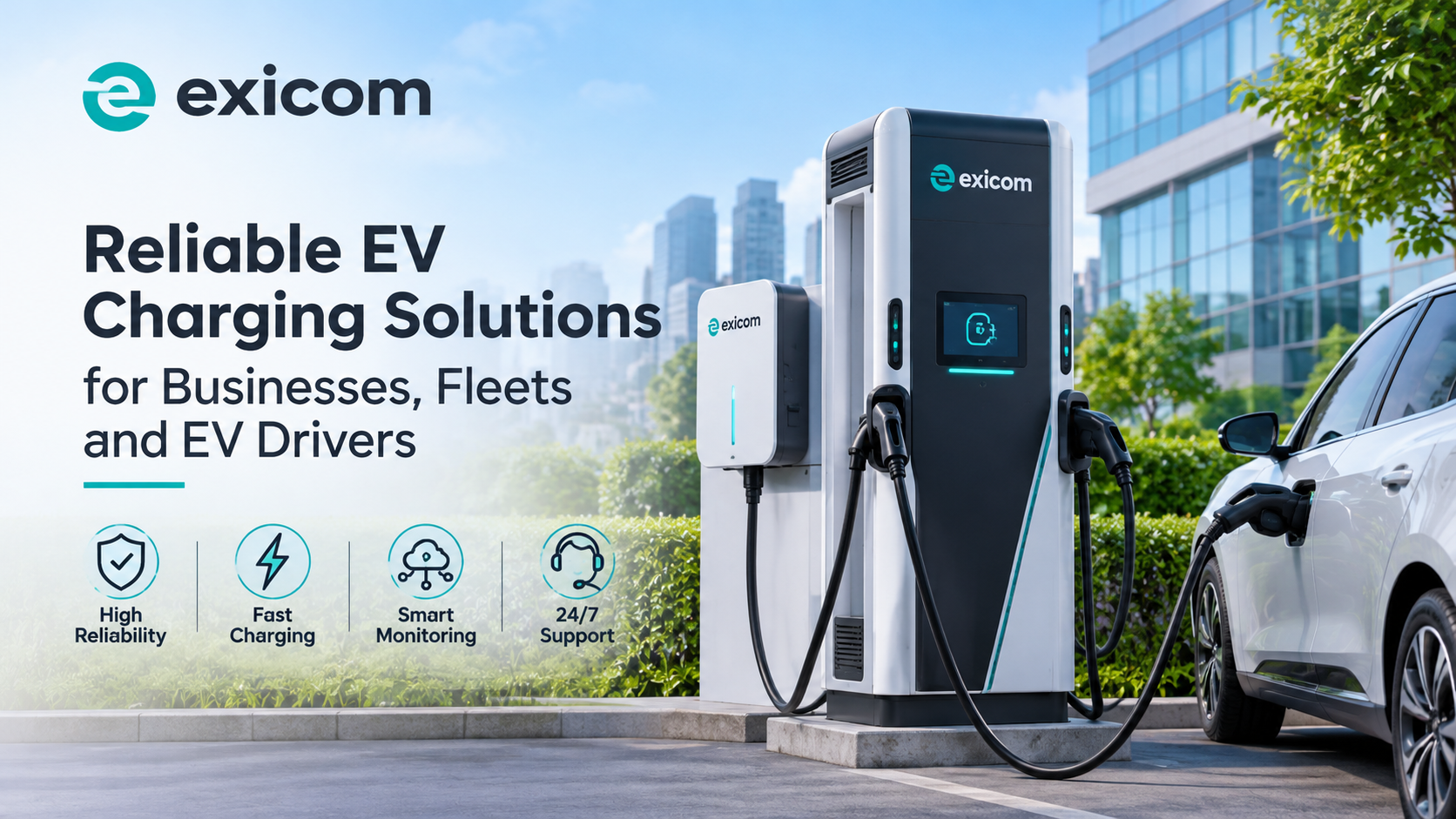
By combining rugged design, intelligent software, and solid customer support services, Exicom provides reliable and safe charging solutions which will help you to drive without any doubts and problems. No matter what kind of charging point you would like to install, whether it is just one home charger or a network of fast highway chargers, the idea is always the same – plug in, charge, go.
If your existing charging stations cause you to spend more time and money, and even lose customers, it might be the right time to upgrade. Contact Exicom experts to choose the right solution for you.
FAQs
1. What are reliable EV charging solutions?
Reliable EV charging solutions are chargers, software, and service systems that deliver consistent charging speeds and high uptime in real-world conditions. They combine rugged hardware, smart remote monitoring, and fast after-sales support, so the charger works whenever a driver needs it.
2. Why do public EV chargers break down so often?
Common causes include overheating, poor protection against dust and water, unstable power supply, software or network glitches, and slow maintenance. Low-cost hardware that wasn't designed for local climate and grid conditions tends to fail more often.
3. How does Exicom make its EV chargers more reliable?
Exicom draws on decades of experience in critical power systems for telecom. Its chargers are engineered for heat, dust, and grid fluctuations, support open protocols for remote monitoring and updates, and are backed by local manufacturing and service teams that help reduce downtime.
4. Should I choose an AC or DC charger for my business?
It depends on how long vehicles stay parked. AC chargers suit homes, offices, and hotels where cars park for several hours. DC fast chargers are better for highways, retail hubs, and fleets that need quick turnaround. Many businesses use a mix of both.
5. How can charge point operators improve charger uptime?
Operators can improve uptime by choosing durable hardware, using OCPP-compliant management software for real-time monitoring, scheduling preventive maintenance, and working with a supplier that offers quick local service and spare-part availability.
Frequently Asked Questions
Lorem ipsum dolor sit amet, consectetur adipiscing elit, sed do eiusmod tempor incididunt ut labore et dolore magna aliqua. Ut enim ad minim veniam, quis nostrud exercitation ullamco laboris nisi ut aliquip ex ea commodo consequat. Duis aute irure dolor in reprehenderit in voluptate velit esse.
Lorem ipsum dolor sit amet, consectetur adipiscing elit, sed do eiusmod tempor incididunt ut labore et dolore magna aliqua. Ut enim ad minim veniam, quis nostrud exercitation ullamco laboris nisi ut aliquip ex ea commodo consequat. Duis aute irure dolor in reprehenderit in voluptate velit esse.
Lorem ipsum dolor sit amet, consectetur adipiscing elit, sed do eiusmod tempor incididunt ut labore et dolore magna aliqua. Ut enim ad minim veniam, quis nostrud exercitation ullamco laboris nisi ut aliquip ex ea commodo consequat. Duis aute irure dolor in reprehenderit in voluptate velit esse.
Lorem ipsum dolor sit amet, consectetur adipiscing elit, sed do eiusmod tempor incididunt ut labore et dolore magna aliqua. Ut enim ad minim veniam, quis nostrud exercitation ullamco laboris nisi ut aliquip ex ea commodo consequat. Duis aute irure dolor in reprehenderit in voluptate velit esse.
Lorem ipsum dolor sit amet, consectetur adipiscing elit, sed do eiusmod tempor incididunt ut labore et dolore magna aliqua. Ut enim ad minim veniam, quis nostrud exercitation ullamco laboris nisi ut aliquip ex ea commodo consequat. Duis aute irure dolor in reprehenderit in voluptate velit esse.