


EV Charging: Fitting everyday lives?
.avif)
Something is changing on Indian roads. If you are an old soul like us, you’d remember that somewhere in the 2000s, vehicles started having 2 distinct color plates: white for privately owned, yellow for commercial. And then, a 3rd color entered the scene. Green. It was incredibly rare, to the point of being an anomaly, but in the last couple of years, you’ve probably seen at least one on the road every time you go out. Yes, the vehicles with green number plates are EVs (electric vehicles).
EVs are changing the way India moves
Like we said in our last blog, over 2 million EVs have been bought by Indians in just this half of 2026. The quick commerce guys delivering to your society, those E rickshaws near the market, the overnight bus your kids went backpacking in, and then the new stylish car your neighbor bought last month, EVs have now become part of everyday Indian lives.
But absolute numbers are only half of the story.
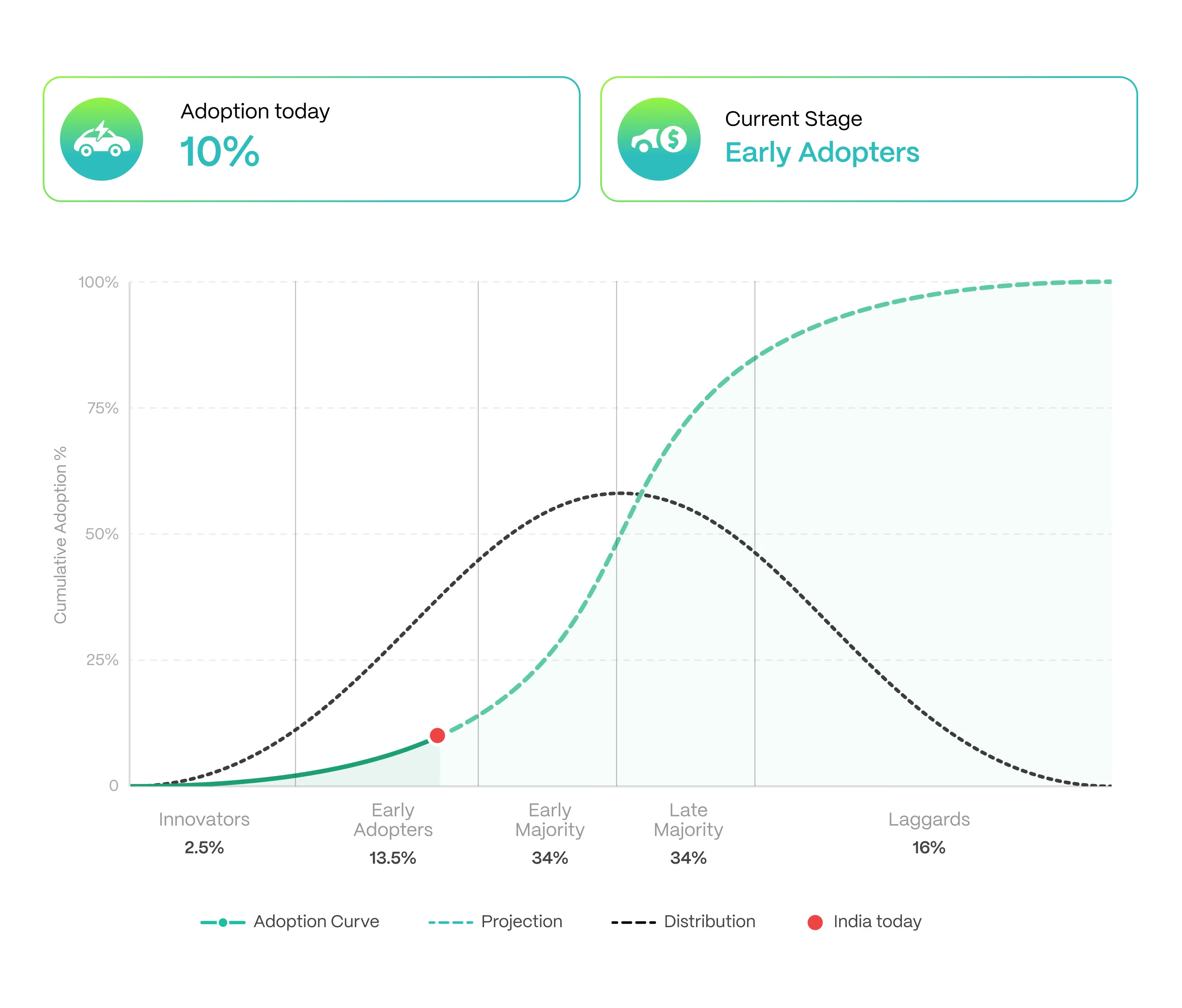
Any new technology, when coming to the market, often follows something called the technology adoption curve. This much-discussed sociological pattern segments customers into five categories based on their willingness to embrace new technology.
- Innovators (first 2.5% of the population)
- Early adopters (up to 13.5%)
- Early majority (34%, or 1/3rd)
- Late majority (next 34%)
- Laggards (last 16%)
India’s overall EV adoption currently stands at around 10%, which is clearly in the early adopter stage.
India's EV adoption %
But the question is, why have EVs not become the majority despite having government backing, and being considerably better, both for the pocket and the environment?
EV charging is still seen as a cumbersome investment
EV charging needs to be made easier, but this is easier said than done. That’s becuase EV charging is not a simple demand-production-supply equation.
For example, a parking operator in a prime commercial location is a tier 1 city may get EV charging enquiries due to a lot of vehicles frequenting the space, but still struggle to install one. Why? A full-scale DC build for fast charging, needs power upgrades amidst an already overburdened grid. Thus, the project is stuck in some electrical work, utility reviews, or some internal sign-off.
Or take the case of destination charging. A transporter in a tourist hub may want to venture into the EV charging business, especially if there is a solar-integrated BESS solving grid dependence. However, they may be unsure of break-even during seasonal variations, not to mention the unique spatial challenges in remote terrains, which may require more precarious site constructions. This may not be something a first-time investor would want to start with.
Move closer to the city again, and there’s the facility management of an upscale gated society getting complaints. EV charging slots are falling short, because most EVs remain plugged overnight. Should they invest in a full-scale DC fast charge? Unclear at the moment.
All of these examples hint at one thing.
There has to be a scope for creating EV charging pilots with smaller initial installations. But these should not compromise on reliability and safety. As and when demand grows, the site’s capacity should be seamlessly scalable with more EV chargers under a controlled plan.
Specialized EV chargers can solve key investment constraints
EV chargers, especially for pilot projects, should be designed around 3 practical constraints:
- Space
- Power flexibility
- Scalability
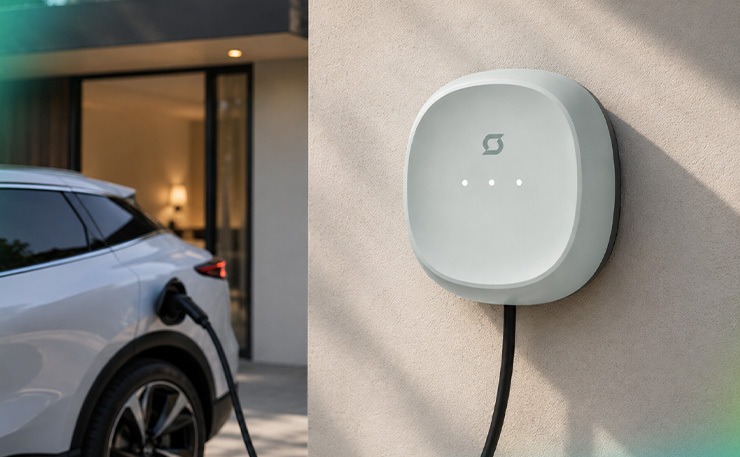
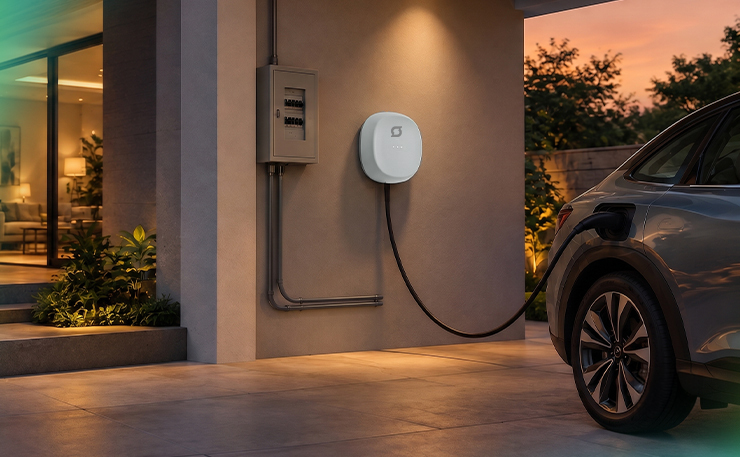
This is the thought behind Slim 60, our newest EV charger.
In an EV charger, compactness reduces the physical burden of spacing and installation. Ring topology reduces the risk of overcommitting to the first build. Dynamic load management reduces the chance that the site needs a larger upstream supply before the demand is proven.
Slim 60 works for diverse use cases.
For Parking spaces
A midsized retail parking operator can deploy a single Slim 60 at the edge of a parking bay cluster to test price elasticity, dwell time, and repeat traffic. The compact footprint reduces civil works and lets the operator begin revenue capture quickly. As utilisation rises, a second Slim 60 can be added and configured in ring mode to scale to 120 kW without changing the upstream supply.
The advantage here is operational simplicity. The operator can keep most of the site unchanged while adding a visible charging service that supports tenant appeal and customer dwell time. If the pilot underperforms, the operator has not overcommitted to a large build. If it performs well, expansion is already built into the plan.

For Transport/Fleet Depots
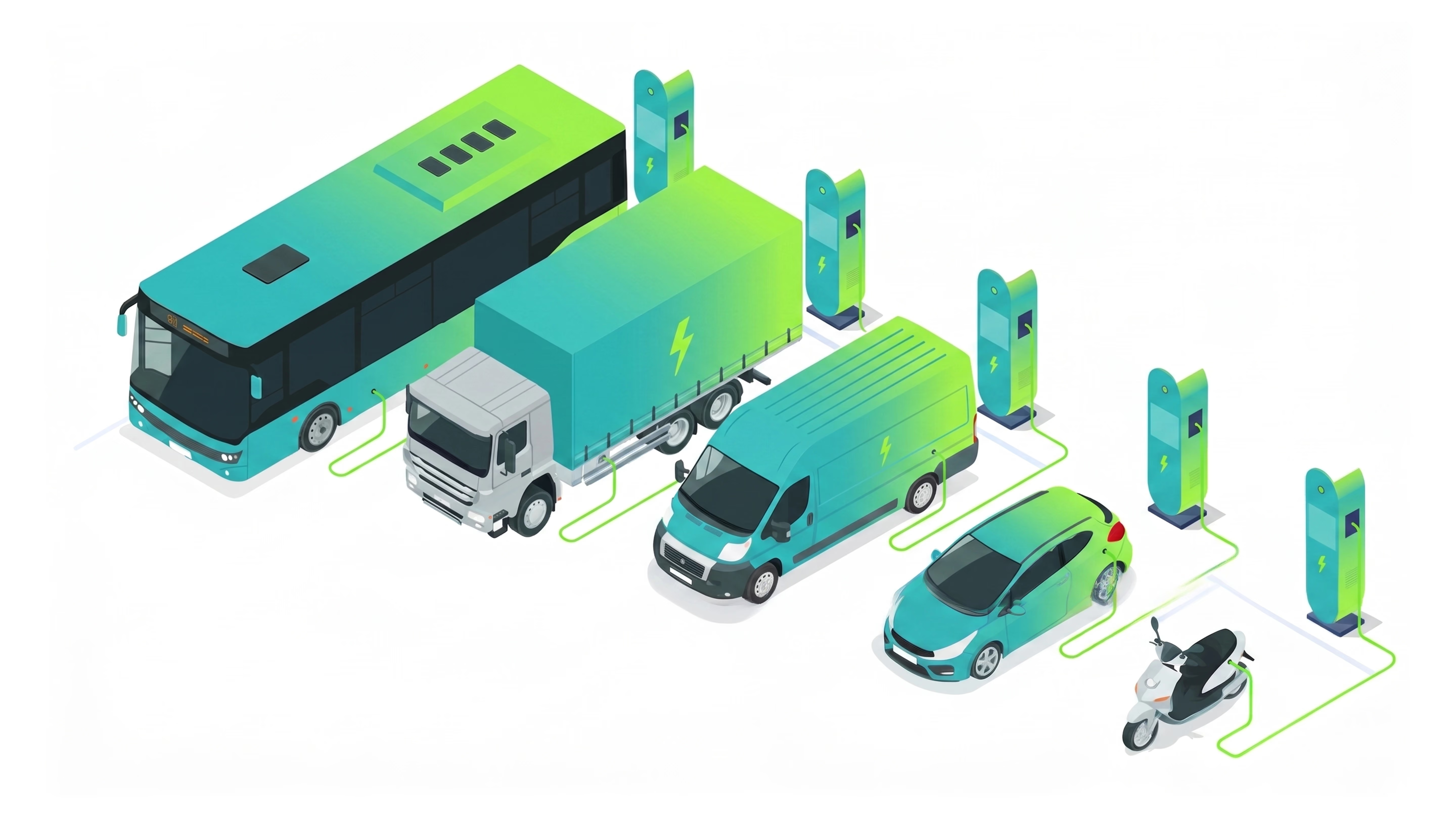
Delivery fleets typically charge during defined shift windows. A Slim 60 pilot lets an operator trial scheduled charging + dynamic load sharing so the depot can run multiple vehicles without expanding service capacity immediately. The build is slim, which will use minimal space and 2 large commercial vehicles parked adjacently can also charge simultaneously. The software layer and RMS reduce operational friction and make a staged capex path practical.
This is also where utilization is easiest to prove. Fleet dwell times are relatively predictable, so the operator gets clean operational data quickly. That makes it easier to decide whether the site should move toward a larger charging cluster.
For Community Charging
For gated communities or apartment clusters with uncertain charging patterns, Slim 60 provides an ’install small, expand only if necessary’ option. Dynamic load sharing reduces the need for immediate upstream reinforcement and lowers the barrier to entry for facility managers. The broader value is trust. RWAs and facility managers are more likely to implement an installation when the electrical and spatial footprint is constrained. That combination makes the first project easier to start.
.avif)
A deployment needs to keep 3 things in mind
If a site has visible traffic, a manageable first electrical envelope, and no appetite for major civil works, then the first charger should be optimized for pilot-ability rather than maximum size. In contrast, a site that already has high and predictable demand may justify a larger initial build. The point is not that every site should begin small. The point is that many sites should begin with an installation that makes learning cheap.
CPOs should budget for:
- a short pilot budget that includes monitoring
- a data collection window of 3–6 months to validate utilisation assumptions,
- a staged procurement clause allowing a second Slim 60 (or additional units) to be added under the same civil footprint. The combination of compact hardware and flexible power sharing keeps the initial capex modest while preserving an upgrade path.
CPOs should also define success before installation begins. Success might mean the following:
- a minimum number of charging sessions per wee
- a dwell-time threshold
- a target revenue level per bay.
Clear criteria keep the pilot from drifting into a vague proof-of-concept that never moves to scale.
The procurement decision should be treated as a phased commitment. Phase one validates demand. Phase two adds infrastructure if the site proves it can support more. That approach is slower than a headline-grabbing full build, but it is usually more defensible for a new CPO.
Interested in a pilot? Slim 60 2.0 is designed to be a low-risk first step for commercial and community charging sites. Talk to an Exicom expert here.

Slim 60 2.0
A space-efficient DC fast charger for commercial parking, public charging, and fleet depot applications.
Frequently Asked Questions
Lorem ipsum dolor sit amet, consectetur adipiscing elit, sed do eiusmod tempor incididunt ut labore et dolore magna aliqua. Ut enim ad minim veniam, quis nostrud exercitation ullamco laboris nisi ut aliquip ex ea commodo consequat. Duis aute irure dolor in reprehenderit in voluptate velit esse.
Lorem ipsum dolor sit amet, consectetur adipiscing elit, sed do eiusmod tempor incididunt ut labore et dolore magna aliqua. Ut enim ad minim veniam, quis nostrud exercitation ullamco laboris nisi ut aliquip ex ea commodo consequat. Duis aute irure dolor in reprehenderit in voluptate velit esse.
Lorem ipsum dolor sit amet, consectetur adipiscing elit, sed do eiusmod tempor incididunt ut labore et dolore magna aliqua. Ut enim ad minim veniam, quis nostrud exercitation ullamco laboris nisi ut aliquip ex ea commodo consequat. Duis aute irure dolor in reprehenderit in voluptate velit esse.
Lorem ipsum dolor sit amet, consectetur adipiscing elit, sed do eiusmod tempor incididunt ut labore et dolore magna aliqua. Ut enim ad minim veniam, quis nostrud exercitation ullamco laboris nisi ut aliquip ex ea commodo consequat. Duis aute irure dolor in reprehenderit in voluptate velit esse.
Lorem ipsum dolor sit amet, consectetur adipiscing elit, sed do eiusmod tempor incididunt ut labore et dolore magna aliqua. Ut enim ad minim veniam, quis nostrud exercitation ullamco laboris nisi ut aliquip ex ea commodo consequat. Duis aute irure dolor in reprehenderit in voluptate velit esse.