


Top 7 things in 2026 that are a gamechanger for EVs in India

Do you remember 2015? Of course you do. Do you remember the EVs in 2015? Even if you do, it’s probably not much. Frankly speaking, EVs were at best a rarity at that time. Cut to 2026? They are 7.3% of new vehicle registrations, that’s roughly 20 lakh EVs. And that number didn’t come out of thin air.
After a decade of pilots and fits-and-starts, India’s EV ecosystem has finally arrived, and delivering.
2025 is the year the EV industry truly comes into its own
We’ve crossed the tipping point. Not only do we have a booming EV 2 and 3-wheeler market, 4 wheelers have joined the bandwagon too! And how! As much as we are tempted to talk about the cool EV models that have come in, this blog of ours, is about the ‘how’ of them coming in; the infrastructure, the technology and the policies that converged to shape this ecosystem.
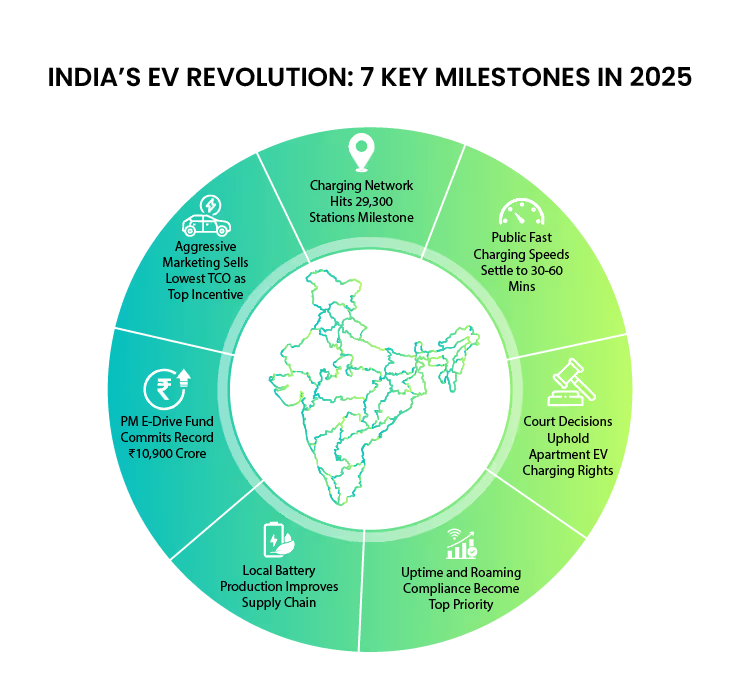
Here are the 7 biggest developments:
1. EV Charging infra went from being patchy to being dependable
The primary question vehicle buyers had in mind while considering EVs, was “Where do I charge this?”
That question has reduced a lot, because EV charging infrastructure has made a quantum leap. In early 2022, India had only around 5,000 public chargers. By the end of 2023 that was nearly 12,000. By mid 2025, the number has more than doubled. Now, we have roughly 29,300 public charging stations.
Public charging network density crossed minimum viable threshold
Delhi, Mumbai, Bangalore and Hyderabad, India’s largest EV markets, have the highest number of EV chargers. Karnataka (including Bengaluru) has ~ 6,100 public chargers, Maharashtra (including Mumbai) has 4,155. Delhi, though smaller, has a dense 1,967, and Telangana (Hyderabad), approximately 1,066. Each metro has effectively cleared what industry analysts call the “minimum viable network” threshold: the point at which drivers can reasonably rely on public charging for routine and intercity trips.
Tier-2 cities are catching up. There has been a surge of EV chargers in smaller cities, driven by private CPOs working with DISCOMs and real-estate partners (like petrol stations, malls and residential complexes). As of April 2025, roughly 4,625 chargers were operational in tier 2 cities. The emergence of this mid‑market network is slowly enabling intercity EV travel viable even outside big metros.
.avif)
Are we ideal? No. Our EV:Charger ratio currently stands at 235:1, far from the required 20:1. But this also means there is huge potential of further expansion, and the scope of innovation is far from over.
Which brings us to this: EV charging initially required hours of idle time. But not anymore.
Fast charging has become more affordable and available
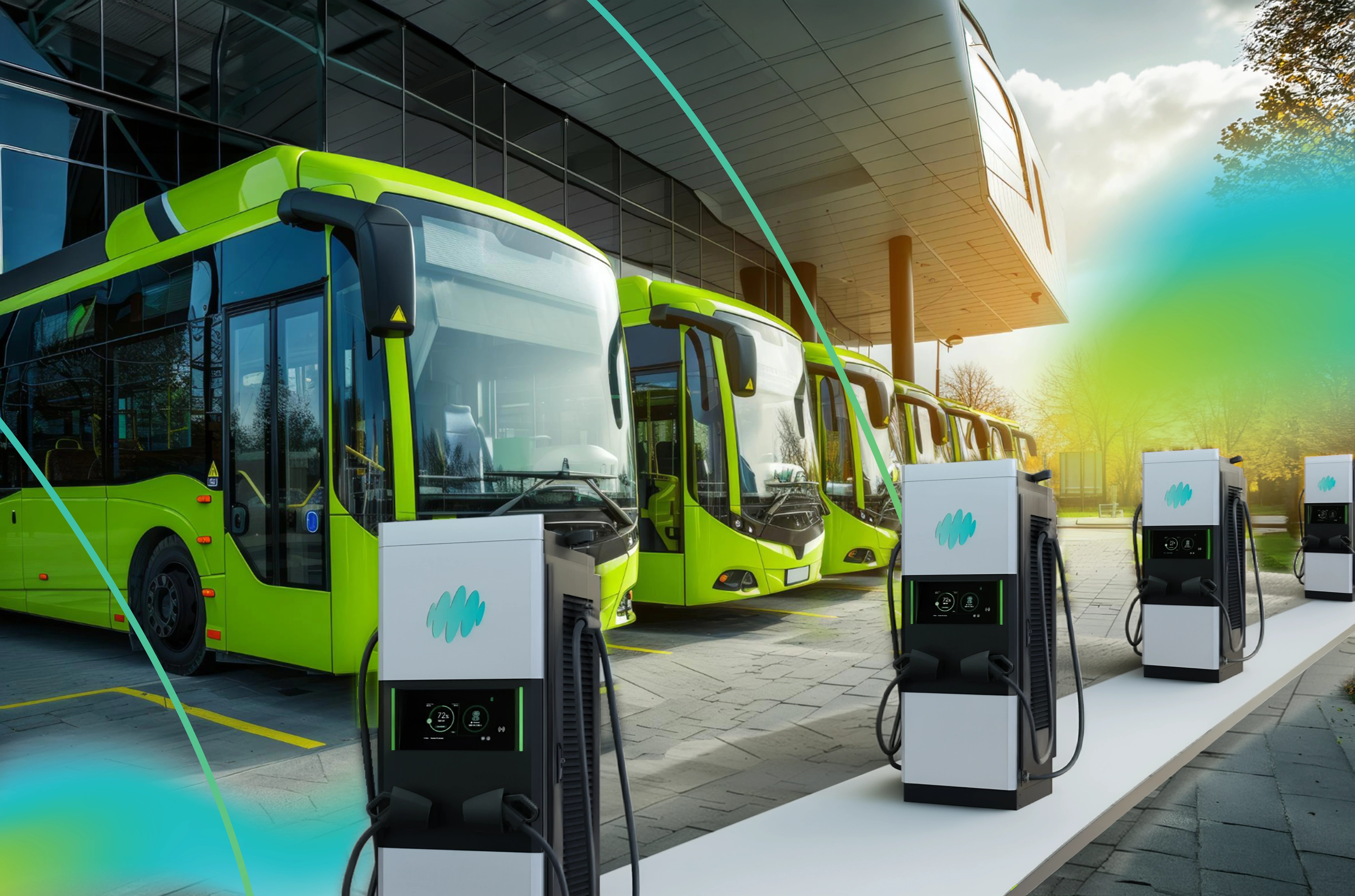
High-speed charging is now common, not special. 60–120 kW DC fast-chargers are being installed along highways and major roads. This power range allows drivers to recharge 20–30 km of range in just 20–30 minutes.
More players are entering the EV Charging market
EV charging industry today has both big MNCs and domestic players, which improves reliability and price stability. State-owned oil companies alone (IOC, BPCL, HPCL) have deployed one of India’s largest networks, ~18,000 points. Beyond them, private domestic firms like Tata Power, Adani, Tata Motors/TPower, Charge+Zone, Magenta, and international names like ABB and Siemens are all building EV chargers for use in India.
It will be interesting to see how the advent of fast charging technology and the presence of multiple players turns out for India as we plan to expand into 72000 EV charging stations in the upcoming year.
While the roads reflect these important changes, the most significant step in EV adoption is probably being taken inside homes.
Home EV charging is now a basic right of residents
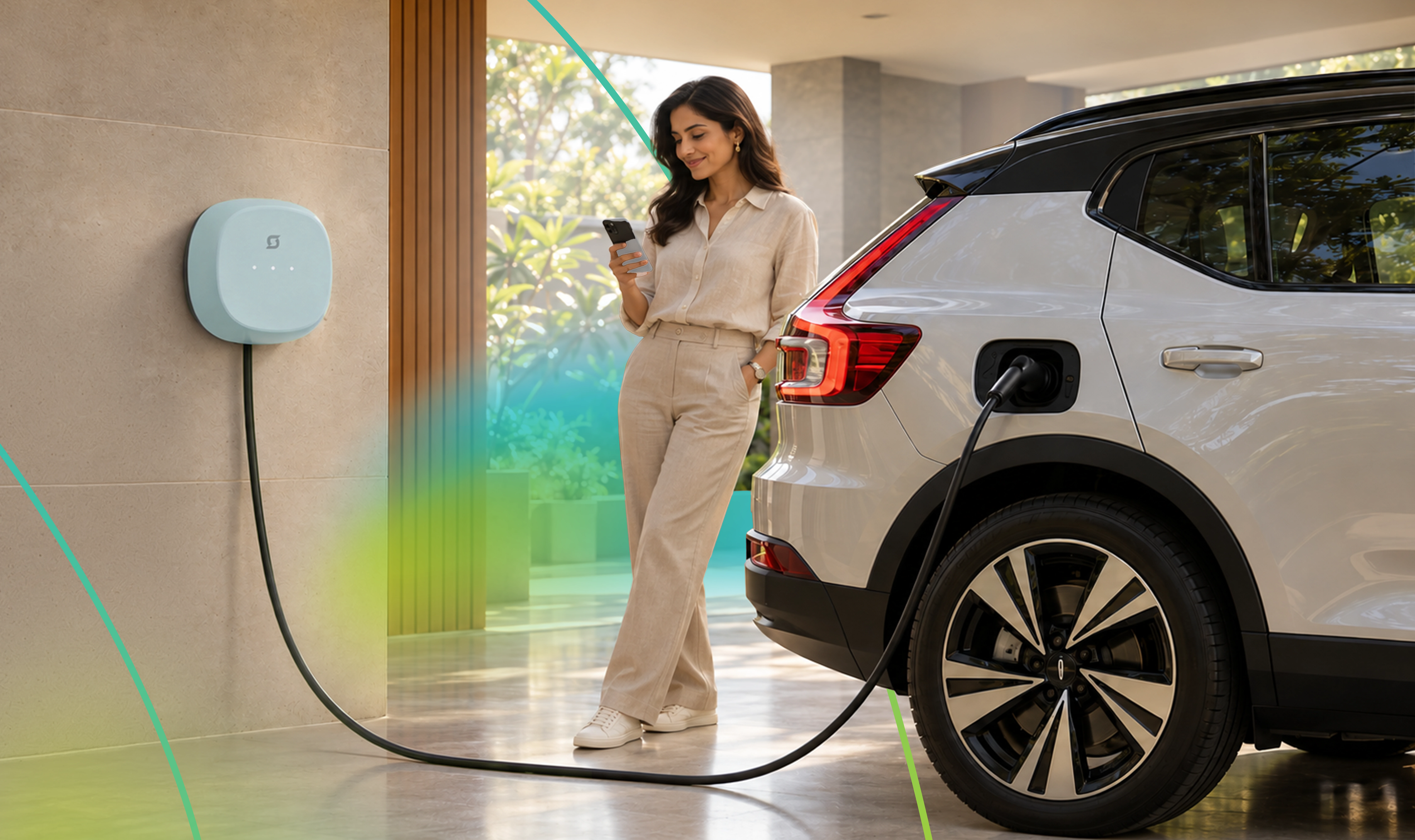
Anyone who lives in India knows how difficult it is to avail utilities of your choice, even if you are paying for them or using them within your private space. Something similar had happened with early EV owners, when societies and RWAs had no provision for accommodating EV charging needs. But not anymore. In January 2025, Bombay High Court took a clear stance: Housing societies cannot arbitrarily deny EV charger installation if an owner follows the rules. Tamil Nadu (Nov 2025) amended its building rules to require EV-ready parking in all new complexes, following similar bye laws in other states like Delhi (20% parkings reserved for EVs, 5% must have EV chargers). Charging at home or society parking is now treated almost like a basic utility right, in sharp contrast to the cumbersome approval processes of the past.
Corporates back EV charging for both ESG and employee welfare
Workplaces are not holding back. Many corporates are viewing EV charging as an ESG initiative and employee perk rolled into one. Forward-thinking firms such as Vedanta and MakeMyTrip have started subsidizing employee EV purchases and installing EV chargers on campus as part of a “green perks”. Delivery and logistics giants are doing the same: Flipkart, Swiggy, and others are electrifying fleets and putting chargers in warehouses. In short, offering charging at work (and even incentivizing staff to go EV) has become part of the corporate sustainability playbook.
But no expansion or incentive can ultimately succeed if the core problem statement of users remains unsolved. Here’s where technology comes in.
2. EV charging tech is breaking longstanding hurdles
Two major problem EV users faced while charging, was the lack of:
- Reliability
- Interoperability
Technological breakthroughs are solving both.
95% uptime is becoming a common commitment
With the advent of remote-monitoring, predictive maintenance and rugged IP65 enclosures, EV charger reliability has improved, with issues being detected in real time, fixed within 1-2h before exacerbation, or being prevented from happening altogether. This has given CPOs the confidence to speak of high uptime, as high as 95, or 97%, and drivers the confidence to rely on public EV chargers much like they rely on petrol pumps.
Roaming pilots and universal payments are making charging truly user centric
EV charging used to be fragmented by “app hell,” but that’s ending. Pilots of EV roaming standards, analogous to mobile roaming, are underway. India’s charging guidelines now mandate open protocols (OCPP/OCPI). What does this mean? One account, one RFID card will work at any public charger. If you have App A, you can walk up to a charger on Network B or C and simply use your existing login. Behind the scenes networks authenticate you and handle billing seamlessly This “charge anywhere” model is becoming reality: in 2025, interoperable platforms are rolling out that link most major CPOs. With unified billing and a single app, users no longer need to juggle multiple accounts, EV charging will be finally as simple as pulling into any station and plugging in.
But ultimately the charging experience also depends on the battery of the EV, doesn't it?
3. EV battery packs are evolving to have longer range and life cycle
Battery tech in India saw major gains in 2025. Gen-3 batteries became standard, enabling 400 to 600 km of range on new EV models. Mahindra’s XUV e8, for eg, now claims 600 km range with 20–80% fast charging in under 20 minutes.
Lithium-ion chemistry delivers better performance
While high-nickel NMC and silicon-anode batteries still power premium vehicles, most Indian OEMs are moving to LFP (Lithium Iron Phosphate) batteries for everyday models. LFP chemistry offers lower cost, longer cycle life, and much better thermal stability (which means very low fire risk). Tata’s Nexon EV, for eg, uses LFP cells. Real-world degradation has improved too: new batteries now lose only about 1.8% capacity per year on average, a significant improvement from 2.3 % just a few years ago. Strong warranties reflect this progress. Tata introduced a 15-year unlimited km battery warranty on the Harrier EV, while Hyundai offers 10 years or 160,000 km coverage. Safety has improved due to stricter AIS-156 norms, smarter battery management systems, and better thermal design.
Localised manufacturing is lowering production costs of EVs
India’s battery cell manufacturing capacity reached 60 GWh in 2025, led by Tata’s Gujarat plant, Reliance’s upcoming sodium-ion facility, and Exide’s JV with Hyundai5. Local pack assembly is further reducing dependence on imports and lowering costs of EVs, making them accessible to more and more people.
4. DISCOM improvements have boosted trust in the EV ecosystem
Many DISCOMs have created EV-specific feeders and added transformers to serve charging hubs. Regulators now require fast approval for new charger connections and often offer special off-peak tariffs for EV loads. For example, Delhi and Karnataka have mandated rapid grid connections for chargers and introduced lower nighttime rates for EV charging. These measures ensure that as charger numbers grow, the grid can handle the extra load without brownouts. In short, the promise that “the grid will take care of EVs” is being backed up by actual grid upgrades and smart tariffs, which reassures both operators and drivers.
5. Smart Charging and renewable integration are improving efficiency
In 2025, smart charging and renewables formed a powerful alliance in India’s EV landscape, to usher a new era of energy efficiency. Kerala began offering ~30% lower electricity tariffs for EV charging during solar-rich daytime hours, incentivizing clean energy use directly. On the infrastructure side, highway charging hubs, the Delhi-Jaipur expressway for example, now feature 50+ kW solar canopies and battery banks that store energy for nighttime or backup charging.
But how to best utilise the mix of renewables and grid, without overpowering circuits or overcharging a customer? Here’s where smart chargers did the heavy lifting.
In many Tier-1 apartment complexes, it’s now common to see networked EV chargers dynamically allocate power to avoid overloading circuits. At corporate logistics hubs, Energy Management Systems stagger charging to off-peak hours, cutting DISCOM stress and power bills. Delhi’s EV policy
even promoted time-of-day aligned home charging, and 2025 saw early vehicle-to-grid pilots in NCR and Bangalore where EVs fed electricity back to the grid during peak evening hours.
6. Policies are finally fuelling action, not just announcements
After years of talk, the government has put some serious budgets and plans of action around EVs and their supporting infrastructure.
PM E-Drive and state level mandates are taking clear EV-first stance
The new PM E-Drive scheme (2024–26) is essentially FAME-II’s successor, with a ₹10,900 Cr outlay, including a ₹2,000 Cr fund earmarked specifically for public charging infrastructure. On top of that, individual states have set concrete targets. Maharashtra aims to make 10% of new vehicle sales electric by 2025, and Karnataka plans to electrify 100% of small commercial vehicles (3W/4W cargo) by 2030.
These funded programs and mandates are showing that EVs are now at the top of policy agendas.
GST stability provides financial incentive
In 2025 the GST Council retained the concessional 5% tax on all EVs, even though the general GST structure was overhauled, with ICE vehicles facing 28%.). This meant that EV buyers didn’t face surprise price jumps, keeping customer sentiment positive.
Battery end-of-life legislations have nipped a problem at bud
The lithium in EV batteries carries risk of leaching if disposed incorrectly, which can negate the whole environment-friendly proposition of EVs. In 2022, the government formalised the Battery Waste Management Rules, which mandate that battery producers (including EV companies) must collect and recycle or refurbish spent batteries. The rules also state that 20% material in new EV batteries must also come from recycled batteries.
7. EVs are being marketed at par with ICEs, if not better
Almost all major automakers are now rolling out EV models with mass-market intent, not as slideshow or compliance products. Maruti Suzuki, which was so far absent in the EV race, showcased its first electric SUV at the January 2025 Auto Expo. Hyundai introduced an electric version of its best-selling SUV – Creta, built locally in India. Mahindra rolled out its XUV.e8 and BE series electric SUVs in late 2024, with deliveries in 2025. Tata Motors, already the EV leader, expanded its lineup further with its Punch EV (compact SUV), Harrier EV (midsize SUV) covering multiple segments. Luxury markets weren’t behind either, with Audi, BMW, Mercedes, Volvo each showcasing multiple EV models and aggressively marketing them.
Lower TCO emerges as key driver of purchase interest
The EV industry has shifted its pitch from “cute green transport” to hard economics. It’s now routine to see EV ads emphasize “save ₹X per km” and “break even after Y years”. Even if EVs cost more upfront, they pay for themselves over time. In 2025, a fresh study by CEEW found that electric scooters run at about ₹1.48 per km, versus ₹2.46/km for petrol bikes, that’s almost 50% cheaper, not to mention, the lower maintenance costs. EVs are selling on the strength of lower running costs: a powerful incentive that simply didn’t exist at this scale a few years ago.
Waiting periods post purchase have reduced
In 2022-23, most EV models, even by major manufacturers would have several months of waiting, due to production and semiconductor supply chain issues. By late 2025, some dealerships reported EVs in stock ready for immediate delivery, thanks to many major manufacturers like Tata and Mahindra setting up dedicated assembly lines and inventory for mass production.
Charger installation support is making things easier for buyers
By 2025, it’s an expected norm that when you purchase an EV, the manufacturer will facilitate installation of a wall box home charger at your residence. Companies have learned that a seamless charging experience is key to customer satisfaction, and have made it part of the product selling process.
A culture shift is happening. The future is electric
Rome wasn’t built in a day. But days after days of hard work of hundreds of people, and there was a day, when Rome finally stood built. We stand at an inflection point of the same happening with EVs. It’s 2025, and EVs are no longer a fringe experiment.
With dependable charging networks, Gen-3 batteries, solar-integrated energy systems, and robust policy backing, the ecosystem has matured. Improvements have to be done, yes, but the toughest battle: the psychological one - has been won. A consumer can now trust the tech, infrastructure, and economics.
We are not watching the EV future arrive anymore. We are living it.
Frequently Asked Questions
Lorem ipsum dolor sit amet, consectetur adipiscing elit, sed do eiusmod tempor incididunt ut labore et dolore magna aliqua. Ut enim ad minim veniam, quis nostrud exercitation ullamco laboris nisi ut aliquip ex ea commodo consequat. Duis aute irure dolor in reprehenderit in voluptate velit esse.
Lorem ipsum dolor sit amet, consectetur adipiscing elit, sed do eiusmod tempor incididunt ut labore et dolore magna aliqua. Ut enim ad minim veniam, quis nostrud exercitation ullamco laboris nisi ut aliquip ex ea commodo consequat. Duis aute irure dolor in reprehenderit in voluptate velit esse.
Lorem ipsum dolor sit amet, consectetur adipiscing elit, sed do eiusmod tempor incididunt ut labore et dolore magna aliqua. Ut enim ad minim veniam, quis nostrud exercitation ullamco laboris nisi ut aliquip ex ea commodo consequat. Duis aute irure dolor in reprehenderit in voluptate velit esse.
Lorem ipsum dolor sit amet, consectetur adipiscing elit, sed do eiusmod tempor incididunt ut labore et dolore magna aliqua. Ut enim ad minim veniam, quis nostrud exercitation ullamco laboris nisi ut aliquip ex ea commodo consequat. Duis aute irure dolor in reprehenderit in voluptate velit esse.
Lorem ipsum dolor sit amet, consectetur adipiscing elit, sed do eiusmod tempor incididunt ut labore et dolore magna aliqua. Ut enim ad minim veniam, quis nostrud exercitation ullamco laboris nisi ut aliquip ex ea commodo consequat. Duis aute irure dolor in reprehenderit in voluptate velit esse.