



How to Start an EV Charging Business in India - Complete Guide
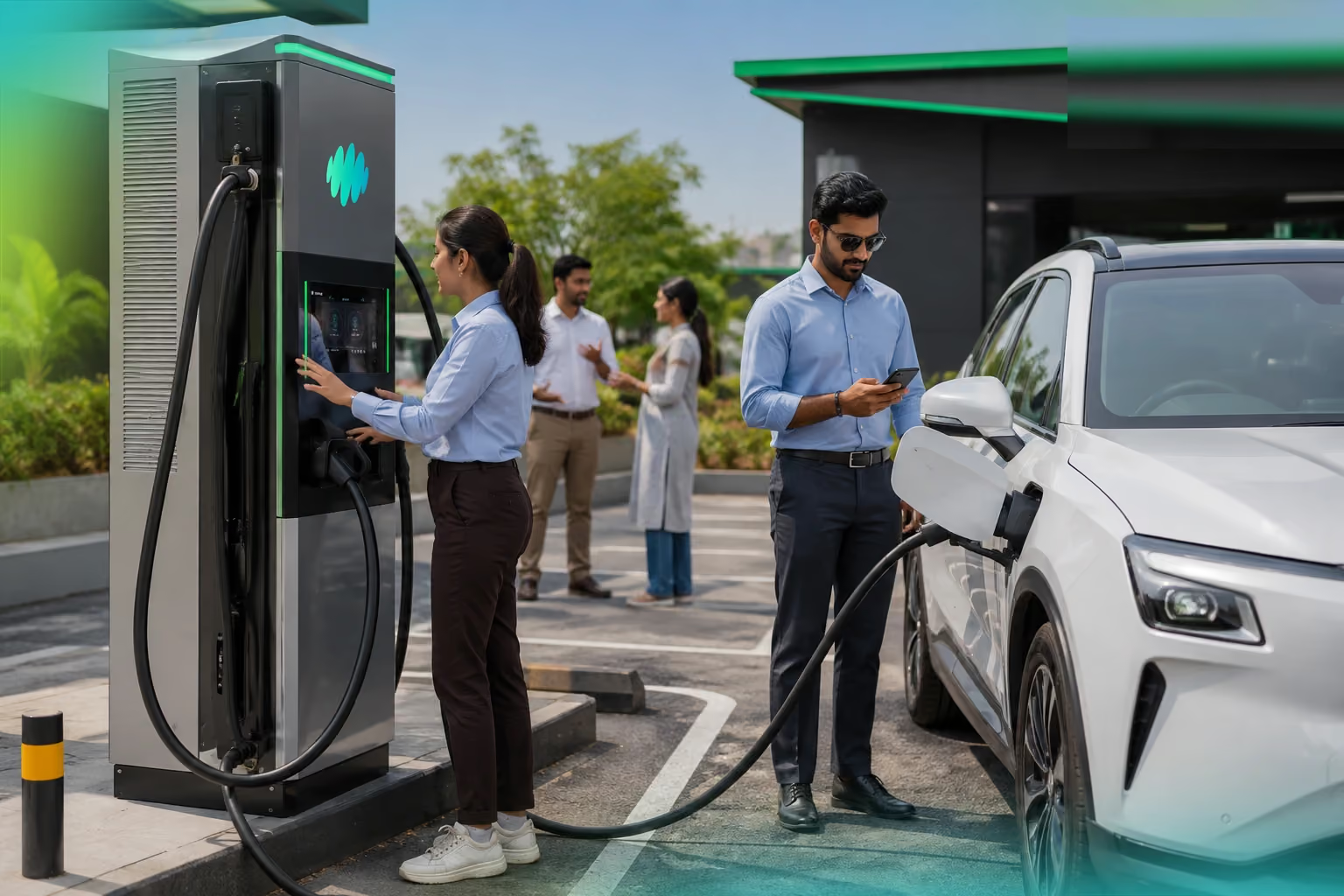
An EV charging business often starts with a simple observation. More electric vehicles are appearing on roads across India. At the same time, charging availability remains limited in many regions. That gap is creating a new business opportunity , but one that rewards patience over speed.
India's EV infrastructure plans are expanding steadily. Public and private investments are increasing. Government-backed initiatives are encouraging the growth of charging networks. For many entrepreneurs, the idea becomes practical when daily EV usage starts to become visible in nearby cities, on highways, in office spaces, and in residential areas.
How Much Does It Cost to Start an EV Charging Station in India?
Starting an EV charging business involves multiple cost layers. Hardware alone can represent a substantial expense , especially when DC fast chargers are involved.
The first major consideration is usually investment. Common startup costs include land acquisition or leasing, charger procurement, electrical infrastructure upgrades, transformer setup, installation work, software integration, licensing and approvals, and maintenance agreements.
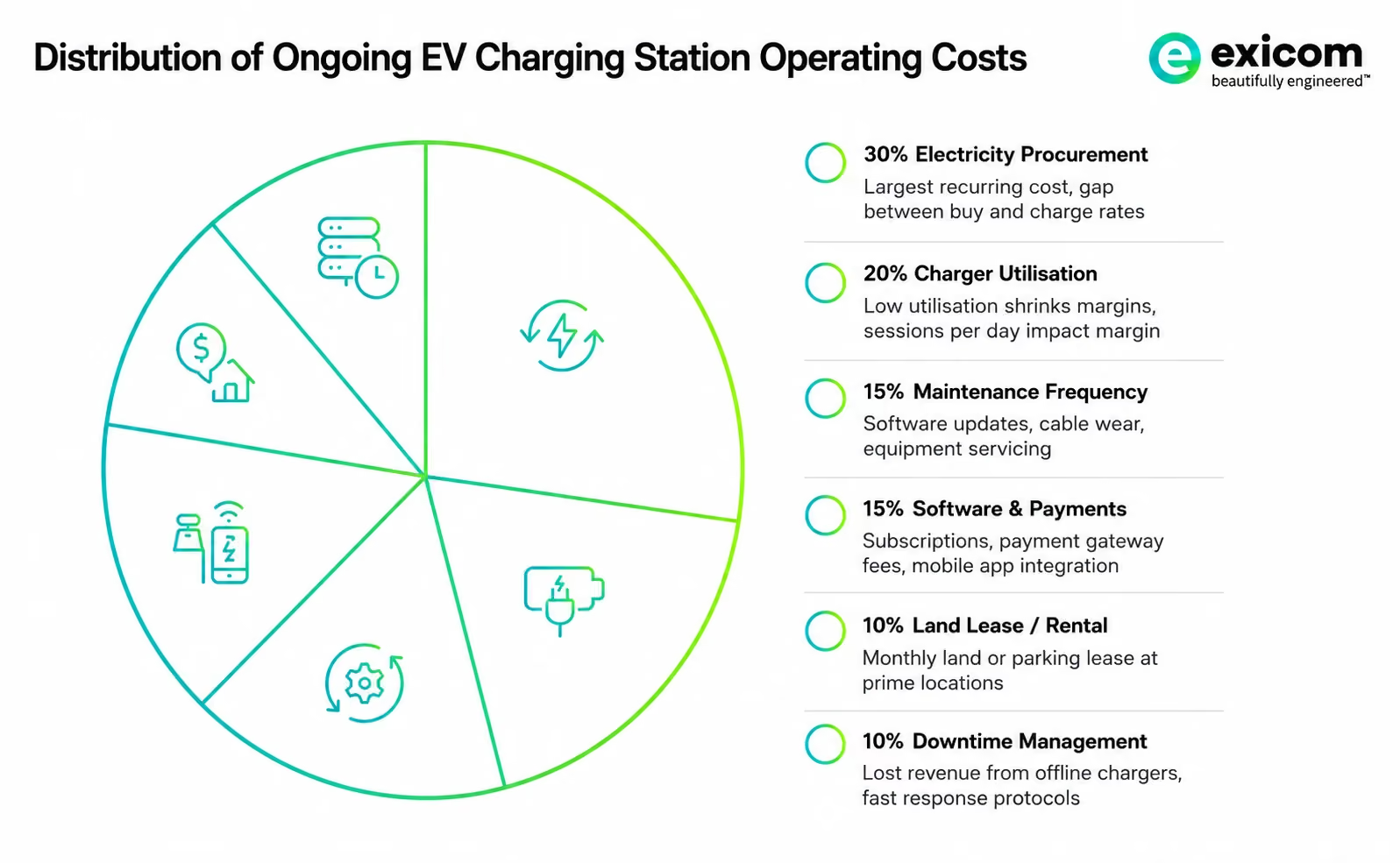
What Are the Ongoing Operating Costs of an EV Charging Station?
Operations begin immediately after installation. The business then moves into a recurring cost structure.
Electricity generally becomes the largest operational expense. EV charging operators purchase electricity at regulated tariff rates. Users are then charged based on charging speed, location, and service model. That pricing difference creates the operating margin , however, profitability depends on several ongoing factors.
Monthly Revenue vs. Operating Cost – Illustrative DC Station (Urban)
An analysis of the monthly financial dynamics for an illustrative urban DC charging station highlights the balance between gross earnings and core operational outlays. While robust top-line revenue generation reflects strong urban demand, profitability remains closely tied to managing fixed and variable overheads, with power procurement standing out as the single largest operational expenditure.
- Gross Revenue: ₹90K–₹1.2L
- Electricity: ₹40K–₹55K
- Lease / Land: ₹10K–₹25K
- Maintenance + SW: ₹8K–₹15K
- Net Monthly Profit: ₹20K–₹40K
How Long Does It Take to Break Even on an EV Charging Station in India?
Break-even rarely arrives quickly in this industry. Utilisation remains one of the biggest deciding factors.
A charging station used consistently may recover costs steadily. A low-traffic station may struggle for years. EV adoption is growing across India, but growth patterns vary by region. Different locations also produce different usage behaviours:
The Operational Lifecycle of EV Charging Stations
The maturity curve of an EV charging station project shifts systematically from high-capital infrastructure setup to predictable, data-driven profitability. Unlike scalable software models, this asset-heavy business requires an initial period of operational stabilization where reliability takes precedence over immediate monetization. As usage patterns crystallize over a multi-year horizon, operators transition from optimizing uptime to refining margins, eventually reaching financial break-even based on location density and traffic volume.
Key Phases of the Maturity Timeline
- Months 1–3: Setup & Early Operations
This initial phase centers on hardware installation and grid connection. Initial vehicle traffic is typically low, resulting in expected negative cash flows. Because this is an infrastructure business rather than a SaaS product, the strategic priority is to establish high uptime reliability and a frictionless user experience before chasing aggressive revenue targets. - Months 6–12: Pattern Recognition Phase
As the station crosses its first half-year, operators begin gathering historical data to identify distinct usage trends. Predicting peak charging hours becomes easier, allowing for more precise dynamic pricing adjustments. At this stage, even minor, incremental improvements in day-to-day operations yield measurable financial returns. - Years 1–2: Stability & Margin Refinement
The focus shifts heavily to maximizing customer retention by minimizing charger downtime. Implementing faster, seamless payment processors upgrades the overall user experience, while consistent equipment reliability drives high repeat utilization. Smart pricing adjustments begin protecting and expanding margins, leading to stable, predictable revenue generation as the station's utilization curve climbs. - Years 2–3: Break-Even Zone (High-Traffic Locations)
For optimally located urban hubs and major highway corridor stations, this window represents the inflection point for profitability. As utilization reaches a critical mass, revenue stability solidifies. Operators at this stage recognize that long-term patience is structurally built into the unit economics of the business model. - Years 4–5: Break-Even Zone (Tier 2 / Lower Traffic Locations)
In secondary markets or lower-density zones, the break-even timeline naturally stretches across multiple years due to less consistent traffic patterns. To compress this timeline and accelerate profitability, operators increasingly look to incorporate secondary, non-charging revenue streams—such as co-located retail spaces, cafes, and digital advertising networks.
"Most operators eventually realise that patience becomes part of the business model. Break-even timelines often stretch across multiple years, depending on traffic consistency and operational efficiency."
Is an EV Charging Station Business Profitable in India?
Profitability usually develops gradually. Operators begin identifying usage patterns over time and the margin levers that move the needle.
Peak charging hours become easier to predict. Pricing strategies become more refined. Small operational improvements can make a measurable difference:
Core Levers for Optimizing EV Charging Station Performance
Sustaining long-term profitability for an EV charging network requires a sharp focus on user experience and operational metrics. Unlike traditional retail, charging infrastructure relies heavily on habit formation and hardware trust. By systematically optimizing hardware uptime, transaction workflows, and utility-margin differentials, operators can transform single-use drivers into loyal, recurring cohorts while insulating their unit economics against fluctuating power procurement costs.
Core Operational and Financial Levers
- Reduced Downtime
Minimizing station infrastructure failures directly protects customer retention rates. In a highly competitive grid, every seamless charging session shifts user behavior, turning a transactional stop into a sticky habit of returning to your specific station network rather than risk a competitor's site. - Faster Payment Systems
Frictionless transaction processing is vital to reducing dropout rates at the plug. Integrating ultra-fast, single-click UPI interfaces and intuitive app-based checkouts eliminates technical hurdles, driving down session abandonment rates and maximizing successful completions. - Charger Reliability
Hardware dependability dictates customer churn. A driver who consistently finds an active, operational charger quickly becomes a recurring brand advocate. Conversely, encountering an offline gun just twice permanently damages trust, instantly handing that customer lifetime value over to competing networks. - Smart Pricing
Strategic, dynamic pricing models are essential for widening operating margins. While public charging tariff rates can scale significantly higher than raw electricity procurement costs, this arbitrage gap only translates into real bottom-line profitability when station utilization rates remain consistently high.
Over time, charging stations may also create secondary commercial opportunities. Customers spend time waiting during charging sessions. That waiting period can support:
Secondary Revenue Streams for EV Charging Stations
- Convenience Retail
- Cafés
- Quick-Service Restaurants
- Co-working Spaces
- Advertising Displays
What Is the Best Location for an EV Charging Station in India?
Small decisions often have large consequences in the charging infrastructure business. Location remains one of the strongest success factors.
A well-positioned station may naturally attract consistent traffic. A poor location may struggle even with high investment and advanced hardware.
Critical Success Factors for EV Charging Station Site Selection
Selecting the right location for an EV charging station requires balancing geographic, technical, and consumer behavior variables. A site's success is determined by its immediate visibility to long-distance drivers and its integration into local EV ecosystems. Beyond mere location, robust utility infrastructure, frictionless transactional capabilities, and environmental resilience dictate long-term operational viability. Missing any of these core pillars can quietly erode profit margins, turn high-potential hubs into operational liabilities, and drive users toward competing networks.
Key Operational and Location Metrics
- Highway Visibility
Long-distance drivers map out their journeys around battery range constraints. Prominent highway signage and clear approach visibility are essential drivers of spontaneous and planned charging session volume. - Nearby EV Density
Higher numbers of EVs per square kilometer generate natural, organic footfall without requiring heavy marketing spend. Assessing local vehicle registration data is vital before finalizing a site. - Parking Accessibility
Frictionless in-and-out traffic flow without localized congestion protects user experience. Internal Combustion Engine (ICE) vehicles blocking designated charging bays acts as a hidden, preventable killer of station profitability. - Traffic Movement
Mapping the direction and specific type of passing traffic is critical. Inbound commuters and outbound highway travelers exhibit entirely different charging behaviors, dwell times, and spending patterns. - Stable Power Supply
Local transformer availability and uncompromised grid reliability are absolute prerequisites. Power outages directly equal zero revenue generation coupled with damaging negative user reviews. - Future Expansion
Evaluating whether a location can scale to support additional chargers over time is essential. Securing electrical capacity headroom during the initial build saves prohibitive, complex infrastructure upgrade costs later. - Simple Payments
A UPI-first checkout flow with minimal operational steps keeps conversion rates high. Overly complex checkout and authentication processes measurably reduce successful session completion rates. - Climate Conditions
Environmental factors are increasingly critical for infrastructure deployment in India. Extreme ambient temperatures directly impact hardware charging efficiency, vehicular battery thermal behavior, and overall equipment durability.
Is Now a Good Time to Invest in EV Charging Infrastructure in India?
EV charging businesses usually reward consistency more than speed. The sector behaves similarly to long-term infrastructure development. Growth happens gradually. Demand expands over time rather than overnight.
The broader EV market continues showing strong expansion potential. Still, adoption spreads unevenly across regions and customer groups. As a result, timing matters.
The transition toward electric mobility does not happen all at once. It happens gradually. One more EV enters the road network. Another office installs chargers. More drivers are beginning to plan around battery range rather than fuel stations.
Over time, charging infrastructure starts feeling normal rather than experimental. That gradual shift is what continues driving the industry forward. Starting an EV charging business is less about perfectly predicting the future and more about recognising where transportation trends are moving.
"Success often depends on staying present long enough for demand to catch up with infrastructure. In many cases, the business is not built through speed alone. It is built through consistency."
Frequently Asked Questions
Lorem ipsum dolor sit amet, consectetur adipiscing elit, sed do eiusmod tempor incididunt ut labore et dolore magna aliqua. Ut enim ad minim veniam, quis nostrud exercitation ullamco laboris nisi ut aliquip ex ea commodo consequat. Duis aute irure dolor in reprehenderit in voluptate velit esse.
Lorem ipsum dolor sit amet, consectetur adipiscing elit, sed do eiusmod tempor incididunt ut labore et dolore magna aliqua. Ut enim ad minim veniam, quis nostrud exercitation ullamco laboris nisi ut aliquip ex ea commodo consequat. Duis aute irure dolor in reprehenderit in voluptate velit esse.
Lorem ipsum dolor sit amet, consectetur adipiscing elit, sed do eiusmod tempor incididunt ut labore et dolore magna aliqua. Ut enim ad minim veniam, quis nostrud exercitation ullamco laboris nisi ut aliquip ex ea commodo consequat. Duis aute irure dolor in reprehenderit in voluptate velit esse.
Lorem ipsum dolor sit amet, consectetur adipiscing elit, sed do eiusmod tempor incididunt ut labore et dolore magna aliqua. Ut enim ad minim veniam, quis nostrud exercitation ullamco laboris nisi ut aliquip ex ea commodo consequat. Duis aute irure dolor in reprehenderit in voluptate velit esse.
Lorem ipsum dolor sit amet, consectetur adipiscing elit, sed do eiusmod tempor incididunt ut labore et dolore magna aliqua. Ut enim ad minim veniam, quis nostrud exercitation ullamco laboris nisi ut aliquip ex ea commodo consequat. Duis aute irure dolor in reprehenderit in voluptate velit esse.

%20(1).webp)

