



How do I charge my electric car with renewable energy?
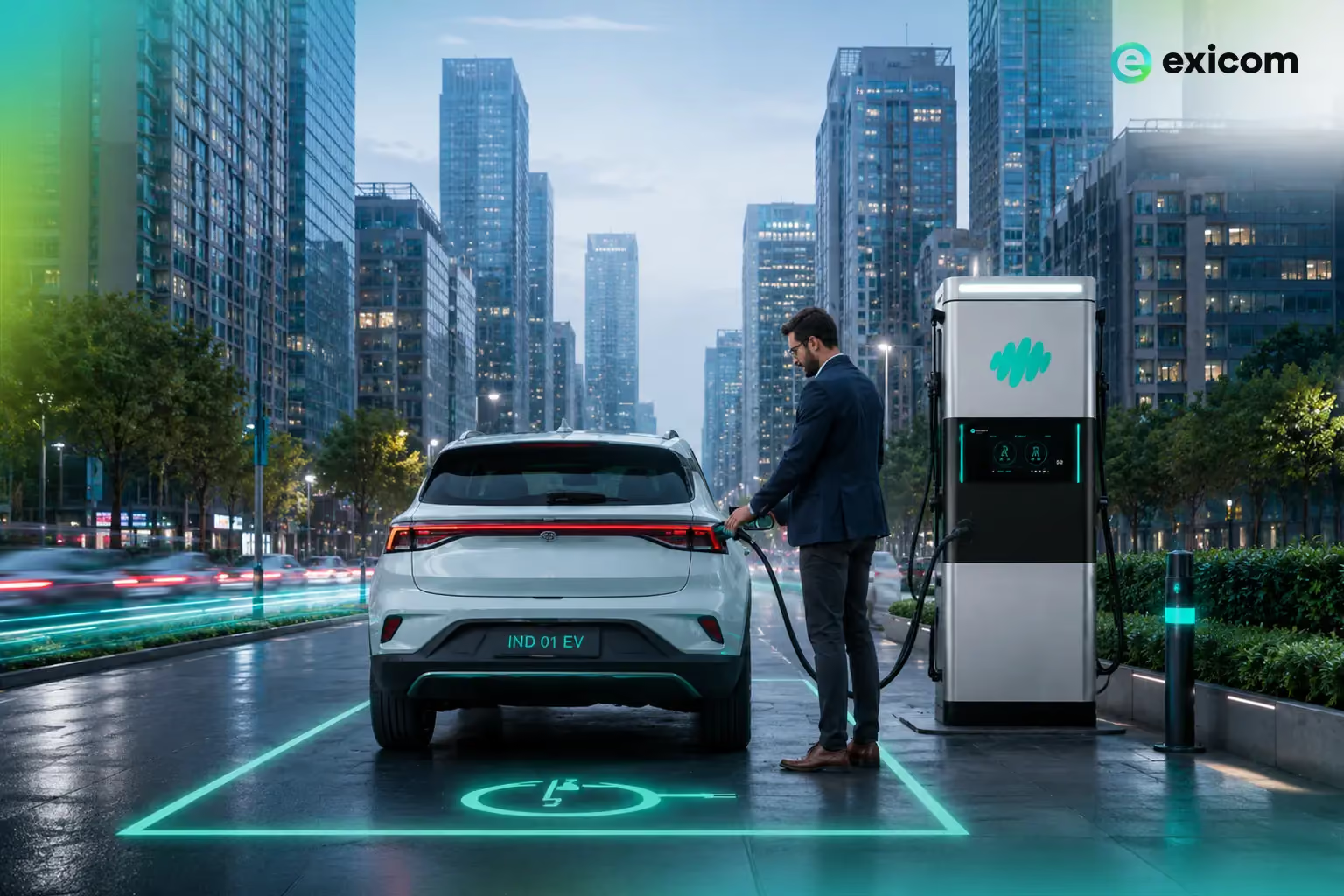
EV charging is rather simple
At first, charging an EV at home does not feel complicated. The car is plugged in at night and ready by morning. That routine quickly becomes normal.
After a while, though, people start thinking about the electricity itself. Not the charger or the battery, but the actual power source.
Most grid electricity still comes from traditional energy systems in many parts of the world. Coal is still part of the mix in several regions. Gas is too. So while the car may not use fuel directly, the power behind it is not always as clean as expected.
That is usually when the conversation changes a little.
Grid irregularities often limit EV charging
EV charging is no longer only about convenience. It also becomes connected to electricity prices, grid reliability, and energy sources. Some households begin looking at solar because of this. Others simply want more control over long-term charging costs.
In urban regions:
- Charging stations may remain occupied for longer periods.
- Evening demand increases the grid load.
- Peak-hour consumption can slow charging efficiency.
In smaller towns or developing regions:
- Voltage fluctuations remain common.
- Unexpected outages can interrupt charging.
- Infrastructure quality varies significantly.
The Ministry of Power continues to expand charging and power infrastructure across the country, but day-to-day charging experiences still vary by location.
Electricity pricing also becomes part of the discussion. Residential and commercial tariffs change over time, and peak-hour pricing can increase operational costs for EV owners and businesses alike.
The Cost Impact of Peak-Hour Electricity Pricing
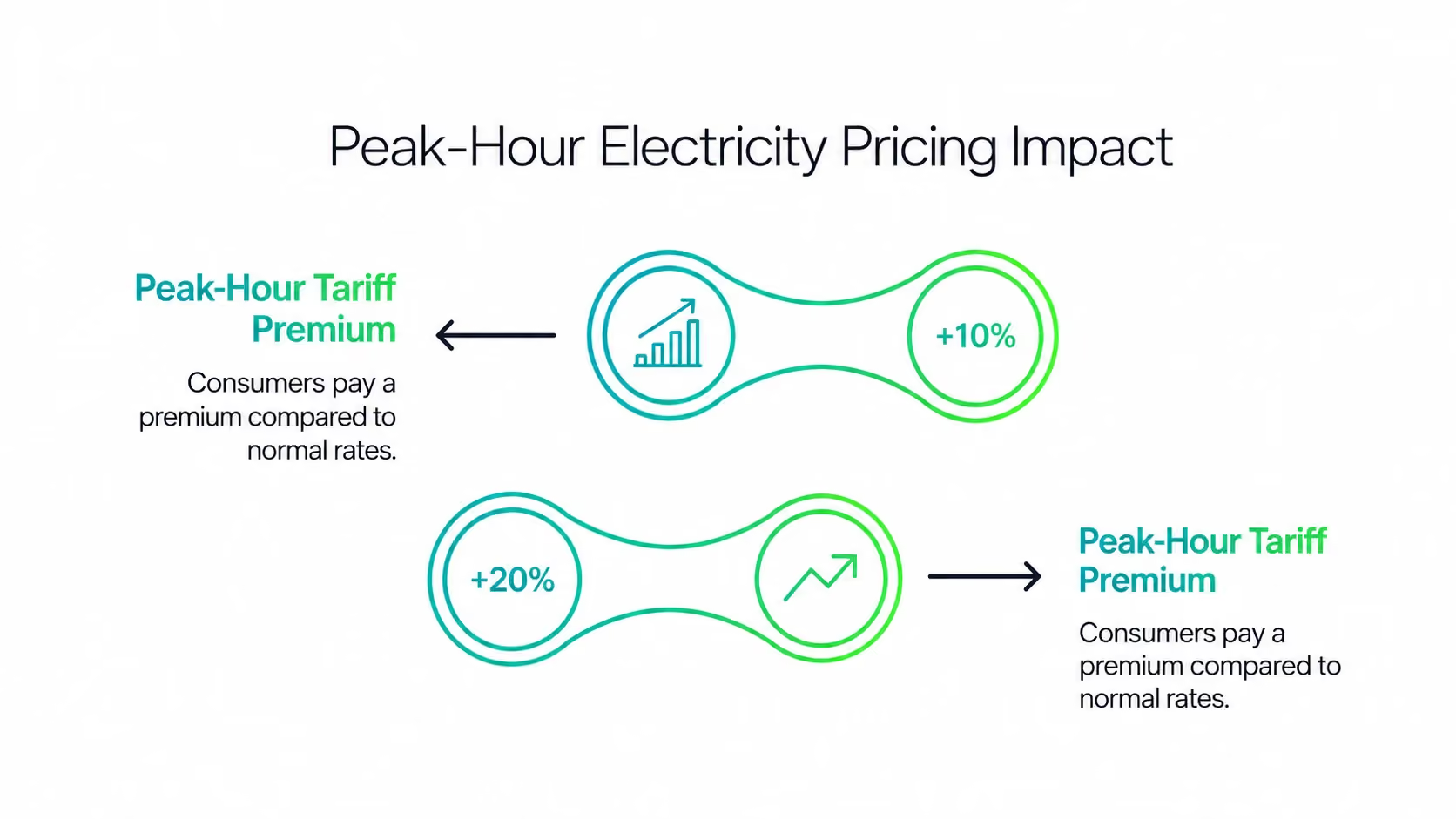
The assumption of unlimited, low-cost grid power begins to break down when charging demand overlaps with peak electricity consumption periods. Under India's amended Electricity (Rights of Consumers) Rules, many utilities are adopting Time-of-Day (ToD) tariffs, where electricity prices vary based on demand throughout the day. During peak evening hours, typically between 6 PM and 10 PM ;consumers may pay a tariff premium of 10% to 20% compared to normal rates. For EV owners who rely exclusively on grid charging, this can significantly increase charging costs over time. As EV adoption grows and charging demand becomes more concentrated during evening hours, a flat grid-charging strategy can expose both individual EV owners and charging operators to higher energy costs, making energy management, smart charging, and alternative power sources increasingly important.
Renewable Energy creates a Controlled Alternative
For many households, solar adoption does not begin as a major energy decision. It usually starts with observation.
Some examples are:
- A neighbour installing rooftop panels
- Lower electricity bills within nearby homes
- Interest in reducing long-term charging expenses
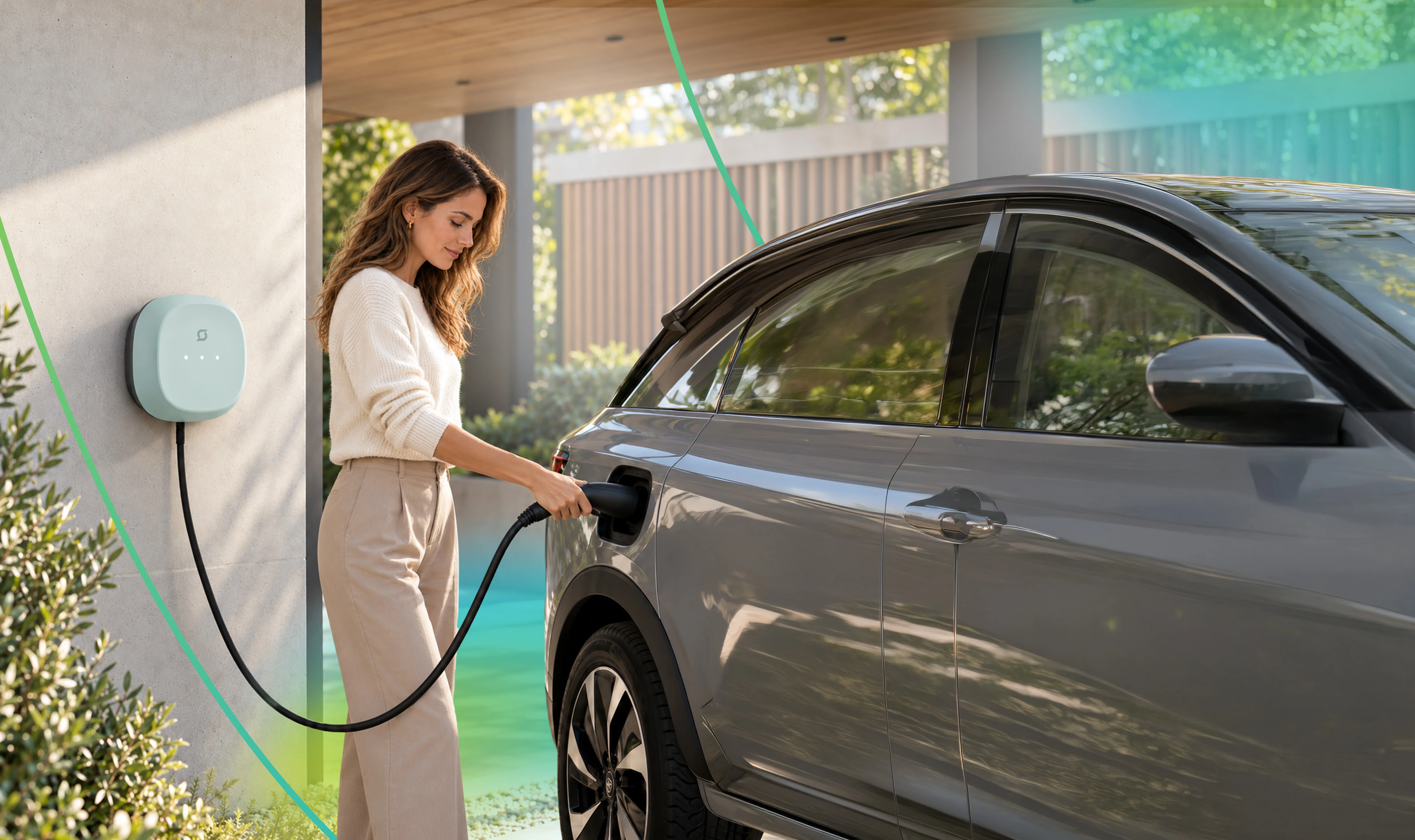
A rooftop solar setup can often support both household electricity needs and EV charging requirements.
Typical residential systems include:
Once installed, solar energy changes how charging costs are viewed. Electricity generated on-site reduces dependence on external supply and improves cost predictability.
Alternative Becomes Stronger When Savings Start to Show
Initial installation costs remain one of the biggest considerations in solar adoption.
These usually include:
- Solar panels
- Inverters
- Installation expenses
- Optional storage systems
Government initiatives such as the PM Surya Ghar Muft Bijli Yojana have helped reduce the financial burden for many households by offering subsidies and incentives. Over time, several financial benefits become noticeable:
- Lower monthly electricity bills
- Reduced EV charging costs
- Lower dependence on fuel expenses
- Long-term savings from self-generated energy
In many cases, systems gradually recover their own installation costs through accumulated savings over several years.
While the long-term operational advantages of combining solar arrays with clean energy management are substantial, navigating the upfront financial math is where most homeowners hesitate. To systematically remove this entry barrier, the Central Government’s flagship PM Surya Ghar Muft Bijli Yojana provides massive financial relief via direct bank transfers.
Instead of a flat incentive structure, the scheme calculates Central Financial Assistance (CFA) based on tiered kilowatt brackets. It aggressively heavily incentivizes the baseline consumer sweet spot—capping out fully at $3\text{ kW}$ of installed capacity.
The PM Surya Ghar Subsidy Breakdown (2026 Model)
Savings Reveal a Gap When Timing Doesn’t Align
Solar systems generate electricity mainly during daylight hours. EV charging, however, often happens during the evening or overnight.
This creates a timing mismatch. Common challenges include:
- Excess daytime electricity is going unused
- Surplus energy is being exported back to the grid
- Limited direct solar usage during night charging
Without storage, some of the system’s potential efficiency remains underutilised.
The Gap Closes When Storage Turns Energy Into Availability
Battery storage systems allow electricity generated during the day to be stored for later use.
This changes how solar-powered EV charging operates.
Storage systems help:
- Supply energy during nighttime charging
- Reduce reliance on grid electricity
- Improve energy availability during outages
- Maintain a more stable charging performance
Exicom focuses on integrated energy management systems that combine EV charging, storage, and power optimization. Modern storage systems can automatically manage:
- When to draw power from storage
- When to use grid electricity
- How to optimise charging efficiency
The result is a more balanced and dependable charging ecosystem.
The Architecture of Smart Energy Management: ToD & Peak-Shaving Algorithms
Behind this seamless integration sits an automated software layer driven by intelligent Time-of-Day (ToD) optimization and peak-shaving algorithms. Rather than operating as a passive electrical reservoir, the system functions as an active decision-making node that monitors real-world utility price fluctuations in real time.
The system manages your power eco-system through a three-stage automated lifecycle:
- Dynamic Peak Shaving: During premium evening hours—when grid demand spikes and local utilities enforce peak ToD tariff surcharges (often a $10\%\text{--}20\%$ premium)—the system detects the high-cost window. It autonomously shifts the household and the EV charger's source allocation away from the grid, drawing entirely from the stored battery stack to "shave" off expensive consumption peaks.
- Intelligent Grid Switching: Once the premium peak window closes and grid tariffs return to baseline off-peak rates overnight, the software switches the system back to grid power. This preserves your battery's reserve capacity and ensures maximum vehicle charging speeds without exposing you to premium utility costs.
- Solar Priority Routing: Throughout daylight hours, the system prioritizes direct consumption. If an EV is plugged in, solar generation bypasses the battery to charge the vehicle directly to prevent conversion losses. Any surplus yield is contextually rerouted to top up the battery stack before exporting any excess power back to the grid via net metering.
The result is a more balanced, self-contained, and dependable charging ecosystem that permanently automates electricity cost minimization.
Availability Turns Into a System That Can Be Built Step by Step
Setting up a solar-powered EV charging system usually happens in stages rather than all at once.
The process often begins with a basic assessment:
- Daily driving distance
- Charging frequency
- Household electricity consumption
- Available rooftop space
Core Components of a Solar-Powered EV Charging System
A standard residential solar setup generally requires around 300 square feet of rooftop space.
Guidelines issued by the Solar Energy Corporation of India also support grid integration and net metering processes for residential systems.
Steps Begin to Justify Themselves When the Economics Settle
At the beginning, installation expenses can appear significant. Costs increase further when storage systems are added. However, long-term economics often shift the overall picture. Financial advantages may include:
- Stable electricity expenses
- Lower operating costs
- Reduced fuel dependency
- Incentives for commercial installations
- Better long-term energy management
Storage systems increase upfront investment, but they also improve energy utilisation by reducing wastage from unused daytime generation.
Over time, many households and businesses begin viewing the setup less as a one-time expense and more as a long-term operational investment.
Economics Eventually Fades Into a More Reliable Everyday Routine
The biggest change is often practical rather than technical. Charging becomes routine. Electricity generated earlier in the day powers the vehicle later when required. Dependence on unpredictable external supply reduces, and daily charging requires less active management.
For many EV owners, the long-term benefit is not only financial savings but also consistency.
The system continues operating quietly in the background without demanding constant attention.
Conclusion
Transitioning to solar-powered EV charging solves the dual challenge of rising Time-of-Day grid tariffs and traditional energy reliance. By pairing a rooftop solar setup with advanced battery storage systems, you effectively close the daytime generation gap, automate peak shaving, and secure long-term cost predictability. Building this ecosystem step by step transforms unpredictable charging expenses into a highly reliable, self-contained operational investment.
Frequently Asked Questions
Lorem ipsum dolor sit amet, consectetur adipiscing elit, sed do eiusmod tempor incididunt ut labore et dolore magna aliqua. Ut enim ad minim veniam, quis nostrud exercitation ullamco laboris nisi ut aliquip ex ea commodo consequat. Duis aute irure dolor in reprehenderit in voluptate velit esse.
Lorem ipsum dolor sit amet, consectetur adipiscing elit, sed do eiusmod tempor incididunt ut labore et dolore magna aliqua. Ut enim ad minim veniam, quis nostrud exercitation ullamco laboris nisi ut aliquip ex ea commodo consequat. Duis aute irure dolor in reprehenderit in voluptate velit esse.
Lorem ipsum dolor sit amet, consectetur adipiscing elit, sed do eiusmod tempor incididunt ut labore et dolore magna aliqua. Ut enim ad minim veniam, quis nostrud exercitation ullamco laboris nisi ut aliquip ex ea commodo consequat. Duis aute irure dolor in reprehenderit in voluptate velit esse.
Lorem ipsum dolor sit amet, consectetur adipiscing elit, sed do eiusmod tempor incididunt ut labore et dolore magna aliqua. Ut enim ad minim veniam, quis nostrud exercitation ullamco laboris nisi ut aliquip ex ea commodo consequat. Duis aute irure dolor in reprehenderit in voluptate velit esse.
Lorem ipsum dolor sit amet, consectetur adipiscing elit, sed do eiusmod tempor incididunt ut labore et dolore magna aliqua. Ut enim ad minim veniam, quis nostrud exercitation ullamco laboris nisi ut aliquip ex ea commodo consequat. Duis aute irure dolor in reprehenderit in voluptate velit esse.
.webp)

