


How should I get an EV charging franchise in India?
.png)
It’s 7:00 PM in Delhi. A fleet of electric 2-wheelers is idling behind a quick-commerce dark store, their boxes ready for the evening rush.
Inside, the orders are spiking. Outside, the riders are stuck in "low battery" limbo.
India is moving towards an all-EV future with every sector gradually taking part in it, but the infrastructure is still buffering. While everyone’s talking about "adoption," the real move is solving the hyper-local charging gap. That empty plot is a high-yield franchise opportunity in a market starving for power.
Increasing EVs in India are creating a demand for charging stations
India is in its EV age, and the figures are high. It was extraordinary as in the Indian fiscal year of 2024-2025, the total electric vehicle sales reached a staggering 1.96 million vehicles, which pushed penetration to 7.49%. What we are witnessing is a 15% growth in adoption since FY20. Two-wheelers and three-wheelers are the MVPs as they are taking more than 80-85% of the market. The actual increase is in the commercial fleet and passenger vehicle segments that are increasing at CAGR of 66.52%. It will move to 20 million EVs annually by 2033. There are 20 million vehicles, and each requires a good plug. In case you want a sunrise sector, it is not a sunrise, but a solar flare.
The regional analysis shows an interesting shift of the vibe between the states. Though Delhi and Goa are leading the charge in terms of diversified adoption, other states such as Bihar and Tripura are recording a high number of e-3Ws, meaning that the EV revolution is not a phenomenon housed only in the city but also in the entire nation. The fact sheet behind this is that, between the gig-worker on an e-scooter and the corporate executive with a premium EV to charged, everyone is seeking a place to plug in.
Govt. incentives and fuel costs are accelerating the shift
To be honest: the environmental green flex is fun, but it is the wallet that plays the bigger role. Government is literally hacking the market to make EVs the only rational decision. The North Star of the industry is the PM E-DRIVE scheme with its colossal 10,900 Crore budget. But here is the kicker you must read it the end of huge subsidies is near a Jan 2026 Cliff. In the old FAME II regulations, the consumers got 10,000 per kWh. Year 1 PM E-DRIVE reduced that to 5,000 per kWh, and it will fall to 2,500 per kWh in January 2026. Indian government has already achieved the success of delivering 1.13 million vehicles under PM E-DRIVE half of the per-vehicle subsidy of its predecessor. This is a huge indication that the market is being self-sustaining.
The government is signalling that the market is maturing and can stand on its own feet. For a franchise owner, this means the window to secure high-priority government-backed infrastructure support is now. Waiting until mid-2026 is a "waiting tax" you don't want to pay.
A major infra gap: 1 charging station for 235 EVs
This is the point of the entire situation: we are purchasing vehicles quicker than we are creating EV chargers. The national number of EVs to chargers was 1:235 as of July 2025. In that perspective, the world gold standard is between 6 and 20 EVs per charger.
The infrastructure development has been 5,151 to over 29,277 stations over a 25-month period but the volume of vehicle sales is increasing by a factor of 3.4X each year. The ratio changed by 12:1 to 20:1 within the year 2024 and 2025 respectively as the vehicle adoption is ahead of infrastructure deployment at a pace that is almost overwhelming against some segments.
Investors are not aware of exact profitability metrics of starting an EV charging station
The business concept behind the revenue model is fundamentally an electricity arbitrage game: you purchase power at utility prices and sell it to a premium (typically 15-20rs per unit). But there's a catch. In DISCOMs (power companies) there are also generally demand charges and this is usually a constant fee calculated based on your peak power capacity, not what you use. When you have a huge charger of 150kW and there is only one car that uses the charger daily, your profit margins could be consumed by the demand charges.
Another fear is the “Technology FOMO” of investors. As there are sodium-ion batteries, V2G (Vehicle-to-Grid), and even faster 360kW chargers on the horizon, there is a legitimate worry that the current 50 lakh investment in it might become a thing of the past in three years.
Getting an EV charging franchise simplifies the process of entering this business
When attempting to create a charging network, you must start playing on the Expert Mode, without a power-up. There is the paperwork of de-licensing (though it is de-licensed, still local DISCOM approvals are needed), source of hardware, compliance with OCPP software and the nightmare of getting customers.
A franchise is the cheat-code. It eliminates the guess work in the equation. To own a franchise with a large player such as Exicom (not to brag, but we are amongst the best) where you have the brand trust, which is crucial when the charging corporations are as high as 73% dead, you have the network effect.
The Indian government has facilitated this even further by stating that EV charging is a de-licensed venture. In any case, no special license is required to sell electricity to an EV, but you must comply with safety and technical standards (e.g. earthing, fire safety, standardised connectors). A franchise partner does the heavy lifting of such regulatory bureaucratic hurdles.
The setup is done in 3 stages:
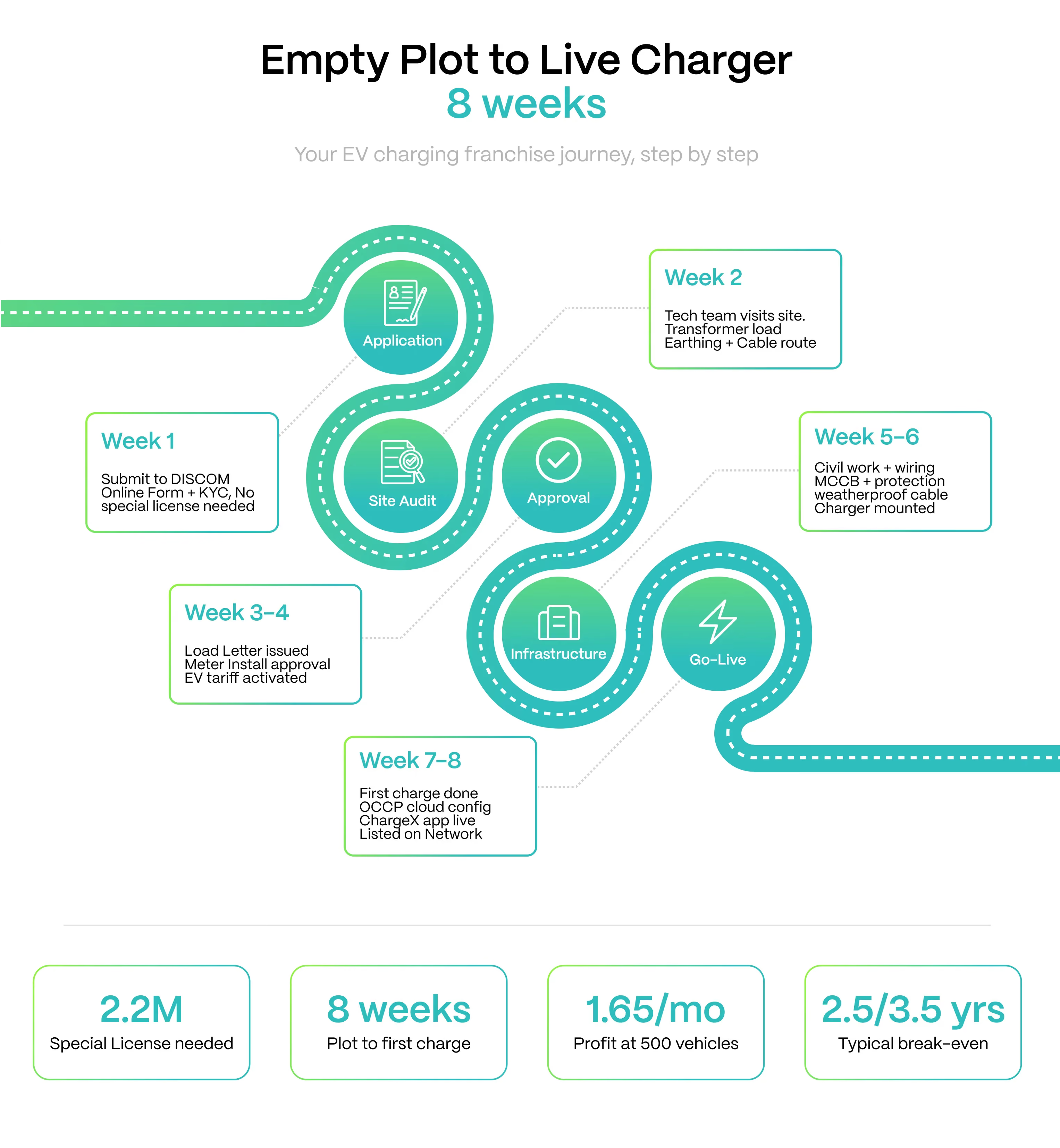
Phase 1: The Site Check (Survey):
It is not just a case of putting a charger anywhere. Your meter load and connection type will be evaluated by our technicians. The cable route is determined where possible drawing under 15-25 meters to reduce the costs and voltage drop.
Phase 2: Electrical Infra Installation:
It is the time when the heavy work occurs. We fit the MCCB (Circuit Breaker) and the protection box, lay high quality weather-proof cabling and connect it all to the main meter.
Phase 3: Go-Live & Commissioning:
Mounting the charger (as on the case of the Harmony Direct 2.0), we connect it to the cloud through the OCPP protocol and configure the ChargeX manager software. We go as far as to test drive an EV with a live charge to ensure that the user experience is flawless.
Established networks help attract EV drivers to your station
Your Revenue is only as good as your hardware. When your charger is down, you are not making money. In Exicom; Harmony Direct 2.0 is a high-performance business asset, not simply a plug in a wall.
Why the Tech Matters to your bottom Line:
- 97% Uptime Guarantee: Predictive maintenance and remote diagnostics gives us the ability to serve several vehicles at once by dynamically shifting power between connectors.
- Dynamic Load Sharing (DLS): This will enable you to serve multiple vehicles simultaneously by intelligently switching power between connectors. Result is that there is Increased throughput and increased cash on hand.
- Modular Scalability: 60 kW to start with as the traffic is increased to either 120 kW or 180 kW. You do not need to over-invest on the first Day.
The "Receipts": Profit Math for a 30 kW DC Fast Station
Monthly Revenue Snapshot:
- The Business Model: You buy electricity at concessional EV tariffs (₹5–6.50/kWh) and sell it at a service charge (₹12–18/kWh). This is "Electricity Arbitrage".
- 250 Vehicles/Month: ₹82,500 Net Profit.
- 500 Vehicles/Month: ₹1,65,000 Net Profit.
- Break-even: Typically achieved in 2.5 to 3.5 years.
You own the franchise, but what about the profit? The approach of a commercial EV connection is getting sparser yet still requiring a checklist mentality.
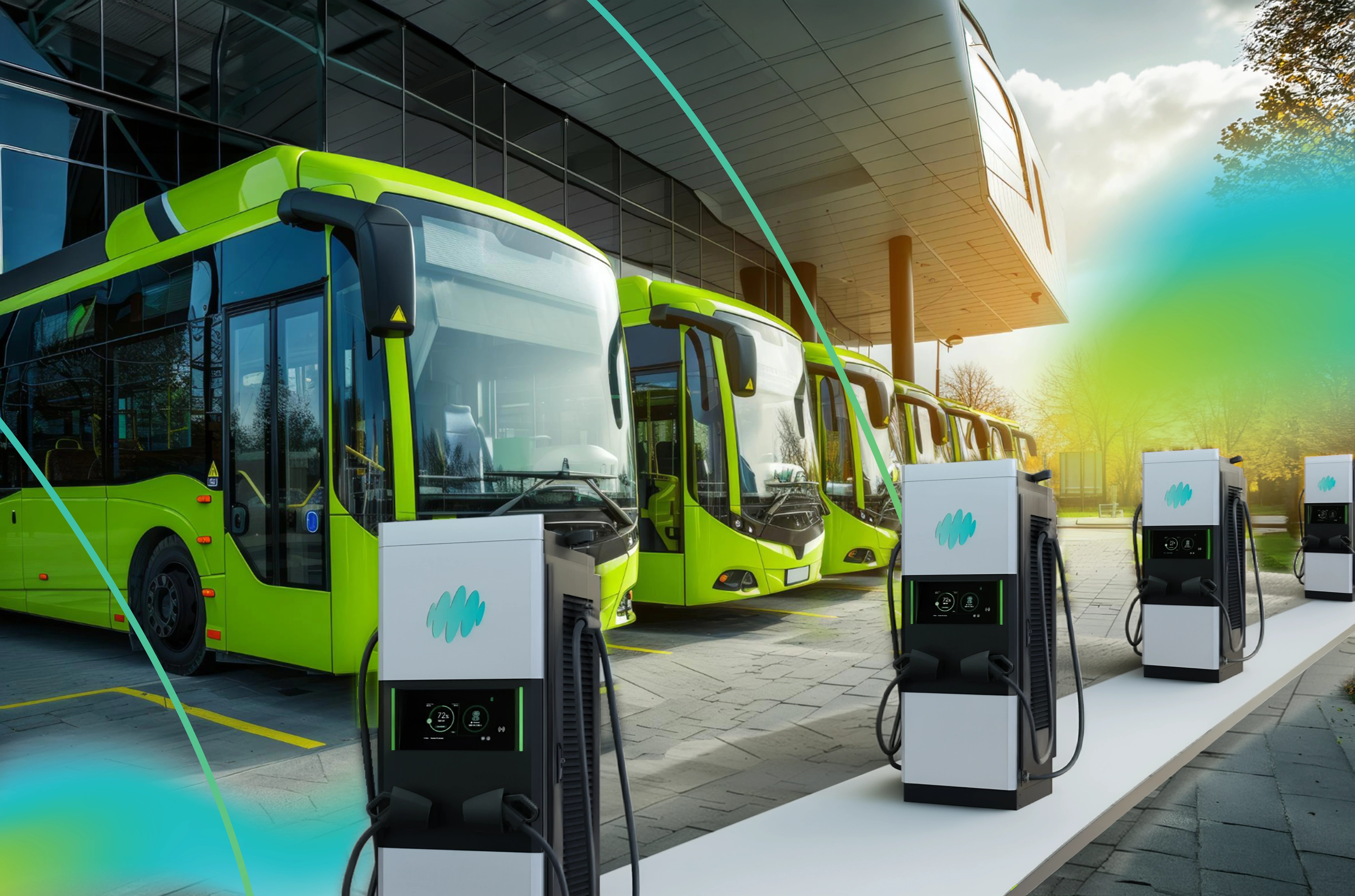
You are going to have to check V2G (Vehicle-to-Grid) in case you want to bring something new to the table. Your charging station will not only be a sort of sink by 2026-2027: It will be a source. When your station is filled with a fleet of 10 e-buses. When you are in a peak grid crisis, DISCOM charges you to withdraw power at those buses back to the grid. This makes your franchise a virtual power plant.
Eyes on Sodium-Ion batteries also. They are cheaper and can cope with Indian heat as compared to Lithium. When they finally land in the market in 2026, the prices of the vehicles will even reduce further, increasing your utilizations rates.
Infra gap still exists, government is supporting the implementation, and the drivers are already on the apps. Don't wait for 2027. The subsidies are becoming smaller, the most prominent spots (highway food courts, metro parking) are being grabbed, and the stage of market consolidation is beginning.
Don't wait for the prime locations at highway food courts and urban malls to be snatched up. Partner with a tech giant that has 30 years of domain expertise and 1.5 lakh+ chargers already in the game. The transition from fossil fuels to renewables is happening right now. Are you going to watch it, or are you going to power it?
Frequently Asked Questions
Lorem ipsum dolor sit amet, consectetur adipiscing elit, sed do eiusmod tempor incididunt ut labore et dolore magna aliqua. Ut enim ad minim veniam, quis nostrud exercitation ullamco laboris nisi ut aliquip ex ea commodo consequat. Duis aute irure dolor in reprehenderit in voluptate velit esse.
Lorem ipsum dolor sit amet, consectetur adipiscing elit, sed do eiusmod tempor incididunt ut labore et dolore magna aliqua. Ut enim ad minim veniam, quis nostrud exercitation ullamco laboris nisi ut aliquip ex ea commodo consequat. Duis aute irure dolor in reprehenderit in voluptate velit esse.
Lorem ipsum dolor sit amet, consectetur adipiscing elit, sed do eiusmod tempor incididunt ut labore et dolore magna aliqua. Ut enim ad minim veniam, quis nostrud exercitation ullamco laboris nisi ut aliquip ex ea commodo consequat. Duis aute irure dolor in reprehenderit in voluptate velit esse.
Lorem ipsum dolor sit amet, consectetur adipiscing elit, sed do eiusmod tempor incididunt ut labore et dolore magna aliqua. Ut enim ad minim veniam, quis nostrud exercitation ullamco laboris nisi ut aliquip ex ea commodo consequat. Duis aute irure dolor in reprehenderit in voluptate velit esse.
Lorem ipsum dolor sit amet, consectetur adipiscing elit, sed do eiusmod tempor incididunt ut labore et dolore magna aliqua. Ut enim ad minim veniam, quis nostrud exercitation ullamco laboris nisi ut aliquip ex ea commodo consequat. Duis aute irure dolor in reprehenderit in voluptate velit esse.