


How to Plan a Long Trip with an EV
.avif)
EVs have impressive mileage and are ready for long-distance travel
For the longest time, EVs in India were seen as "city cars" , perfect for office commutes, grocery runs, and short drives. But that perception is changing fast.
Today's EVs are built very differently. Better batteries, smarter energy management, and improved efficiency mean they're no longer restricted by distance the way people assume. A drive that once felt "too far for an EV" is now completely doable, without turning the journey into a constant search for charging points.
New EV models offer higher battery ranges and reasonable mileage
Most new EV Models now can comfortably offer 300–500 km range on a single charge. Electric cars have reached their Golden era in 2025 and demonstrate that they are good and have the range to face the Indian highway, not to mention the rizz. Intercity travel on EV is no longer such a thick or thin; it is a complete flex in terms of increasing sustainability. The modern EV models have more battery range and reasonable mileage. Whether you are on a smooth expressway or coastal roads, the EV is ready to give you a W.
The new models that are beginning to hit the streets are carrying the high-density batteries that ensure that your long weekend outings are entirely cold. As an example, the MG ZS EV has a 50.3kWh battery pack, which provides a real-world range that can be used, meaning that it is not very difficult to visit out-of-town. Meanwhile, the Hyundai IONIQ 5 is now the place to set the benchmark of long-distance luxury, combining super-fast charging facilities to get back on the road before you could even drink the coffee, and even the Tata Nexon EV remains the "GOAT" when it comes to regional exploration with certain degrees of reliability.
Charging networks are steadily expanding across highways and major travel corridors
The charging grid is also already increasing significantly on highways and other major travel routes. India has also gone outliers, with 29,300 public charging stations as of August 2025, having had more than 1,800 chargers in 2022; the Bangalore-Mysore highway is literally a smooth sail, and the Himachal Roads Transport Corporation (HRTC) uses electric buses on the drive between Manali and Rohtang and the tunnel at Atal. The fact that these e-buses do not even require the 1,200-per-day vehicle permit that an average tourist normally gets to Rohtang Pass is actually a huge victory regarding the tourism industry in India.
Many EV users still hesitate to take long trips due to range anxiety
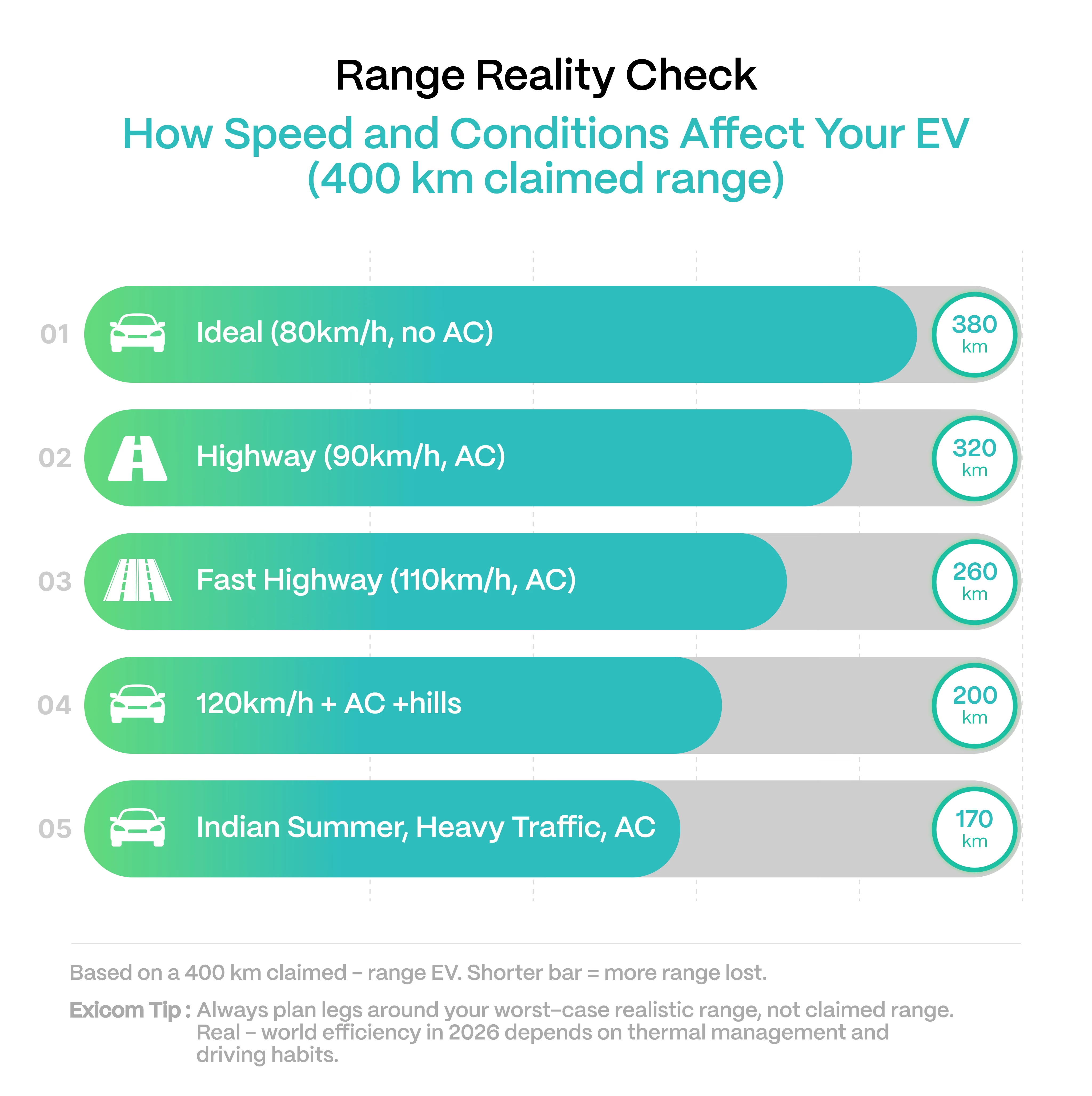
To tell the truth, despite all these new chargers, the issue of fear of being caught is the most popular reason why people do not rush. This anxiety (also called highway anxiety or range anxiety) is typically a psychological challenge. We live in the anxiety of possibilities: What-ifs: What if the charger on the map breaks? What are we going to do when there is a long waiting line and I must wait two hours?
Factors that are on the ground can also be tricky. Indicatively, when driving at 120 km/h in an expressway, your range will 'drop like a rock' as opposed to the same distance at a consistent 90 km/h. There is a point where heat enters it. During an Indian summer, the extremes can reduce the efficiency of the battery by almost three times. Then there is the phantom drain in the mountains, on which it requires a lot of power to climb up and down the valley, compared to flat roads. These variables can be overwhelming when you are unprepared, as a family is used to the 5-minute refill of a petrol car.
What do you need before starting an EV road trip?
Before you start overthinking worst-case scenarios, it helps to get a few basics in place. Most EV road trip issues come down to a lack of preparation , not actual limitations.
Here's what actually makes the difference:

Preplanning the route and carrying a portable charger make long EV trips smooth
More battery capacity is not the secret to making EV travel stress-free, but thinking a bit more intelligently. It is not like driving a petrol car, where you will use it until it becomes almost empty. In an EV, you just get accustomed to the practice of charging at a time when you are also stopping.
As soon as you retrace your rough route of where you will be taking breaks and will have a spare EV charger in the car, the entire journey will also be a lot more manageable. It is no longer what should happen in case things go wrong; it is simply two or three intended stops that would fit into your trip.
EV Trip Planning Apps in India : Which Ones to Use
Maintaining a battery buffer and using trip-planning apps can help in a better EV experience. These are the apps that India’s most experienced EV road-trippers rely on to reduce range anxiety:
Planning charging breaks around meals or rest stops makes the journey feel natural
The optimal mode of transportation in EV is to make congruence between the requirements of your vehicle and your own. When you pull over to a lunch dhaba on a highway, and you take 45 minutes to have a meal, you can get your EV battery charged up, and by the time you can finish your chai, the car is charged. It also becomes the norm to charge your EV battery during the night.
Statiq now has more than 700 hotels in India, both luxury and boutique hotels, equipped with chargers installed. Such chains as Marriott Bonvoy or Best Western already provide EV charging in a number of places such as McLeod Ganj, Amritsar, and Kolkata. Even Airbnb has experienced an increase by 80% in the number of people seeking places to stay that have the EV charger filter. The best hack is to charge you during sleep; to wake up in the morning with 100% range and free to the day.
Carrying a portable charger solves the problem of uncertainty around range anxiety
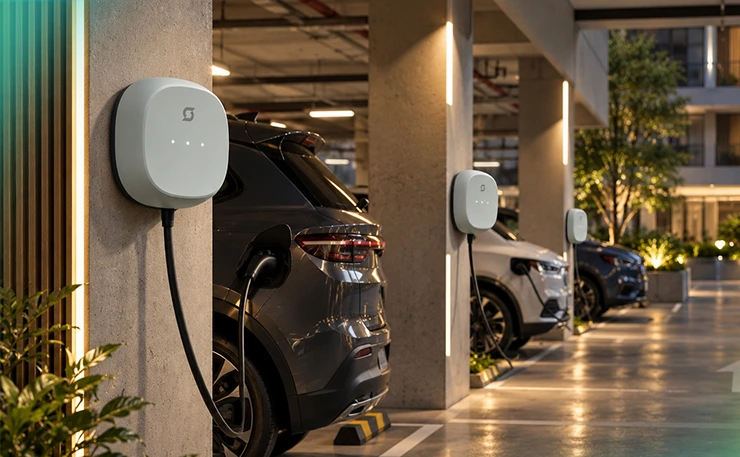
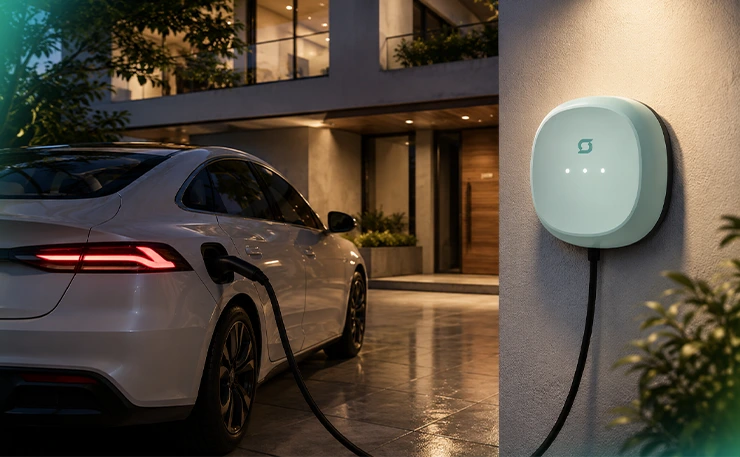
A portable EV charger steps in as a safety net in case you are going to a far-off homestay or an offbeat destination that has not modernized yet. It is a high-powered cable that enables you to charge at any normal 16A power point. It eliminates the uncertainty, as long as there is a socket, you have fuel. The Product we are talking about here is Exicom's Spin Free, which is a Portable EV charger for electric cars and is small and reliable.
The Exicom Spin Free is tailor-made to these types of trips. Compact enough to fit the trunk: It weighs less than a small coffee cup, and it fits in the corner of your trunk without any fuss (and it can be used anywhere, in a humble home or at a 5-star hotel). Built in India: It is waterproof (IP67) and can withstand temperatures up to 55 degrees Celsius, so you can leave it on charge overnight at a villa or even at a hotel and not worry about charging. Peace of Mind: With its built-in safety features like earth leakage protection and temperature monitoring, your car will not be so unpredictable for you anymore. Safe travels!
Frequently Asked Questions
Lorem ipsum dolor sit amet, consectetur adipiscing elit, sed do eiusmod tempor incididunt ut labore et dolore magna aliqua. Ut enim ad minim veniam, quis nostrud exercitation ullamco laboris nisi ut aliquip ex ea commodo consequat. Duis aute irure dolor in reprehenderit in voluptate velit esse.
Lorem ipsum dolor sit amet, consectetur adipiscing elit, sed do eiusmod tempor incididunt ut labore et dolore magna aliqua. Ut enim ad minim veniam, quis nostrud exercitation ullamco laboris nisi ut aliquip ex ea commodo consequat. Duis aute irure dolor in reprehenderit in voluptate velit esse.
Lorem ipsum dolor sit amet, consectetur adipiscing elit, sed do eiusmod tempor incididunt ut labore et dolore magna aliqua. Ut enim ad minim veniam, quis nostrud exercitation ullamco laboris nisi ut aliquip ex ea commodo consequat. Duis aute irure dolor in reprehenderit in voluptate velit esse.
Lorem ipsum dolor sit amet, consectetur adipiscing elit, sed do eiusmod tempor incididunt ut labore et dolore magna aliqua. Ut enim ad minim veniam, quis nostrud exercitation ullamco laboris nisi ut aliquip ex ea commodo consequat. Duis aute irure dolor in reprehenderit in voluptate velit esse.
Lorem ipsum dolor sit amet, consectetur adipiscing elit, sed do eiusmod tempor incididunt ut labore et dolore magna aliqua. Ut enim ad minim veniam, quis nostrud exercitation ullamco laboris nisi ut aliquip ex ea commodo consequat. Duis aute irure dolor in reprehenderit in voluptate velit esse.
%20(1).webp)