



EV charger Uptime
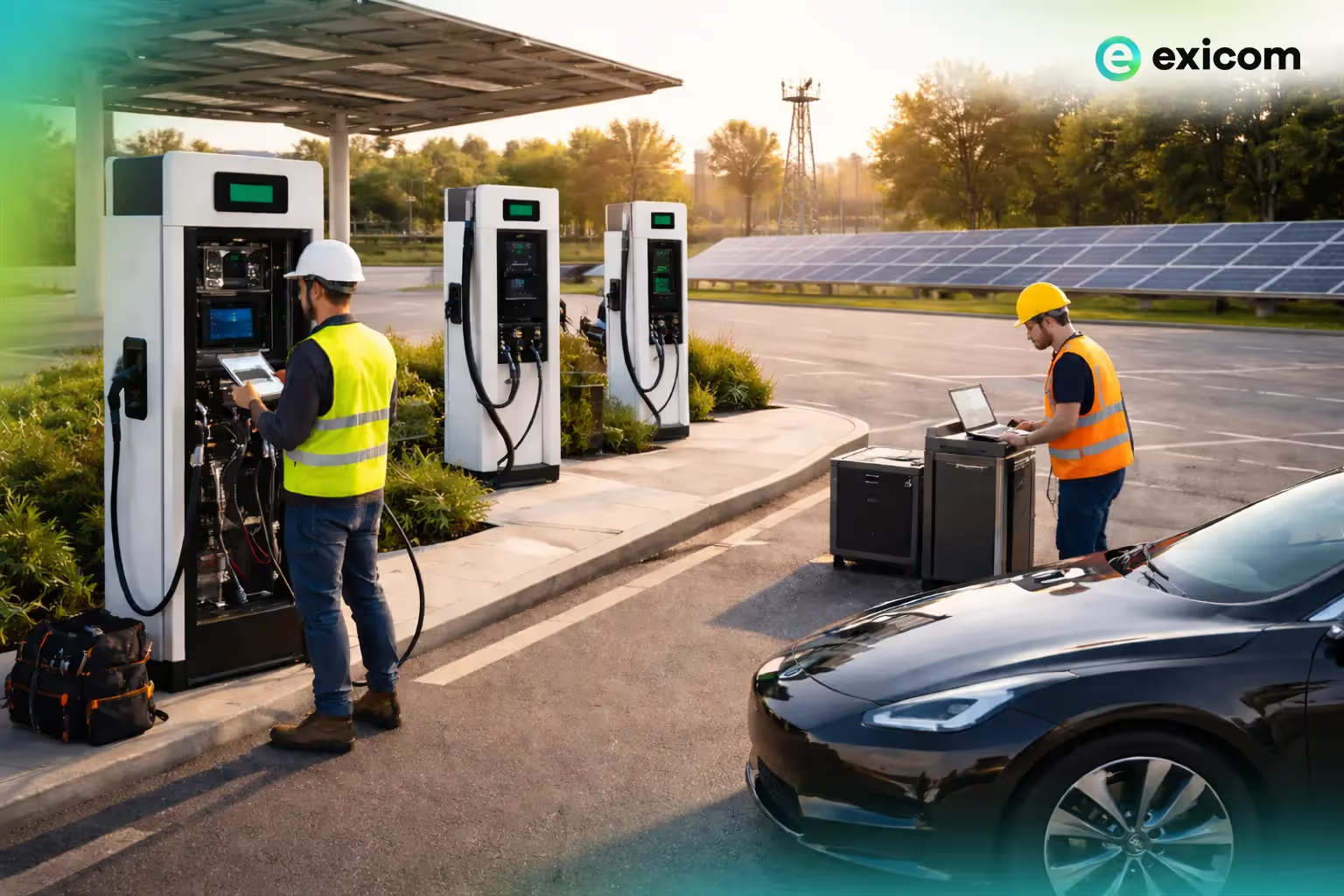
What is EV charger Uptime
What is EV charger uptime? It represents the percentage of time an electric vehicle charging station is fully operational and capable of successfully delivering power to a vehicle. Rather than simply indicating that a device is "online" in a dashboard, it measures the actual ability of a user to initiate and complete a charge.
Expanded Explanation
For a typical driver, uptime is the difference between a seamless journey and a stranded vehicle. At a fundamental level, it tracks the availability of the hardware, network connectivity, and payment processing systems. If any link in this chain fails ;whether it’s a broken connector, a payment gateway error, or a communication fault—the charger is considered "down," even if the lights are on.
From a technical standpoint, operators determine this by calculating the ratio of operational hours to total hours in a reporting period. Current industry standards necessitate more than simple connectivity; they call for infrastructure that operates effectively under actual stress conditions. High-performance networks, like those implemented by Exicom, employ proactive maintenance and sophisticated diagnostics to achieve uptime greater than 99%, guaranteeing that infrastructure provides value instead of frustration.
How It Works
A charger relies on a complex ecosystem of components to stay "up." When these components function in harmony, the system remains reliable.
- Power Electronics: The core modules that convert AC grid power to DC for fast charging.
- Connectivity Gateway: Ensures the charger communicates with the backend software to authorize users and process billing.
- User Interface & Payment: The screen, card reader, or app-linked module that allows the driver to start the session.
- Connector & Cable: The physical interface that must withstand thousands of plug-in cycles and environmental exposure.
- Thermal Management: Active cooling systems that prevent hardware from throttling or shutting down during extreme heat.
Real-world Use Cases
- Consumers: A commuter expects a functional station during a morning stop. Reliable uptime ensures their daily schedule remains uninterrupted.
- Businesses: Retailers and offices providing charging need consistent performance to maintain brand reputation and employee satisfaction.
- Fleets & Infra Players: For logistics providers, uptime is a revenue metric. A down charger at a depot delays vehicle deployment, directly impacting fleet efficiency and operational costs.
Data and Efficiency Metrics
Reliability data is the benchmark for infrastructure maturity.
India Context: The Reliability Gap
India’s aggressive 30% EV penetration goal by 2030 hinges on infrastructure usability. While public stations grew to over 29,000 by early 2026, the gap between "installed" and "operational" remains a challenge.
- Cost: Quality DC fast-charger installations often exceed ₹15 to 30 lakhs depending on power capacity and grid upgrades.
- Policy: The PM E-DRIVE scheme prioritizes reliable infrastructure, incentivizing operators to meet stricter uptime compliance for subsidy eligibility.
- Market Adoption: Low uptime is currently the biggest deterrent to private EV adoption. Drivers frequently cite "charger anxiety" as a barrier, often needing to check multiple apps just to find one working unit.
Business and Industry Impact
- Fleet Operators: These players require high-speed DC chargers that don't fail during shift changes. Low uptime causes a ripple effect, delaying deliveries and increasing overhead.
- CPOs (Charge Point Operators): A CPO's revenue is directly tied to kilowatt-hours dispensed. Every hour of downtime is a direct loss of income and a hit to the long-term ROI of the site.
- Enterprises: Companies integrating EVs into corporate campuses look for "set-it-and-forget-it" reliability to avoid hiring dedicated staff just to troubleshoot charging hardware.
Challenges and Solutions
Final Thought
Uptime is the heartbeat of the electric transition. As EVs move from early adopters to mass-market utility, the infrastructure must shift from an experimental phase to a mission-critical utility. Building for reliability—by prioritizing heat-tested hardware and proactive, remote diagnostics—is the only way to turn the vision of an electrified India into a daily reality.

