



Subscription Model
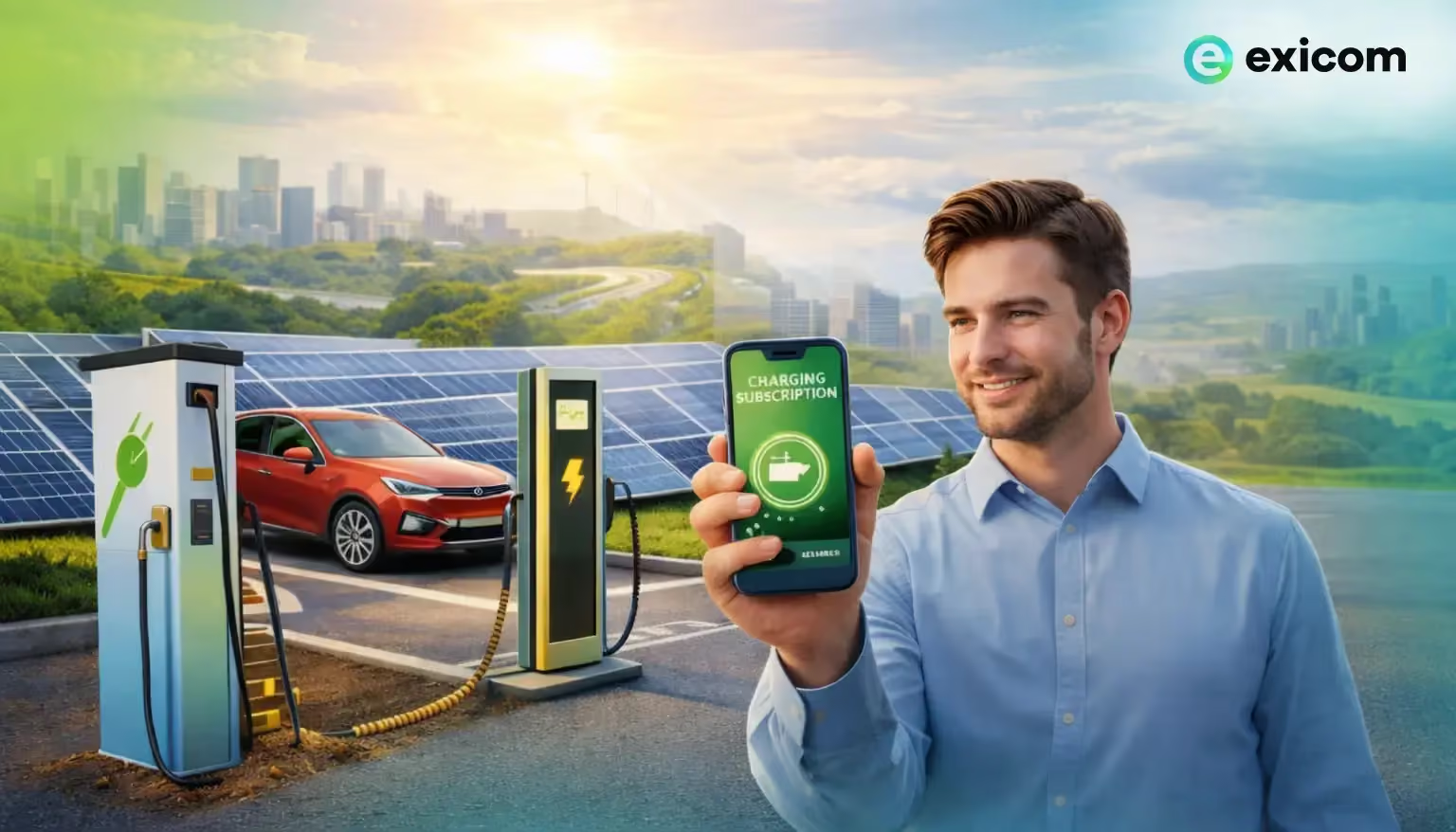
EV Charging Subscription Model
The EV charging Ssubscription model is about routine. About removing small daily decisions. About knowing roughly what charging will cost before the cable is even plugged in.
Instead of paying for each session separately, a recurring fee is charged. Usually monthly. Sometimes yearly. The benefit depends on the plan. Lower per-unit rates. Bundled energy. Priority access. Fewer surprises at checkout.
This model appears once charging becomes frequent. Occasional users rarely care. Regular users do. Especially those who rely on public chargers, such as apartment residents, city commuters, and fleet drivers.
Public charging prices vary by location, time of day, charging speed, and idle penalties. Subscriptions exist to soften that variability. Not always to make charging cheaper. Often just to make it predictable.
From the operator’s side, subscriptions bring stability. Charging demand is uneven. Peak hours fill quickly. Off-peak hours sit idle. Recurring plans help smooth usage and revenue, even if margins remain thin.
In India, subscription adoption is still selective. Most users still charge pay-as-you-go. Subscriptions appear where charging patterns repeat like office corridors, fleet depots, delivery routes and where behaviour is already known.
Does subscription charging reduce EV charging costs?
Subscription models do not always reduce total charging costs. Instead, they improve cost predictability and reduce variability caused by peak pricing, location-based tariffs, and charging speed differences.
For frequent users, especially fleets and daily commuters, subscription models often result in lower effective per-unit costs.
What are the most popular subscription modes in EV charging?
The most popular subscription modes in EV charging are:
Energy bundle subscriptions
A fixed fee for a fixed amount of electricity. Measured in kilowatt-hours and used across a month. Once the limit is crossed, standard rates apply.
This model feels familiar. Similar to mobile data plans. Easy to track. Easy to explain. Works well for users with consistent monthly driving habits.
Membership-based charging plans
No energy bundle included. Just access. Access to lower per-unit prices across the network.
A small recurring fee unlocks discounted charging. Usage still determines the bill. Public Charge Point Operators favour this model. Risk stays controlled. Loyalty improves.
Unlimited or fair-use subscriptions
Often misunderstood. Rarely truly unlimited. Usually capped by time, power, or session count.
These plans work best in closed systems. Fleets. Corporate campuses. Residential complexes. On open public networks, strict rules are required to avoid congestion.
Fleet-focused subscription contracts
Built for predictability. Not for experimentation.
Fleet operators prefer steady operating costs. Charging subscription bundles for energy, access, reporting, and billing into a single agreement. Charging becomes part of daily operations rather than a repeated transaction.
This model is common in logistics, employee transport, and shared mobility.
Battery subscription and swap models
More visible in two-wheelers and three-wheelers. The battery is not owned. It is accessed through a subscription.
Vehicle cost drops. Battery risk shifts. Charging or swapping becomes a service, not a responsibility. Less common in passenger cars. Infrastructure and standardisation remain challenges.
Hybrid subscription structures
Part membership. Part discount. Part bundle.
Designed for flexibility. Light users and heavy users on the same network. Increasingly used as operators test pricing without locking themselves in.
How does an EV charger calculate subscription?
The charger does not decide pricing alone. The logic sits behind it.
Energy measurement
Smart chargers measure the electricity delivered to the vehicle. Recorded in kilowatt-hours. For bundle plans, this number reduces the monthly balance.
Accuracy matters. Small errors create big trust issues.
Session duration tracking
Every session has a start and end time. Charging time. Idle time. Both were recorded automatically.
Idle fees often sit outside subscription benefits. Designed to keep chargers available, especially fast chargers.
Charger type separation
AC and DC chargers are treated differently. Power level matters. Fast chargers cost more to build and operate.
Subscriptions may fully apply to slow chargers while partially applying to DC fast chargers. Limits are common.
Time-based pricing logic
Some networks adjust prices based on demand. Peak hours cost more. Off-peak hours cost less.
Subscription discounts apply on top of these base rates. Charging behaviour is nudged, not forced.
Backend reconciliation
After the session ends, the system reconciles everything. Subscription entitlement. Energy consumed. Time penalties. Location pricing.
For roaming users, data passes between networks before appearing in the final bill.
Subscription model in EV charging in India
The Indian market remains price-sensitive. Per-unit cost still dominates decision-making. Subscriptions gain traction only when friction is reduced visibly.
Urban users without home charging. Fleet operators with fixed routes. Delivery services with daily mileage. These segments adopt subscriptions first.
Public Charge Point Operators continue to experiment. Bundles and memberships are common. Unlimited plans are rare. Grid constraints and utilisation risks remain real.
As usage data improves, subscription models will narrow, not broaden. Built around behaviour. Not assumptions.
When should you choose a subscription model?
- When charging frequency is high
- When cost predictability matters
- When using public charging regularly
- When managing fleet operations
Closing note
EV charging subscriptions are not about free electricity. They are about rhythm. Predictability. Fewer decisions in a busy day. When aligned with real usage, they work quietly in the background. When misaligned, they disappear just as quietly.

