



Intelligent Power Switch Matrix
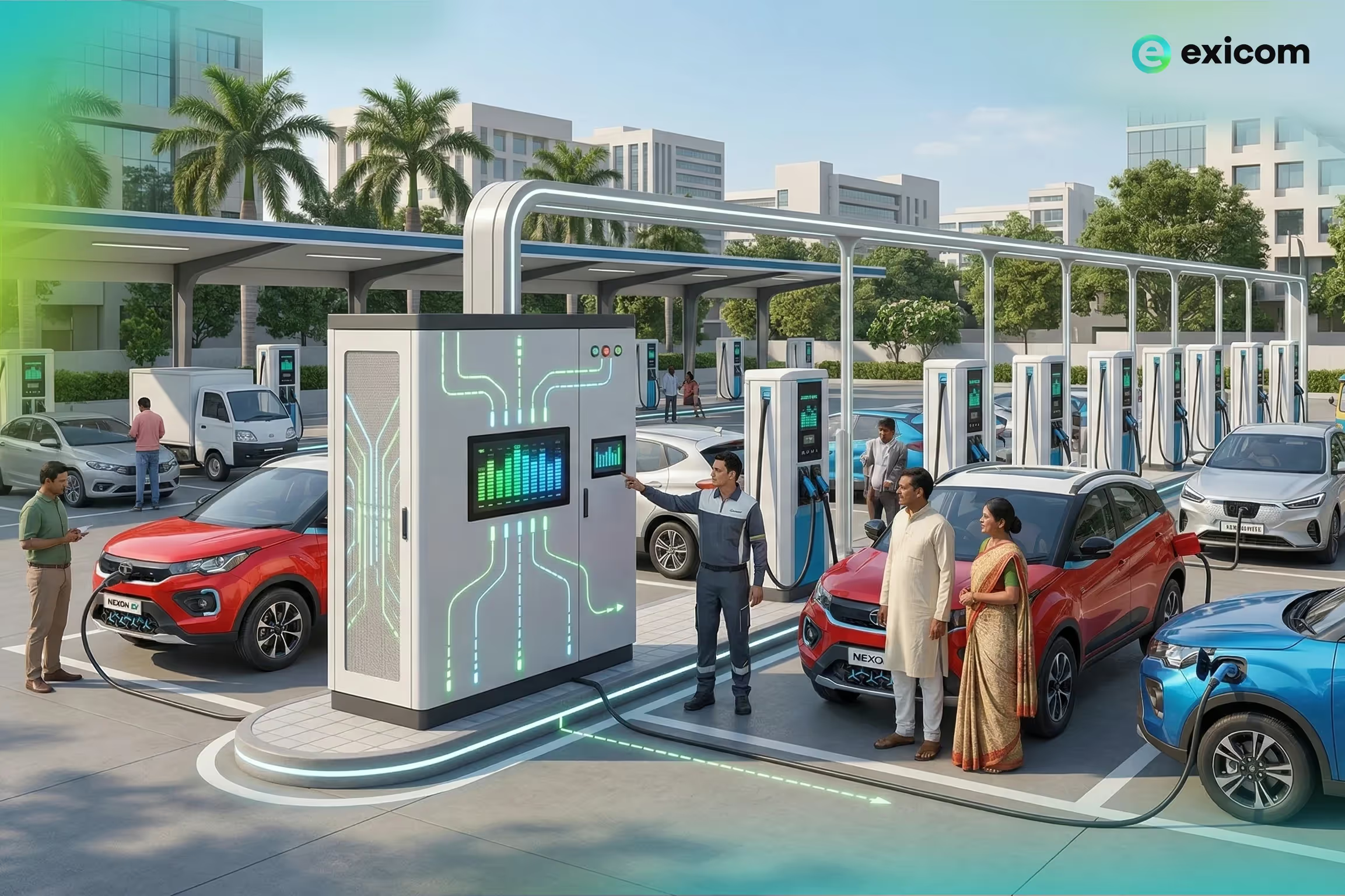
What is an Intelligent Power Switch Matrix?
An intelligent power switch matrix is a digital control system that dynamically routes electricity from a central power source to multiple charging points. It uses smart algorithms to allocate specific power blocks based on real-time vehicle demand. This ensures maximum efficiency and eliminates the limitations of fixed power distribution.
Why it Matters: Maximizing Infrastructure ROI
For station operators, stranded power capacity represents a direct loss of potential revenue. Traditional systems often lock a specific amount of power to a dispenser. If a car cannot accept that full amount, the remaining electricity stays idle.
An intelligent power switch matrix eliminates this waste. By shifting idle energy to other vehicles that need it, the system increases total site throughput. Higher throughput leads to faster return on investment and allows operators to serve more customers without paying for expensive grid upgrades.
Limitations of Static Power Allocation
Along with stranded power capacity, standard charging architectures face two primary technical hurdles that impact profitability:
High Grid Connection Costs
Without intelligent routing, an operator must size their grid connection for the maximum possible load of every dispenser at once. This leads to massive upfront costs for infrastructure that is rarely used at its full peak.
Inflexible Power Distribution
Modern fleets include various vehicle types, from small vans to heavy-duty trucks. Fixed systems cannot easily adjust to provide a small trickle charge to one vehicle and an ultra-fast burst to another from the same power source.
Key Performance Highlights
Implementing a Dynamic Power Core
Advanced power management transforms a charging site into a flexible energy cloud through several key technical features:
- Block Dynamic Allocation: The total power is divided into small (~30kW) increments. The matrix stacks these blocks to match the exact charging curve of each vehicle.
- Scalable Central Architecture: Power cores can scale from 600kW to 1.6MW. This allows a single hub to manage an entire charging plaza or depot.
- Ring-Loop Seamless Transfer: A specialized ring-loop design allows the system to reroute power paths instantly. This ensures zero interruption during power shifts between dispensers.
- High Current Support: The system supports up to 500A peak current. This is essential for liquid-cooled dispensers serving the next generation of high-voltage electric vehicles.
Strategies for Efficient Power Management
- Prioritize Granular Control: Use systems that move power in small increments. Smaller blocks allow for more precise distribution and less wasted energy.
- Centralize Power Conversion: By separating the power conversion from the user dispenser, you reduce the footprint at the parking spot and simplify maintenance.
- Invest in Future-Proof Scaling: Choose a system that can scale up to 1.6MW. This avoids the need for new civil works when vehicle traffic increases.
- Monitor System Health: Use remote diagnostics to track the health of individual power modules within the matrix.
The Industry Standard Advantage
Effective power routing is built on modular engineering. By utilizing a modular design, the system ensures that if one 30kW module requires service, the rest of the matrix continues to route power. This maintains high reliability. Integrating these systems with remote diagnostics allows for over the air updates. This ensures the switching logic stays compatible with new vehicle software. Reliable engineering maintains 99.9% uptime, which means less than 9 hours of downtime per year for the operator.

