



What Is Fast EV Charging and Its Impact in 2026
What is fast ev charging
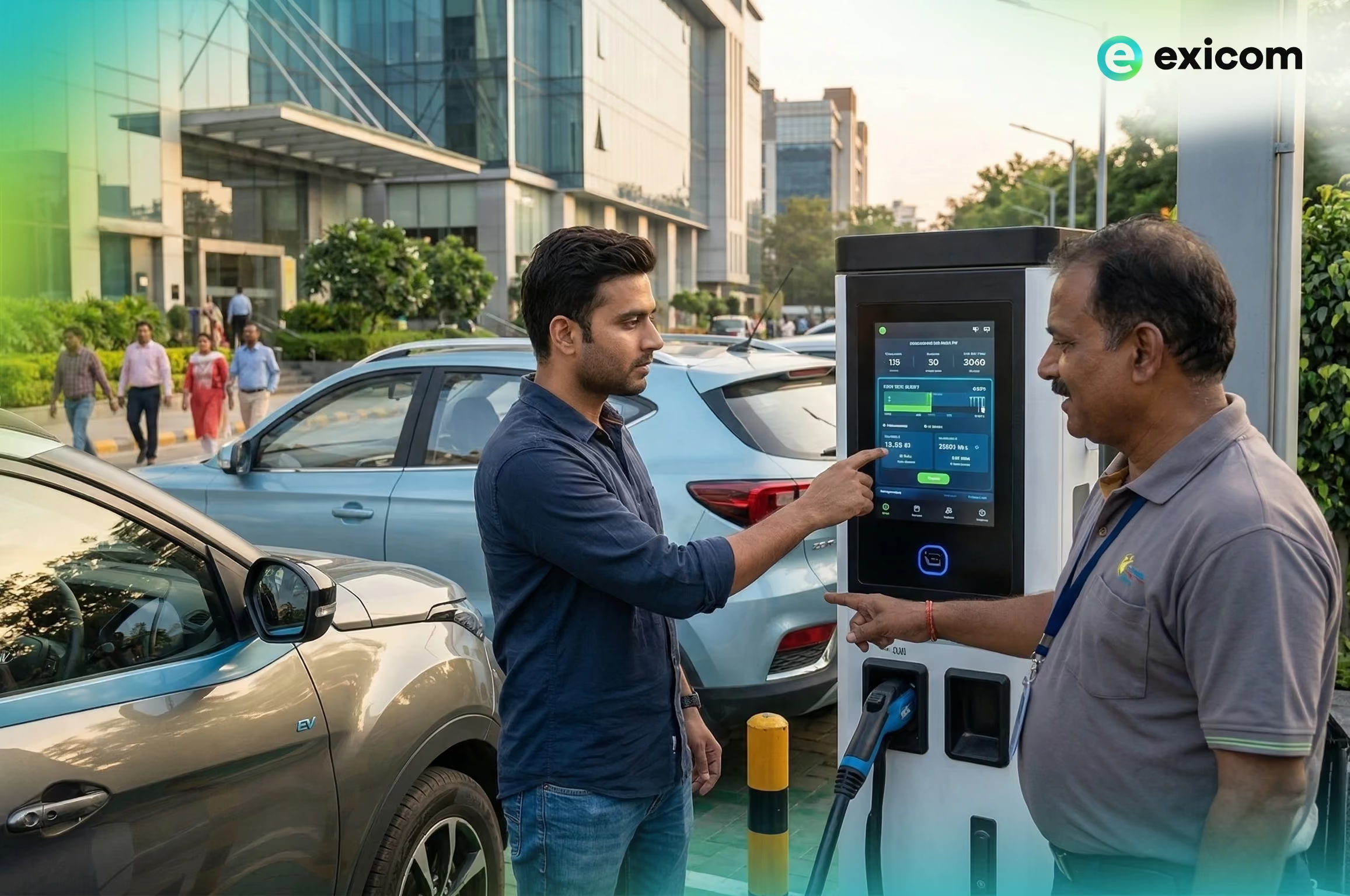
Fast EV charging, also known as Direct Current Fast Charging (DCFC), delivers high-voltage DC electricity straight to the battery of an electric vehicle. It circumvents the vehicle's built-in charger to provide quick energy replenishment, usually restoring 80% capacity in 20 to 45 minutes.
Expanded Explanation
Enhanced DescriptionStandard 230V AC networks deliver electricity to both residential and commercial spaces. Electric vehicles accumulate energy in direct current. A rectifier is needed to convert AC into DC. In Level 1 and Level 2 charging configurations, the vehicle's onboard hardware manages this conversion. The charging speed is limited by the physical dimensions and heat dissipation capabilities of these internal components.
Direct Current Fast Charging (DCFC) relocates the large rectifiers from the vehicle to the fixed charging station. These substantial external systems manage enormous electrical demands and effectively dissipate the heat generated. They supply direct current directly into the vehicle's battery system. This bypass facilitates swift energy transfer, converting a process that typically takes hours into a quick interruption.
The true charging rate is influenced by several factors. The battery management system (BMS) of the vehicle, the surrounding temperature, and the current state of charge (SoC) of the battery determine the rate at which power can be accepted. The charger and the vehicle consistently interact to determine the appropriate current supply.
How It Works
Grid electricity arrives at the charging station in the form of alternating current. The station contains robust power modules that transform this AC power into high-voltage DC power.The charging cable attaches to the charge port of the vehicle. The vehicle interacts with the charging station through protocols such as ISO 15118. This electronic exchange confirms security credentials, assesses battery thresholds, and sets the highest permissible current. High-capacity cables utilize liquid cooling to maintain the physical connector's usability for users while delivering up to 500 amps of current.
Within the vehicle, the contactors engage, permitting direct current to enter the battery cells. The BMS constantly tracks voltage and temperature across numerous individual cells. It reduces the power delivery as the battery nears its full capacity to avoid lithium plating on the anode.
Types / Variants
Different fast charging standards exist globally, defined by connector types and power limits.
Practical Application Scenarios
Buyers
Drivers rely on quick charging for traveling between cities. A 30-minute break increases the range by hundreds of kilometers, making highway travel feasible. Urban drivers lacking home charging access also rely on public DC stations as their main energy source.
Companies
Retailers, shopping centers, and eateries implement rapid chargers to draw in customers who stay longer. A 60 kW DC charger at a supermarket supplies sufficient energy in a 45-minute shopping visit to meet a week's commuting needs.
Fleets and Infrastructure Stakeholders
Logistics firms and taxi services need to maximize vehicle usage. DC fast charging stations are utilized at depots to power up vehicles between shifts. Charge Point Operators (CPOs) install high-power charging stations along key transit routes to earn income from frequent charging sessions.
Quick Facts & Figures
The impact of rapid charging for electric vehicles on battery longevity and vehicle functionality is quantifiable. Data from Geotab's 2026 fleet study of 22,700 EVs reveals the precise influence.
Intermittent fast charging contributes approximately 0.1% additional yearly degradation relative to AC-only charging. The rate of vehicle discharge solely relies on driving behavior, entirely unrelated to the charging technique. Excessive use of high-power charging increases capacity loss, particularly in extreme heat or when the battery exceeds 80% capacity. Contemporary liquid-cooling systems and LFP (Lithium Iron Phosphate) compositions greatly lessen these impacts.
India Focus
The Indian EV charging sector is growing quickly, backed by the Delhi EV Policy 2026 and FAME II regulations. The market supports particular capabilities designed for 4-wheel vehicles and commercial fleets.
- Cost (₹):Public DC fast charging costs vary between ₹15 and ₹25 per unit (kWh). A fast charge session for a 30 kWh battery costs around ₹450 to ₹750.
- Government Policy: The Delhi EV Policy 2026 provides up to 100% road tax exemptions and direct purchase incentives. The Department of Heavy Industry is providing subsidies for thousands of new charging stations, reducing the obstacles for operators.
- Market Adoption: Firms such as Exicom offer extensive high-power DC charging solutions, meeting the need for bigger battery capacities (up to 80 kWh). The market is shifting towards local production, as Exicom sets up facilities in Hyderabad for global technologies tailored to local needs.
Industry Insights
Fleet Operators
Time is revenue. Fleet managers deploy 60 kW to 120 kW chargers to turn vehicles around fast. They use telematics to charge vehicles during off-peak grid hours while managing battery temperatures to extend fleet lifespan.
Charge Point Operators (CPOs)
CPOs build the public charging network. They calculate ROI based on utilization rates and grid demand charges. High-power DC chargers (120 kW and above) attract highway travelers and commercial fleets, generating higher energy dispensing volumes per day than slower AC alternatives. CPOs rely on remote monitoring software to guarantee high uptime, as broken chargers directly eliminate revenue.
Enterprises
Corporate campuses install mid-level DC chargers (30 kW to 60 kW) to support employee commuting and corporate vehicles. These systems integrate with building energy management software to balance loads and avoid peak demand charges from the utility provider. Enterprises use these installations to meet sustainability targets and provide reliable infrastructure for transitioning corporate fleets.
Key Challenges & How to Solve Them
Final Thought
Fast EV charging is the backbone of mass electric mobility. As battery capacities grow and fleet operations scale, high-power DC infrastructure dictates the pace of global transportation electrification. The focus is shifting from simple hardware deployment to intelligent power distribution, thermal management, and grid integration. Reliable, high-uptime charging networks determine vehicle adoption rates.

