



ESG-linked loans
What are ESG-linked loans?
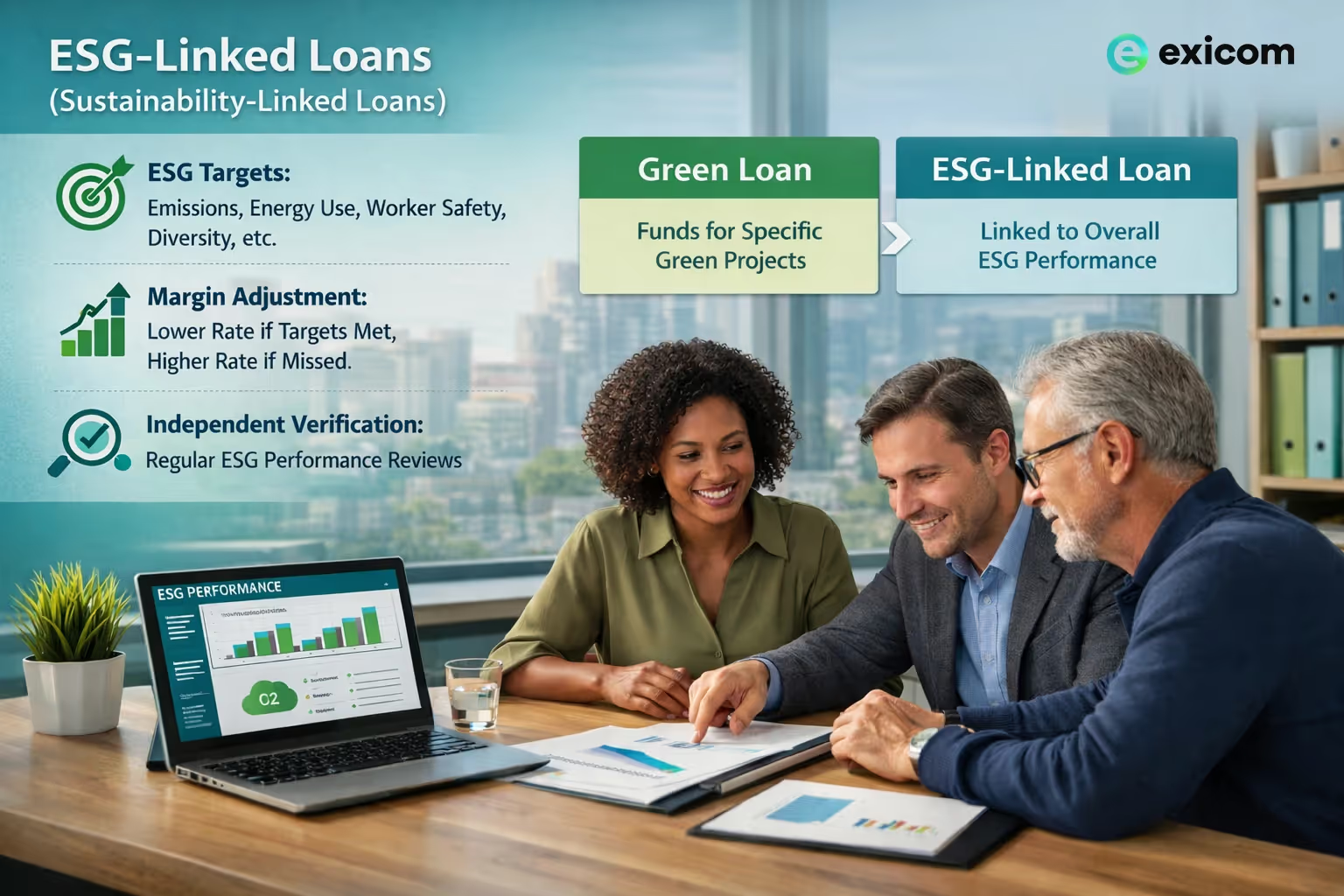
A sustainability-linked loan is not about financing one green activity. It is about linking money to behaviour. These facilities are often called ESG-linked loans or ESG loans, but the idea stays the same. Loan pricing changes depending on how a borrower performs on environmental, social, and governance parameters over time.
What matters here is flexibility. Funds are not locked into a specific project. They can be used for everyday business needs. The difference appears later, in the interest margin. That is why the sustainability-linked loan meaning is best understood as performance-based finance rather than use-of-proceeds finance.
How pricing works (margin ratchets)?
Most ESG-linked loans use a margin ratchet structure. The interest margin does not stay fixed. It moves. If sustainability targets are met, the margin reduces. If targets are missed, the margin increases.
On paper, the adjustment may look minor. In reality, it changes behaviour. Finance teams track ESG data more closely. Senior management pays attention. Over time, the margin ratchet loan mechanism embeds sustainability into routine financial monitoring rather than treating it as a separate reporting exercise.
KPIs and SPTs
Everything depends on ESG loan KPIs and sustainability performance targets (SPTs). These define what improvement actually means. KPIs need to reflect the real business model. Generic indicators rarely survive lender scrutiny.
In industrial setups, manufacturing companies often choose KPIs that reflect day-to-day shop-floor activity. These priorities are emissions, energy use, water consumption, and worker safety. This is because teams are already watching these areas as part of their regular operations. In other industries, the emphasis can shift significantly, toward topics such as employee diversity or supplier management. In the end, a KPI works only if it actually matters to the business. It needs to be something people can measure without second-guessing the numbers, and it has to start from a baseline that everyone is willing to trust.
SLL Principles
The SLL principles serve as a framework for how sustainability-linked loans should function. They focus on four areas: alignment with the borrower’s sustainability strategy, credible target-setting, ongoing reporting, and independent review.
These principles are widely followed because they reduce ambiguity. Adoption of the SLL principles is evident in ESG-linked loans in the US/Europe, where disclosure expectations are higher, and lenders demand consistency across transactions.
Difference: Green Loan vs SLL
The table shows the comparison between Green Loan vs SLL:
Disclosures and verification
Disclosure is simply part of the arrangement with ESG-linked loans. Borrowers are expected to report on KPI performance at agreed intervals, usually once a year. When this information is unavailable to the public, independent third-party checks become necessary.
Reviewers check the data, examine the baselines used to set the targets, and confirm the reported outputs. This scrutiny helps protect the credibility of both borrowers and lenders, particularly in the US and Europe, where ESG-linked loans are increasingly tied to broader sustainability and climate reporting expectations.
Examples by industry (focus)
There isn’t really a standard way sustainability-linked loans appear across industries. In manufacturing, the conversation usually starts with emissions, energy use, or waste, mostly because those are issues teams already deal with daily. Real estate often goes in a different direction, tying pricing to a building's actual efficiency or to whether it meets specific certification benchmarks. Logistics companies tend to focus more on fleet emissions and fuel efficiency, while consumer-facing businesses usually spend more time looking at labour practices further down their supply chains.
Benefits/risks (greenwashing)
A sustainability-linked loan is most effective when it connects financial terms with long-term sustainability priorities. Pricing incentives can influence how organisations think about sustainability, pushing it beyond annual disclosures and into regular business decisions. In some cases, this also shows up as lower borrowing costs and stronger confidence among investors and other stakeholders.
That said, the structure only works if the targets are taken seriously. Poorly chosen KPIs or targets that are set too cautiously can weaken the entire framework and raise greenwashing concerns. When sustainability goals are easy to meet, the loan risks become a symbolic exercise rather than something that actually drives change.
How to structure an SLL?
Putting together a sustainability-linked loan isn’t really about following a set formula. It usually starts with working out which ESG issues actually show up in the business day-to-day, not just in presentations or policy documents. From there, the KPIs have to be usable in practice, based on data people already deal with and trust. The targets should move things in the right direction, but not so far that they stop making sense on the ground.
After that, the mechanics need attention. Details like margin ratchets, reporting timelines, verification checks, and what actually happens if targets are missed need proper thought and clear documentation. When that groundwork is done well, the loan stops feeling like an ESG badge and starts playing a real role in everyday financial decisions.

