



AC to DC Converter: Essential Power for EV Charging
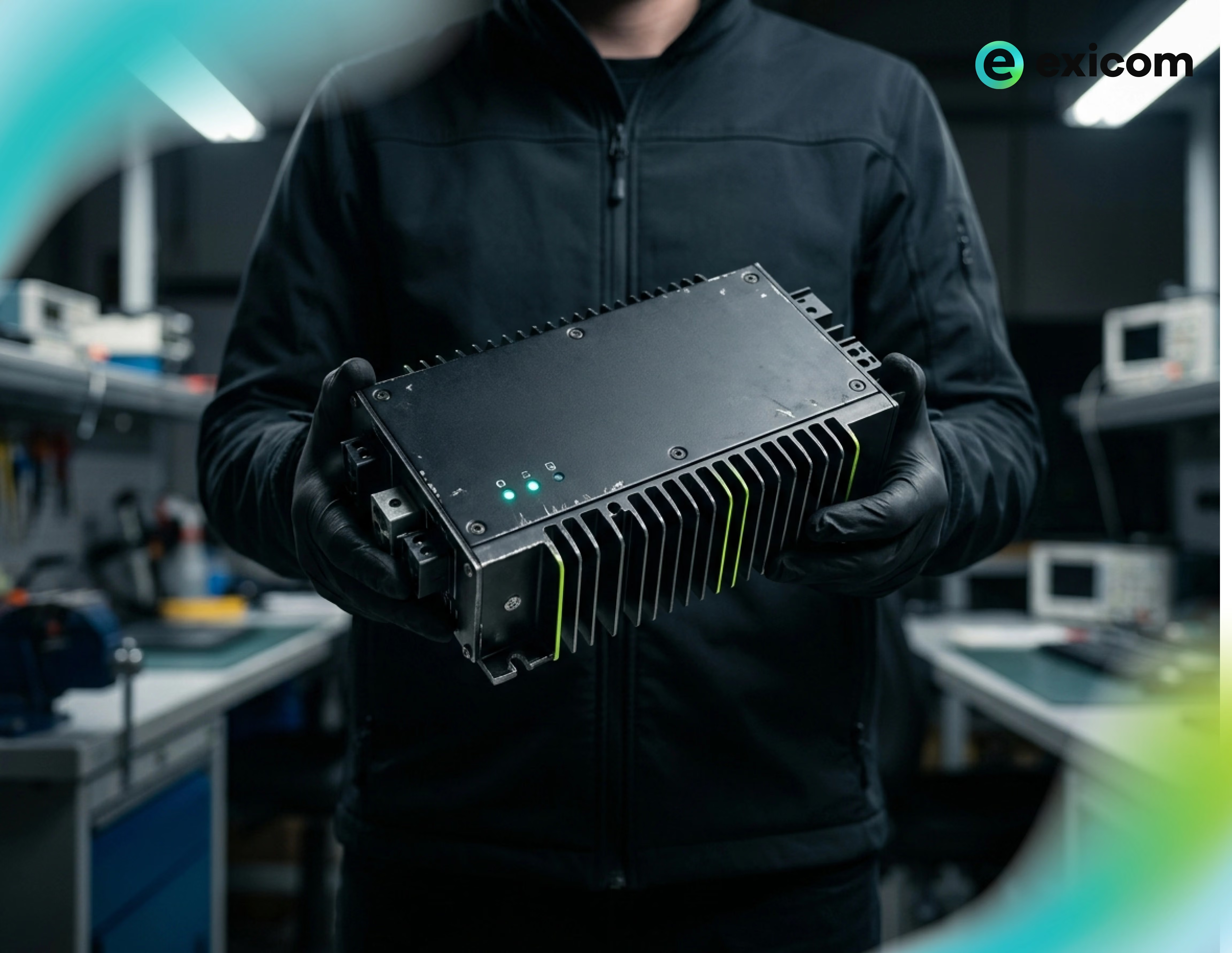
What is an AC to DC Converter?
An AC to DC converter is an electronic power system designed to transform Alternating Current (AC), which periodically reverses direction, into Direct Current (DC), which flows in a single, constant direction. This process, known as rectification, is fundamental for powering electronics, charging batteries, and operating industrial machinery.
Core Principles of AC to DC Conversion
At its simplest, an AC to DC converter acts as a "one-way valve" for electricity. While the power from your wall outlet (AC) fluctuates like a wave, most digital devices and batteries (like those in EVs) require a steady, flat line of energy (DC) to function without damage.
Technically, the conversion involves a transition from a sinusoidal waveform to a stabilized output. In high-power applications like EV fast charging, this is achieved through Power Electronics, utilizing semiconductors (diodes, MOSFETs, or IGBTs) to switch and filter the current. High-efficiency converters use Switch Mode Power Supply (SMPS) technology to minimize energy loss during this transition, ensuring that thermal waste is kept to a minimum.
How It Works
The conversion process typically follows a four-stage power conditioning flow:
Types & Technical Variants
Different applications require different rectification topologies. The choice depends on the required power quality and efficiency.
Sectoral Implementation & Strategic Applications
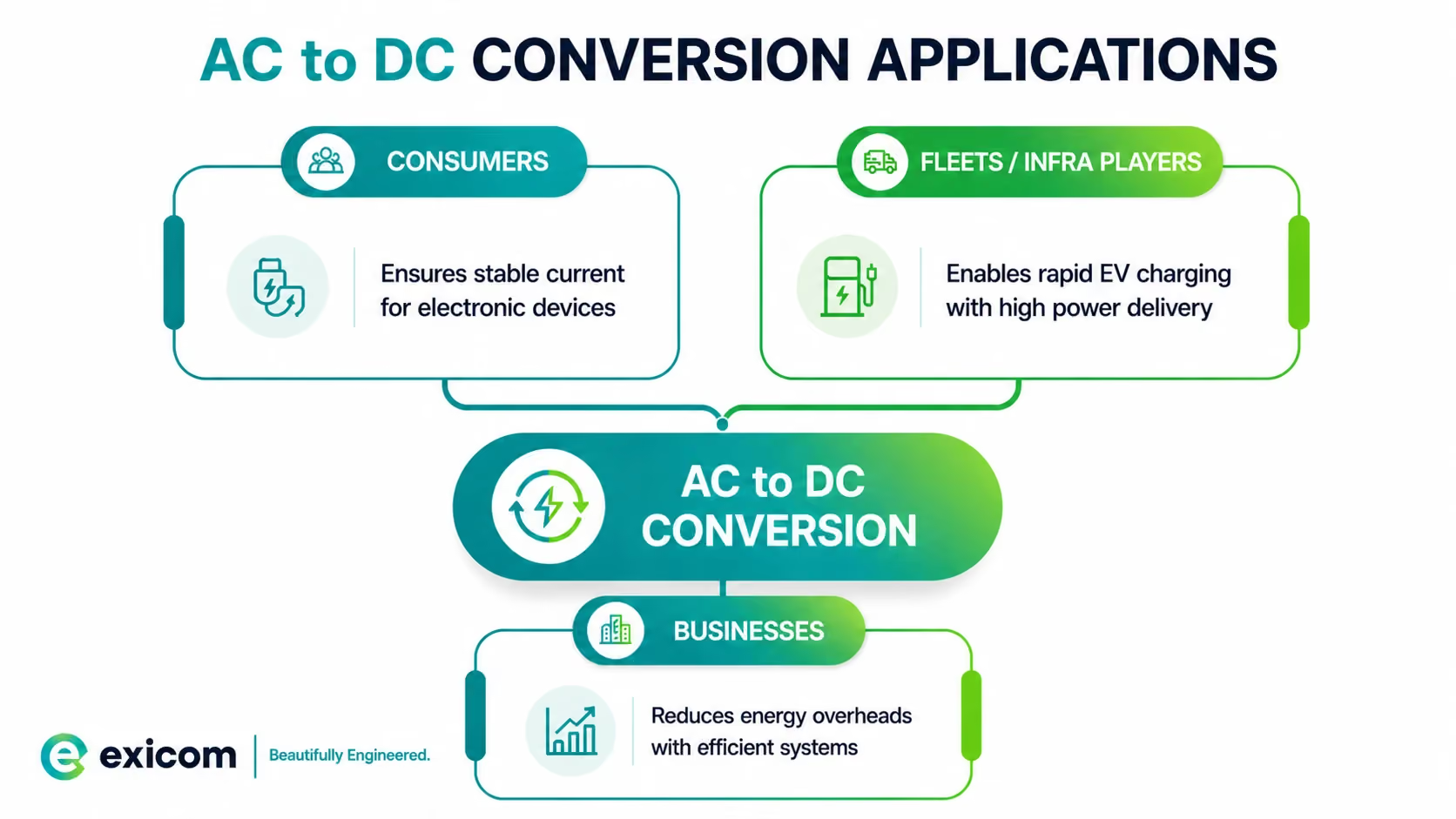
The utility of AC to DC conversion spans from micro-electronics to massive industrial infrastructure.
Economic Benchmarks & Technical Performance Metrics
In the energy industry, efficiency is the primary metric for ROI. Even a 2% loss in conversion can result in millions of rupees in wasted energy over a fleet's lifecycle.
India’s Energy Transition Roadmap: Policy, Costs, and Standards
India is a unique market due to voltage fluctuations and high ambient temperatures, requiring robust conversion hardware.
- Market Adoption: With the push for FAME-II and state-specific EV policies, the demand for indigenous AC to DC power modules for charging stations has surged by 400% since 2022.
- Standards & Compliance: Converters in India must adhere to BIS (Bureau of Indian Standards). For EV charging, the IS 17017 standard governs the communication and safety protocols between the converter and the vehicle.
- Grid Context: Indian converters are often designed with high-voltage surge protection (up to 440V) to handle grid instability, a feature less common in European or US models.
Business & Industry Section
Strategic considerations for primary stakeholders:
Fleet Operators
Fleet owners should prioritize converters with Active Power Factor Correction (PFC). This ensures that the power drawn from the grid is used efficiently, avoiding "reactive power" penalties from utility companies.
Charge Point Operators (CPOs)
For CPOs, the Modular Converter Architecture is critical. If one 30kW AC-to-DC module fails in a 120kW charger, the station can still operate at reduced capacity, ensuring uptime and consistent revenue.
Enterprises
Large-scale enterprises are moving toward Bi-directional Converters. These allow for AC to DC (charging) and DC to AC (discharging), enabling Vehicle-to-Grid (V2G) strategies where EV fleets act as giant backup batteries for the building.
Challenges & Technical Solutions
High-power conversion faces significant physics-based hurdles.
Final Thought
The AC to DC converter is no longer a "hidden" component; it is the strategic gatekeeper of the energy transition. As we move toward a DC-centric world—driven by solar power, battery storage, and electric mobility—the efficiency and reliability of these converters will define the profitability of the modern energy enterprise.

